

A retailer drowning in support tickets buys an AI chatbot, plugs it in, and cancels three months later because nothing changed. The tool worked fine. The problem was that nobody defined what "working" meant before flipping the switch. That gap, between buying technology and fixing an actual bottleneck, is where most projects fail. It's exactly what this guide walks you through. Learning how to implement ai in business is less about the model you pick and more about the sequence you follow. We'll cover it step by step, from defining goals to measuring results.
What AI implementation in business actually means (plain-English definition)
So what is ai implementation, in plain terms? It's the practical work of putting artificial intelligence implementation into your daily operations. You take a repetitive process and use ai tools to run it faster, more accurately, or with less manual work. That covers models predicting demand, generative ai drafting content, and ai chatbots answering routine questions. The U.S. Small Business Administration's guide on using AI frames it the same way: start with a specific task, not a general ambition. Any artificial intelligence implementation is a decision about your business processes first, and a technology decision second.
Cutting through AI hype: common misconceptions before you start
Most of the noise around AI overstates what it does today. Many assume AI will replace whole teams overnight. In reality, it removes narrow, repeatable chunks of manual work and hands the judgment calls back to people. The Federal Trade Commission has flagged how much AI hype exaggerates real capability, a useful reminder before you spend a dollar. This skepticism is well-founded: Gartner's finding that many GenAI projects are abandoned after proof-of-concept shows how often unfocused ambition collapses without clear ROI. Another myth: that ai for small business is too costly or advanced to bother with. It isn't. As you weigh how to implement ai in business, a single workflow automation on a common task can often pay for itself. Judge any ai business strategy by one question: does it reduce manual work you can measure?
Why AI matters for business: benefits, time savings, and operational efficiency
The payoff is operational efficiency, not novelty. When you automate repetitive tasks, your team stops re-keying data and starts on work that actually needs a human. That's the core of a sound ai business strategy: fewer hours lost to manual work, and business processes that don't slow down as you grow. Workflow automation applied to reporting can turn a two-day monthly scramble into an automated summary. Predictive analytics can flag a stockout before it costs a sale. The reason this matters is compounding: an hour saved daily on a repetitive task is roughly 250 hours a year back to your team.
Step 1: Define clear goals and business objectives first
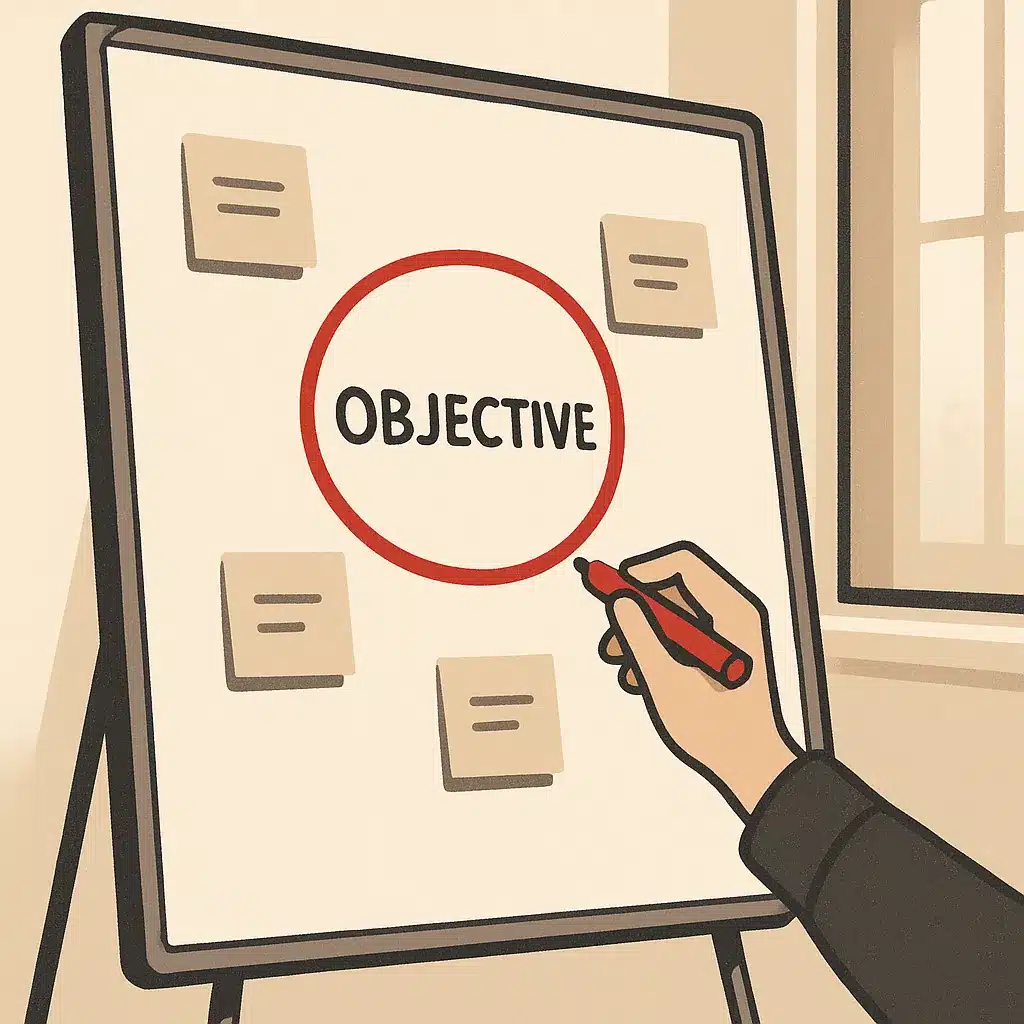
Before you touch any ai tools, define goals in concrete terms. A strong ai implementation strategy starts with one measurable business objective, not a wish to "use AI."
Skip this and you'll buy a tool in search of a purpose. When you define goals as specific business objectives, every later decision gets easier. It also pays to calculate the ROI before you commit, so your ai implementation strategy stays anchored to results rather than optimism.
Step 2: Assess AI readiness, maturity, and existing resources
Now gauge your ai readiness honestly.
The root cause of stalled rollouts is usually a mismatch between ambition and ai readiness. A high ai maturity level means clean, connected systems. A low one means disconnected tools and manual handoffs. Bespoke Mind Ai will run an AI readiness audit on your operations to surface these gaps before any build begins, so you invest where you're actually ready.
Step 3: Audit and prepare your data
AI runs on your data, so a data audit comes before any model.
Here's what happens when a data audit gets skipped: the AI learns from messy inputs and produces confident nonsense. Poor data quality is one of the top reasons projects fail after launch, because a model can only be as reliable as the records it trains and runs on. The Harvard Business Review on using your own company data with AI makes the case that tailoring tools to your actual data beats generic deployment. A data audit isn't glamorous, but clean, accessible data is one of the biggest predictors of whether your ai implementation holds up once it's live.
Step 4: Choose the right AI tools, technologies, and models
Only now do you pick the right ai technology. The choice follows the problem, never the reverse.
Many teams pick the flashiest option and force-fit it. The right ai technology solves your named bottleneck with the least complexity. Sometimes that's a simple tool. Sometimes it's custom AI solutions built around how you operate, and testing rival ai models on your own data is what tells the two apart.
Step 5: Build the right team and skills (or choose a partner)
An ai-proficient team doesn't mean hiring data scientists.
Most SMBs don't have a spare ai-proficient team sitting around, and that's fine. A discovery-led partner handles the technical build while your people stay focused on operations. Bespoke Mind Ai works this way: your team keeps its operational knowledge, and the automation gets built and deployed rather than just recommended.

Step 6: Establish an ethical framework and manage risks
- Define data usage and access for AI outputs.
- Include human review for customer-impacting decisions.
- Document risk management for bias and privacy.
- Check sector-specific data-protection requirements.
- Build governance early to avoid costly retrofitting.
Before you deploy anything, set an ethical framework.
Rules here vary by jurisdiction and industry, so check your sector's data-protection requirements and any relevant privacy statute before handling customer data. An ethical framework isn't red tape. It's how you manage risks that could otherwise cost trust or trigger a compliance problem. Write it down early, because retrofitting governance after a mistake is far more expensive than building it in.
Step 7: Pilot, test, and evaluate before scaling
Never roll AI out company-wide first. Pilot test on one workflow.
The point of a pilot test is to fail cheaply. Consider a service firm that pilots AI on email triage for one team. If turnaround drops, you have proof. If it doesn't, you've spent little. Test and evaluate honestly, and only the workflows that show measurable roi earn a wider rollout.
Step 8: Deploy, integrate, and plan for continuous improvement and scale
A successful pilot earns the right to deploy and integrate properly.
Deployment isn't the finish line. Continuous improvement means watching where the AI stumbles and refining it, because business processes shift. Build for scalability from the start: an automation that works for 50 tickets a day should survive 500 without a rebuild. That's the difference between a one-off tool and a system that grows with you.
Common challenges and pitfalls of AI implementation
- Ensure clear link to business objectives.
- Avoid siloed data that hampers integration.
- Train staff adequately on new systems.
- Prevent scope creep by automating one workflow at a time.
- Conduct a data audit before implementation.
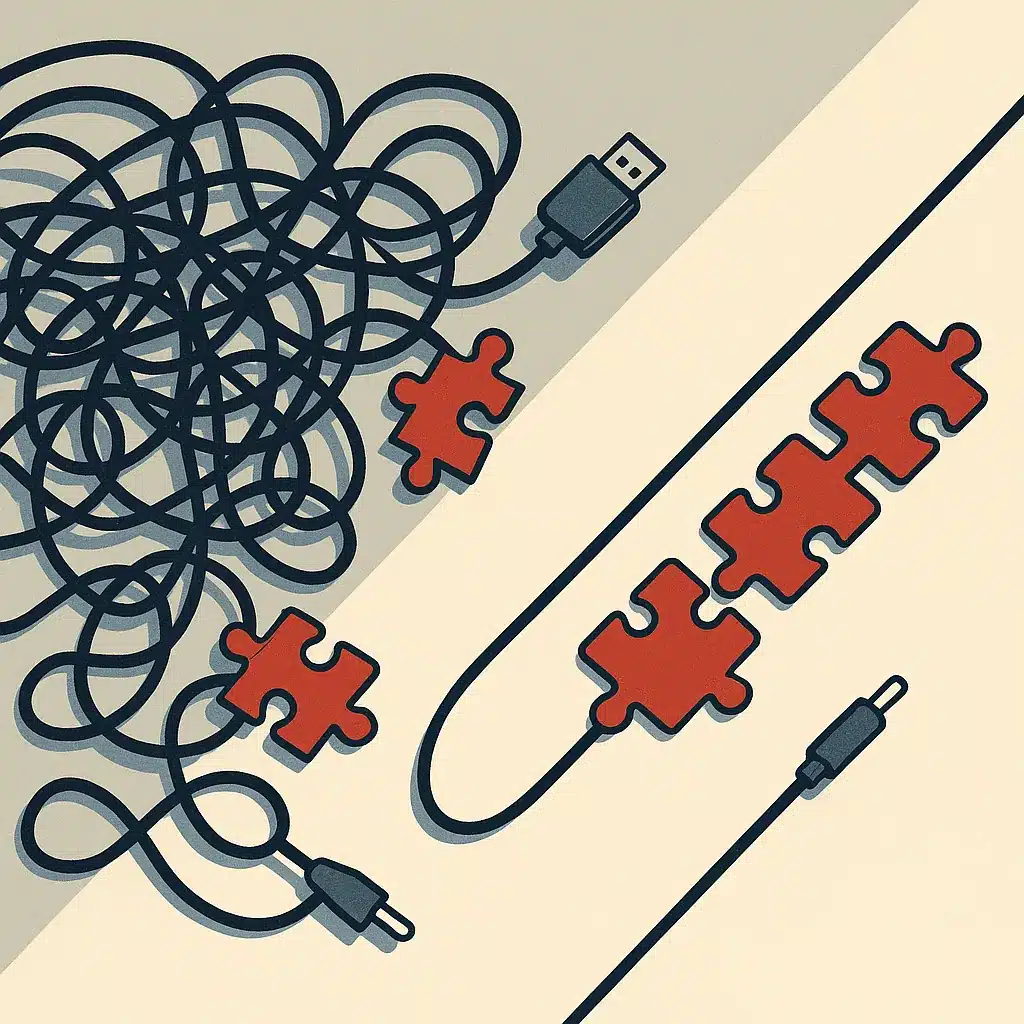
The common challenges rarely involve the technology itself. Most failures trace back to three things: no clear link to business objectives, siloed data, and staff who were never trained. Another common challenge is scope creep, trying to automate everything at once instead of one workflow. A common pattern: teams skip the data audit and then blame the model when outputs are wrong. Picture a distribution company that automates order processing on top of three disconnected spreadsheets. The AI inherits every inconsistency and quietly duplicates orders, and the team spends more time correcting them than the old manual process cost. Fix the foundation first, and most of these pitfalls disappear before they start.
Getting employee buy-in and fostering an AI-ready culture
Technology fails quietly when people quietly resist it. Employee buy-in decides whether an automation gets used or ignored, because a tool people distrust simply gets worked around. Start by being clear about intent: the goal is to remove manual work, not remove jobs. Show the team the tedious task they'll stop doing. Bring the people who know the process into the design, because they'll spot flaws early and feel ownership once it launches. Pair the rollout with light skills development so nobody feels left behind. An AI-ready culture isn't built with a memo. It's built by proving, on one workflow, that the tool makes someone's day easier.
Starting small: pick one manual workflow to automate first
Deciding how to implement ai in business is easier when you don't try to automate repetitive tasks across the whole company at once. Pick the single workflow that hurts most: high-volume, dreaded, and where the manual work is easy to measure. Support ticket sorting, invoice reconciliation, and lead intake are common first picks because the time savings often show up fast. Automating that one process gives you a real result and a template for the next. If you're unsure where to begin, Bespoke Mind Ai's automation ROI tool helps you find out what your business can actually automate so you start there rather than guessing.
Off-the-shelf tools vs custom AI systems: what fits your business
- Ideal for generic needs like chatbots and scheduling
- Cost-effective and quick to implement
- May not fit specific business processes
- Patches gaps but leaves seams between tools
- Built around unique business workflows
- Eliminates manual work between systems
- More expensive but tailored solutions
- Best for addressing specific operational bottlenecks
Off-the-shelf software is right when your need is generic: a standard chatbot, a scheduling tool, a template. It's cheap and fast. The trouble starts when your bottleneck is specific to how your business operates and no product quite fits. That's when custom ai systems earn their cost. If a manual process spans three disconnected tools, off-the-shelf software patches one gap and leaves the seams. Custom ai systems are built around your actual workflow, so they remove the manual work between systems, not just inside one. The rule: buy for common problems, build custom ai systems for the ones that are uniquely yours.
How to measure ROI and track results after implementation
Measurable roi is only possible if you measured the "before." Track results against the baseline you recorded in Step 1.
Measurable roi isn't a single number at launch. It's a trend you watch, and rising operational efficiency is the clearest signal your system is working. Results vary based on your existing processes and how well your team adopts them, so track honestly rather than chasing a headline figure. The numbers tell you where to expand next.

The whole point of knowing how to implement ai in business is to remove work that's quietly draining your team's hours, and the fastest way forward is to find the one workflow worth automating first. Bespoke Mind Ai runs a discovery-led readiness audit and builds custom automations around how your business actually operates, not off-the-shelf software. Book a discovery call to map your automation opportunities and see where the time savings realistically sit.
Frequently Asked Questions
What are the actual first steps to implement AI in a business?
Start by tying AI to one measurable business goal (cutting costs, faster turnaround, fewer errors) rather than chasing tools. Then run a readiness check on your data quality, systems, and skills before picking a single high-value use case to pilot.
Which business tasks should you automate with AI first?
Target work that is repetitive, data-rich, and slow:customer support replies, data entry, email triage, reconciliation, and reporting. These offer the fastest ROI because you can measure the hours saved almost immediately.
Why do so many AI projects fail after the pilot stage?
The most common reasons are no clear link to business goals, poor or siloed data, and low AI literacy among staff. Prosci and IBM both note that projects launched without executive ownership and a real workflow to fix tend to stall before they scale.
Is implementing AI actually worth it for a small business?
It's worth it when it removes measurable manual work:not when it's adopted for its own sake. The Federal Reserve Bank of San Francisco found small businesses see the quickest returns on repetitive, time-consuming tasks like support and content drafting, so start there and track the numbers.
What if I don't have clean data or a technical team?
You don't need a data science team to start, but you do need to know where your data lives and how accurate it is:which is what a readiness audit uncovers. Poor data foundations are a top cause of failed rollouts, so fixing visibility and access often comes before any model.
Should I build custom AI or just buy off-the-shelf software?
Off-the-shelf tools work for generic tasks, but they rarely fit workflows that are specific to how your business actually operates. Custom builds make sense when a manual bottleneck spans multiple disconnected systems and no existing product bridges them.
How do you measure whether an AI implementation is working?
Define success metrics before you launch:hours saved, error rate reduction, turnaround time, or customer satisfaction. IBM and TechTarget recommend baselining these numbers first so you can prove the difference the AI made.
How long does it take to see results from AI in business operations?
A well-scoped pilot on a single repetitive task can show time savings within weeks, while broader operational integration takes longer. The gap between a quick win and full adoption is usually governance, data, and staff buy-in:not the technology itself.