

Most marketing teams now have access to AI tools. Far fewer can name a single number that improved because of them. That gap is the whole problem. A solid ai marketing strategy isn't about which tools you buy. It's about picking two or three business outcomes and connecting AI directly into the workflows that affect them. This article walks through what AI marketing actually is, how it works, where it helps, and how a small business can start without a developer or a hype-driven budget.
What AI marketing is (plain-English definition)
So what is ai marketing, stripped of the buzzwords? It's software that learns from data to handle tasks that used to need a person: sorting leads, choosing who sees which ad, writing first drafts, or flagging which customers are about to leave. Ask a founder what is ai marketing in practice, and the answer is simpler than the term suggests. The system predicts or decides, you act, and it adjusts based on results.
That's the honest version. Artificial intelligence in marketing isn't a robot running your brand. It's pattern-recognition tools pointed at specific, repeatable problems, and artificial intelligence in marketing only earns its keep when it's aimed at a real bottleneck. If you're trying to figure out where AI actually fits into business strategy more broadly, marketing is usually one of the clearest, fastest-to-measure starting points.
A plain way to think about it: traditional software does what you tell it. AI-powered tools make an educated guess about what to do next, then improve that guess over time. The quality of those guesses depends entirely on the data you feed them. This matters more than the brand name on the tool, because a model working with clean data will generally outperform a model working with messy data.
The practical value shows up in two places. First, customer personalization at a scale no human team could manage by hand. Second, workflow efficiency, because ai-powered tools handle the repetitive sorting and drafting that eats hours. For a grounded overview of how marketers are actually applying this, the U.S. Small Business Administration's guidance on digital tools is a useful starting point for owners who want practical framing over vendor pitches.
How AI marketing actually works under the hood (generative AI, machine learning, data)
Two different technologies sit behind most ai marketing you'll encounter, and they do different jobs.
The first is machine learning. You give a model historical data, say, which past leads became customers, and it learns the patterns that predict a good lead. That's what powers lead scoring, churn prediction, and ad targeting. It isn't creative. It's statistical pattern-matching applied at speed.
The second is generative AI, the technology behind tools that produce text, images, and video. Generative AI predicts the next most likely word or pixel based on everything it was trained on. That's content generation, image generation, draft ad copy, and subject-line variations.
The root cause of most AI marketing shortfalls sits underneath both: data quality. A model trained on messy, incomplete, or biased data can produce confident wrong answers, because the model has no way to know its inputs are flawed, it only learns the patterns it is shown. Many assume AI performance comes down to picking a smarter tool. In reality, it's about the cleanliness and structure of the data feeding it. This mirrors a broader pattern found in MIT Sloan research on AI adoption in business, which shows a persistent gap between companies that adopt AI and companies that actually see results from it.
This is also why marketing automation and AI work well together. Automation moves data between systems reliably; AI helps interpret that data. For a clear, readable breakdown of the underlying concepts, IBM's explainer on machine learning lays out the mechanics without the marketing gloss.
Why AI marketing matters and what moves the needle
Here's the blunt reason this matters: marketing teams are now expected to personalize for thousands of individuals, report in real time, and respond to behavior within minutes. No human team does that manually at the same speed. AI is what makes the expectation possible.
But mattering and moving the needle aren't the same thing. Plenty of companies adopt AI marketing tools and see little change in their actual numbers. What actually moves the needle is narrow and specific: faster campaign activation, lower cost per lead, higher email conversion, fewer hours spent on manual reporting. HubSpot's own State of Marketing report backs this up, showing that marketers consistently point to a small set of AI use cases, not broad adoption, as the ones more often tied to measurable results.
The reason the needle-movers are always specific is practical. AI improves a process by removing friction or making a decision faster than a person can. If you can't name the process or the friction, there's nothing for the AI to improve. Your marketing efforts generate tool usage without measurable outcomes.
Consider a service business that spends ten hours a week manually qualifying inbound inquiries. Pointing AI at that single task can return those hours and help hot leads get a same-day response instead of a two-day wait. That's a concrete win tied to campaign effectiveness and revenue. Compare that to installing a general-purpose AI writing tool with no defined goal, where the time saved is real but invisible on any report leadership cares about.
Core benefits: personalization, efficiency, scalability, campaign effectiveness
The ai marketing benefits worth caring about fall into four buckets, and each ties to a number you can track.
Customer personalization comes first. AI can tailor product recommendations, email content, and landing pages to individual behavior, something a human team can only fake with broad segments. Done well, this can support conversion because the message matches intent.
Workflow efficiency is the second, and it's often where ai-powered tools pay for themselves fastest. AI handles the repetitive sorting, tagging, drafting, and reporting that drains a marketing team's week, freeing people for strategic thinking.
Scalability in marketing is the third. A campaign personalized for a thousand people can cost roughly the same effort as one for a hundred once the system is built. That's an advantage human-run campaigns rarely have, because manual personalization tends to scale with headcount while a built system scales with compute.
Campaign effectiveness ties them together. When targeting, creative, and timing adjust based on live behavioral data, campaigns have a better chance to improve mid-flight instead of waiting for a post-mortem.
One honest caveat: these benefits depend on existing processes and clean data, and results vary based on business complexity, implementation, and team adoption. A benefit on paper only becomes a benefit on your P&L when it's attached to a defined objective.
Building an AI marketing strategy step by step
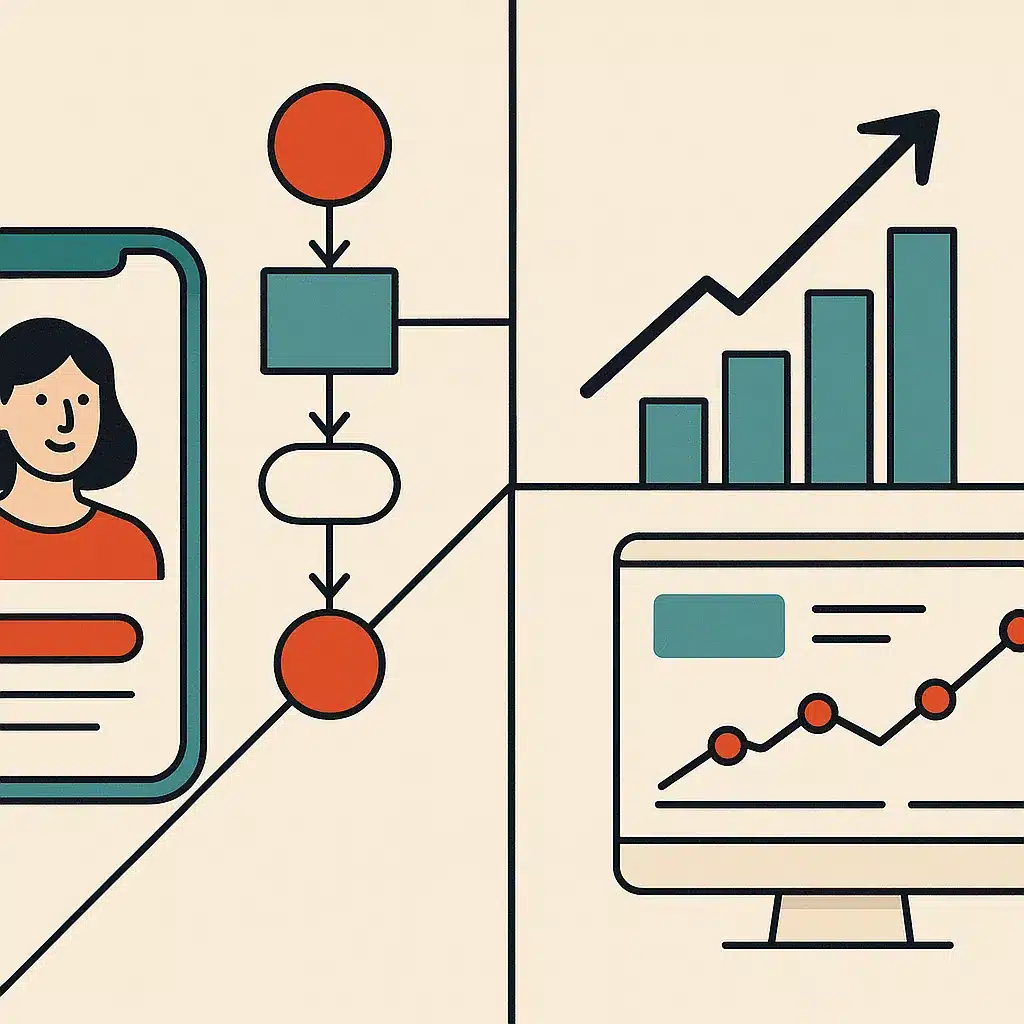
A workable ai digital marketing strategy follows a sequence, and the order matters more than people think. Get the order wrong and you spend money before you know what you're solving.
Start with objectives, not tools. Pick two or three measurable goals: lower cost per acquisition, higher retention, faster lead response. Everything downstream serves these. If you want a structured way to work through this step, Bespoke Mind Ai's free AI marketing plan planner walks through goal-setting before any tool gets chosen.
Second, map your customer journey and find the friction. Where do leads stall? Where does your team repeat the same manual work? Those bottlenecks are where AI can earn its keep.
Third, audit your data and current stack. AI decisions are only as good as the data behind them, so check whether the information you need is clean, connected, and accessible before layering anything on top.
Fourth, choose a single narrow use case and build it. Lead scoring, email automation, or draft content generation are common first steps because they're contained and the result is visible.
Fifth, measure against the objective you set in step one. If the number didn't move, diagnose before expanding.
The mistake most teams make is starting at step four. They buy a tool, then look for a problem it solves. What actually happens is backwards adoption: activity with no measurable outcomes. Build the ai digital marketing strategy around the problem, and the tool choice becomes obvious.
Defining clear objectives and data quality before adopting AI
These two foundations, clear objectives and data quality, decide whether your strategy produces results or just activity.
Clear objectives come first because they define what "working" means. "Use AI in marketing" is not an objective. "Cut cost per lead by 20% this quarter" is. The second one tells you exactly what to build, what to measure, and when to stop or pivot. Without it, you can't tell a win from a waste of money.
Data quality is the quieter issue. An AI model making predictions on duplicate records, missing fields, and inconsistent formatting can produce confident, wrong decisions, and route your budget toward the wrong people. AI reflects whatever it's fed. Clean data supports good decisions; messy data can lead to expensive mistakes at scale.
Picture a local services firm with three years of lead records split across a spreadsheet, an old CRM, and an inbox. They point a lead-scoring model at it expecting instant prioritization, but half the records are duplicates and the outcome field is blank on most of them. The model ranks leads almost at random, the sales team loses trust in it within a week, and the project gets shelved, not because AI failed, but because the input was never cleaned.
Before adopting any AI marketing tools, write down the metric you're improving and confirm the data behind it is trustworthy. That unglamorous step separates measurable outcomes from a line item nobody can justify.
Common AI marketing use cases and real examples
The strongest ai marketing use cases share a trait: they target a repetitive, high-volume task where speed or consistency matters.
Predictive lead scoring is the classic. The system ranks inbound leads by likelihood to convert, so sales calls the hottest ones first instead of working a list top to bottom.
Dynamic ad targeting adjusts who sees an ad and which creative they get, in real time, based on behavior. Personalized email and product recommendations do the same for existing contacts, matching content to what each person actually browsed or bought.
Automated reporting is unglamorous but valuable. Instead of a marketer rebuilding the same dashboard every Monday, the system assembles it, turning hours of manual work into minutes.
AI chatbots handle first-touch questions and qualify visitors before a human ever gets involved. A well-built AI chatbot for lead qualification and booking is one of the more concrete artificial intelligence in marketing applications for lead-driven businesses.
Picture a retailer that sends one generic newsletter to its whole list. Switching to AI-driven product recommendations based on purchase history can help lift email revenue, not because the technology is magic, but because relevance beats broadcast. Each use case replaces manual effort with a decision made faster and at larger scale.
Categories of AI marketing tools (content, image, video, workflow)
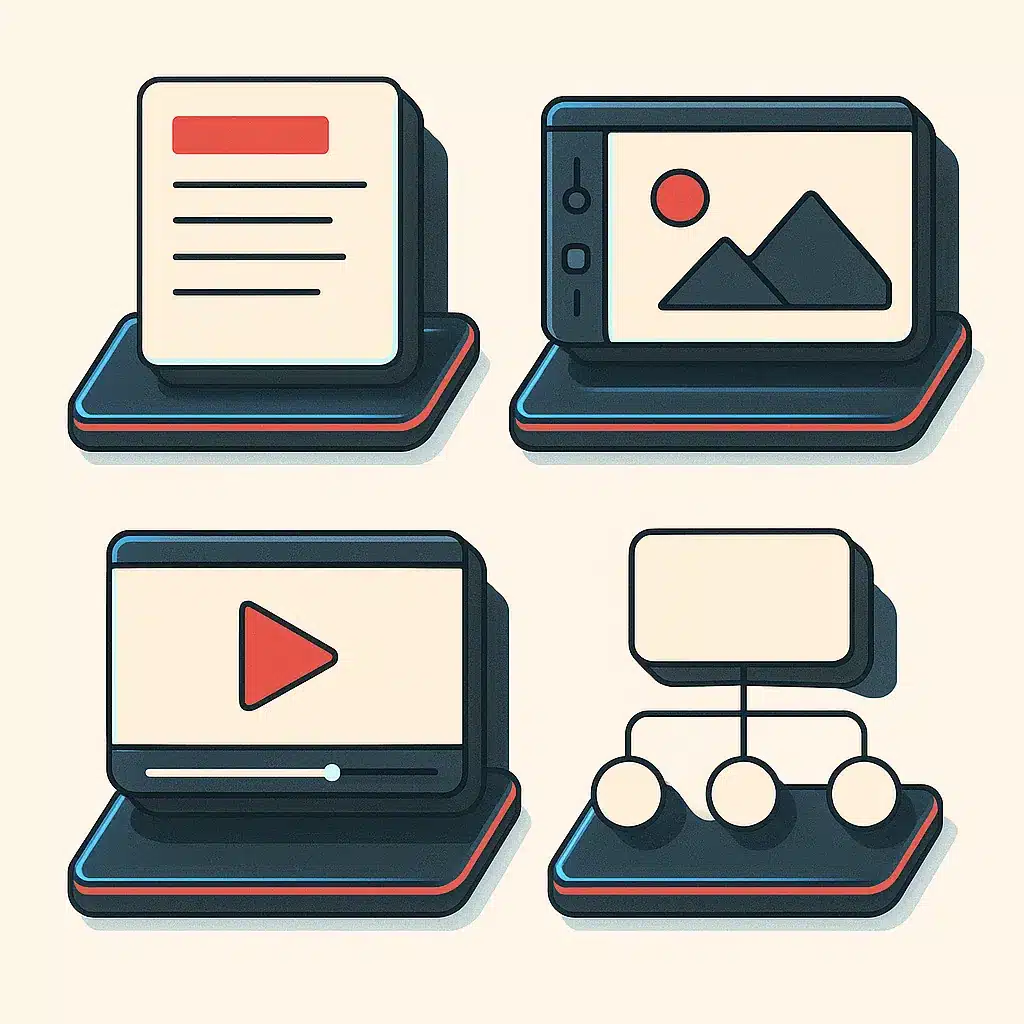
AI marketing tools sort into four practical categories, and knowing which does what keeps you from overbuying.
Content tools handle text: blog drafts, ad copy, email subject lines, social captions. These lean on generative AI to produce first drafts fast, which a human then edits. The point is speeding up content generation, not replacing the editor. An AI tool for content writing and publishing is a good example of this category done well, since it's built around drafting and publishing rather than just generating disconnected text.
Image tools cover image generation and graphic design: ad visuals, social graphics, product mockups. They turn a text prompt into usable visuals, cutting the wait on simple design work.
Video tools handle video generation, including short promotional clips, captions, and repurposing long footage into social cuts. This category is the newest and the most uneven in quality, so set expectations accordingly.
Workflow tools are the quiet workhorses. These handle marketing automation and workflow automation: moving data between systems, triggering emails on behavior, routing leads, and syncing your CRM. They don't generate anything flashy, but they're what helps the other three categories actually run inside your business.
Many teams fixate on the content and image categories because the output is visible. In reality, the workflow category often delivers durable operational efficiency, because it removes manual work that recurs every single day rather than producing a one-off asset.
AI marketing best practices and avoiding common pitfalls
- Keep a human in the loop for content approval.
- Start narrow, then expand to avoid scope creep.
- Continuously protect data quality, not just at launch.
- Tie every tool to a specific metric for evaluation.
- Avoid tool-first thinking; focus on defined workflow problems.
A few ai marketing best practices separate teams that get results from teams that get a subscription bill.
Keep a human in the loop. Generative AI drafts; a person approves. Publishing unreviewed AI content is how brands end up with factual errors and off-tone messaging in front of customers.
Start narrow, then expand. Automating one task well beats automating five tasks poorly. The scope creep that kills early projects almost always comes from trying to do everything at once.
Protect your data quality continuously, not just at launch. Lists decay, fields drift, and model accuracy quietly erodes if nobody maintains the inputs. This happens because models keep making predictions on whatever data arrives, so a slow drift in the inputs becomes a slow drift in the decisions.
Tie every tool to a metric. If you can't say which number a tool is supposed to move, you can't tell whether it's earning its cost.
The most common pitfall is tool-first thinking: buying based on a demo rather than a defined workflow problem. Another is assuming AI eliminates the need for marketing judgment. It doesn't. It removes some of the manual grind so judgment has room to operate.
One more realistic note for small business marketing: don't copy an enterprise playbook. A small team's advantage is focus, so apply AI to the one or two bottlenecks that cost you the most time, and ignore the rest until those pay off.
Ethics, data privacy, and limits of AI in marketing
AI ethics in marketing isn't a compliance footnote. It's central to building and keeping customer trust.
Data privacy comes first. If you're using behavioral data to personalize, you're handling personal information, and that falls under real rules. Privacy and marketing regulations vary significantly by jurisdiction, so check the requirements that apply to your region and customers, whether that's state privacy statutes, federal guidance, or your country's data-protection authority. When in doubt, verify with a qualified professional rather than guessing.
Transparency matters too. Customers increasingly want to know when they're talking to an AI chatbot versus a person. Hiding it erodes the trust personalization is supposed to build.
Then there are the limits. Generative AI can produce inaccurate information stated with apparent confidence. It can reflect biases present in its training data. And it has no understanding of your brand's values beyond what you explicitly give it. Many assume AI removes the need for oversight. In reality, it increases the need, because errors can happen faster and at larger scale.
The honest framing: AI in marketing is a helpful assistant with real blind spots. Treat its output as a draft to verify, keep a human accountable for what ships, and be upfront with customers about how their data is used. That posture protects both your results and your reputation.
Where a custom AI system beats off-the-shelf marketing tools
Off-the-shelf software is the right call for standard, common tasks. Email platforms, scheduling tools, and generic AI writers solve problems that look the same across thousands of companies. If your need is ordinary, buy the ordinary tool.
The gap shows up when your workflow is specific to how your business actually operates. Off-the-shelf software forces you to reshape your process to fit its design, which is fine until the mismatch costs more time than it saves. Your team ends up doing manual work to bridge the gaps between disconnected systems. The reason this happens is simple: packaged tools are built for the average customer, and the further your process sits from that average, the more manual glue you need to hold it together.
Custom AI systems flip that. They're built around how your business actually operates, connecting your existing software, encoding your qualification rules, and automating the specific sequence your team repeats. The goal is to solve the underlying problem, not to add another subscription.
This is exactly the gap Bespoke Mind Ai works in: designing custom AI systems for workflow automation and integrating AI with the business software a company already uses, so the system fits the team instead of the other way around.
A rough rule: if three different tools and a spreadsheet are duct-taped together to run one process, that's a signal custom may beat off-the-shelf. The deciding factor is whether your bottleneck is common or unique to you.
AI-assisted lead qualification and marketing workflow automation
Lead qualification is where AI marketing tends to pay off fastest for many service businesses, because the task is high-volume, repetitive, and directly tied to revenue.
Here's the typical problem: inbound leads arrive through forms, email, and chat, and someone has to read each one, decide if it's a fit, and route it. That manual triage is slow, and slow responses can lose deals. Speed to first contact is one of the clearest predictors of whether a lead converts, because interest fades fast and the first vendor to respond often sets the terms of the conversation.
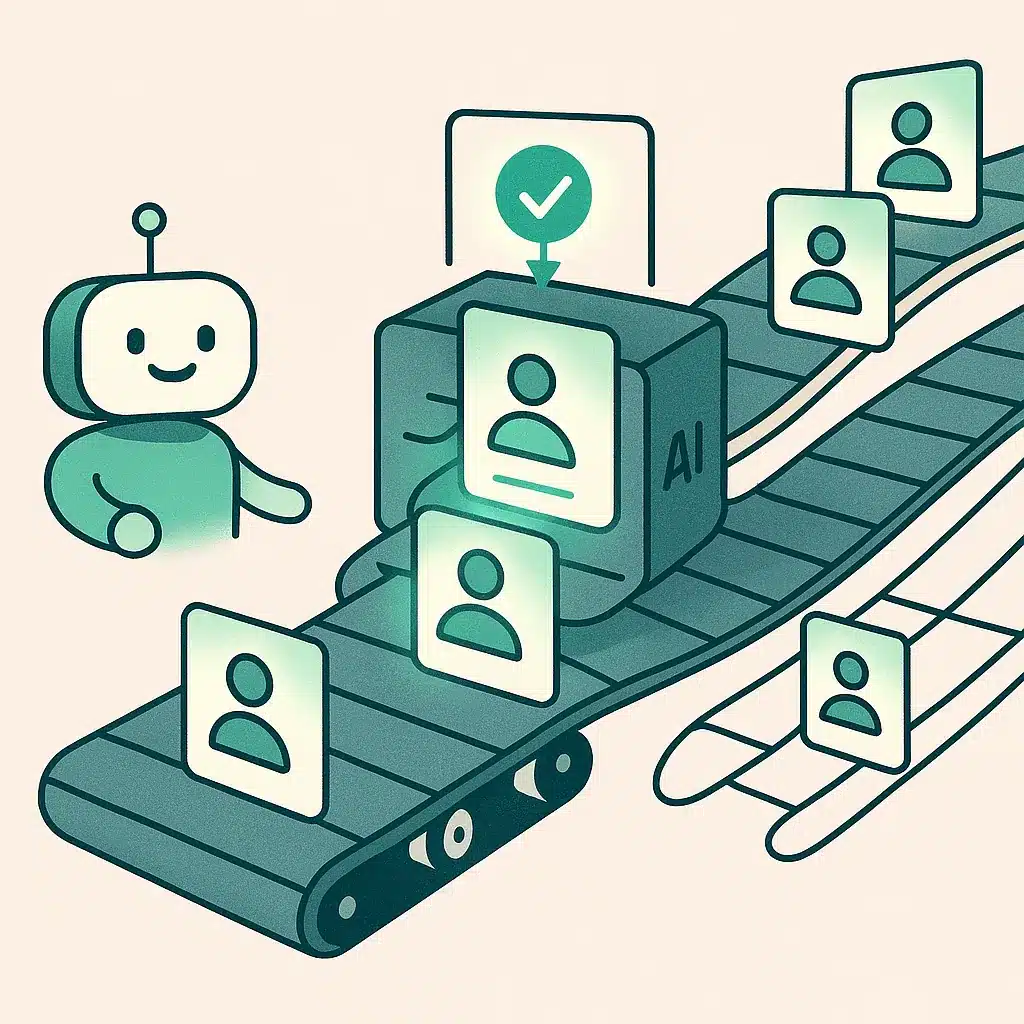
AI-assisted lead qualification helps by scoring and sorting inquiries as they arrive. An AI chatbot can ask qualifying questions, capture answers, and hand a ranked lead straight to the right person, reducing manual triage. Behind that sits workflow automation moving the data between your form, CRM, and calendar without anyone copying and pasting.
Bespoke Mind Ai builds custom AI chatbots and workflow automations for exactly this, qualifying and routing leads so hot prospects can get a response in minutes instead of days.
The measurable outcome is concrete: fewer dropped leads, faster response times, and sales reps spending their hours on qualified conversations instead of sorting. That combination of marketing automation and smart routing is one of the more reliable ways AI can support both operational efficiency and conversion at the same time.
How to assess AI marketing readiness for a small business
AI readiness isn't about budget or technical staff. It's about whether you have a clear problem and clean data to point AI at.
Run a quick self-check. First, can you name a specific, repetitive marketing task that eats hours every week? Second, is the data for that task reasonably clean and accessible, or scattered across tools in inconsistent formats? Third, do you have a measurable objective it would serve? If you answered yes to all three, you're ready to start narrow.
If your data is a mess, that's your first project, not a reason to skip AI. Cleaning and connecting your systems is the foundation everything else stands on. A readiness audit often reveals that the bottleneck isn't a missing tool, it's disconnected data and undefined goals, something small business marketing teams run into constantly once budgets tighten.
Be honest about team adoption too. AI readiness includes whether your people will actually use the new workflow. The best system can fail if it's ignored, because an automation nobody trusts gets bypassed, and a bypassed workflow produces no data to improve on.
A sound ai marketing strategy ultimately comes down to this: a clear objective, clean data, one narrow use case, and a human who stays accountable for the output. If repetitive marketing work is slowing your team down and you're not sure where AI fits, a discovery call can help identify the highest-value place to start. Bespoke Mind Ai runs AI readiness audits and builds custom AI systems scoped to how your business already works, so you can explore where automation fits your workflow before committing to anything.
Frequently Asked Questions
What exactly counts as an AI marketing strategy?
It's a structured plan for using machine learning, generative AI, and AI agents to automate repetitive marketing tasks, personalize customer experiences, and tie that work back to specific business goals like retention or cost per acquisition. It's not a single tool, it's a redesign of how campaigns, content, and reporting actually get done.
Where does AI actually get used in marketing?
Common applications include predictive lead scoring, dynamic ad targeting, personalized email and product recommendations, automated reporting, and AI chatbots handling first-touch customer questions. Most of these replace manual, repeatable work rather than creative strategy itself.
How is an AI marketing strategy different from how we've always done marketing?
Traditional marketing relies on broad audience segments and campaigns planned weeks in advance with manual updates. An AI-driven approach uses real-time behavioral and intent data to personalize at the individual level and adjust campaigns continuously instead of on a fixed schedule.
Is building an AI marketing strategy actually worth it, or is this overhyped?
It depends on execution, not the technology itself, startups and small teams that focus AI on one bottleneck (like lead scoring or content production) report cost-per-lead drops of up to 89% in some cases, while scattershot tool adoption without clear goals rarely shows measurable return. The risk isn't AI failing, it's skipping the step of defining what you actually need it to fix first.
What if we don't have a technical team, can we still run an AI marketing strategy?
Yes, but the strategy has to be scoped around existing systems and staff skill level rather than assuming in-house AI expertise. Small businesses typically start with narrow, low-cost use cases, automated scheduling, draft copy, or basic customer segmentation, before expanding into more complex workflows.
How do we actually start building one from scratch?
Begin by setting two or three measurable objectives tied to revenue, retention, or acquisition cost, then map your customer journey to find where AI removes the most friction, not by picking tools first. From there, audit your current martech stack and data quality before layering in automation.
What's a realistic sign that an AI marketing strategy isn't working?
If AI tools are running but no one can point to a specific metric that moved, faster campaign activation, lower content cost, higher conversion, the strategy likely skipped the goal-setting step and went straight to tool adoption. Misalignment between AI output and business objectives is the most common failure point, not the technology itself.
What's a fair example of what an 'AI advertisement' actually is?
It's typically an ad where AI handles targeting, creative variation, or bid optimization in real time rather than a human manually setting parameters once. This includes dynamic product ads that adjust imagery and copy per viewer based on behavioral data.