

Picture a regional property management firm that paid two staff members to copy tenant data between four systems every day. That is not an AI problem waiting for a fancy platform. It is a manual work problem. Running a business with artificial intelligence solves it by removing the copying, not by adding another dashboard nobody opens. This article walks through what artificial intelligence in business actually means, how the technology works, where it delivers real value, and how to tell if your operations are ready.
What artificial intelligence in business actually means (plain-English definition)
Artificial intelligence in business means using software that learns from data and makes decisions, instead of following only fixed instructions. Traditional software does exactly what you code it to do. AI systems recognize patterns, handle messy inputs, and adapt as conditions change. That difference is why AI in business gets applied to tasks rule-based tools struggle with: reading invoices in different formats, routing customer emails, or forecasting demand.
Strip away the hype and it is practical. The point of artificial intelligence in business is to remove repetitive work and give leaders clearer visibility, not to chase a buzzword. The U.S. Small Business Administration's guidance on using AI tools frames it the same way: match the tool to a real operational need. If you want a foundational companion piece, our overview of where artificial intelligence actually helps in business covers real-world use in more depth. What happens is simple. AI reads context, applies learned patterns, and produces an output a person would otherwise do by hand.
How AI in business works: the core technologies (machine learning, NLP, generative AI, predictive analytics)
Understanding how AI in business works starts with four building blocks. Machine learning trains a model on historical data so it can predict or classify new inputs: which invoice is a duplicate, which lead is likely to convert. Natural language processing lets systems read and respond to human text. That is what powers email routing and ai chatbots. Generative ai produces new content, such as draft replies, summaries, or reports, from a prompt. Predictive analytics uses machine learning to forecast outcomes like inventory needs or churn risk.
Computer vision adds the ability to interpret images and documents, useful for scanning receipts or inspecting products. These technologies rarely work alone, and that is the point: a single workflow might use natural language processing to read a request and generative ai to draft the response, an early form of workflow optimization, because combining them mirrors how a person handles the task end to end. Applying these to your own information is a discipline in itself, and the Harvard Business Review on using company data with generative AI is a practical starting point. Stanford's AI Index Report tracks how quickly these capabilities mature across industry, which is worth watching if you are planning ai adoption.
Why AI matters for business operations and strategy
The reason this matters comes down to where time actually goes. In most small companies, staff spend hours on repetitive tasks: re-keying data, chasing status updates, compiling the same weekly report. That work drags on operational efficiency, and it hides the bottlenecks leaders need to see. Artificial intelligence in business attacks that layer directly. For a practical guide aligned with this focus, see our breakdown of AI solutions for business operations.
Strategically, ai in business changes what your team can focus on. When workflow automation handles the routine, people move to higher-value work: client relationships, judgment calls, growth. It also improves decision-making, because data trapped in disconnected systems becomes accessible once it flows through one place instead of many. This is where Bespoke Mind Ai often starts, running an AI readiness audit to map where manual work and bottlenecks cost the most time. If you are weighing where to begin, it helps to start with an AI readiness audit of your own operations. The business value is not the software. It is the operational efficiency and visibility that follow.

Common ways businesses use AI (automation, customer service, forecasting, personalization)
Most ai use cases fall into a handful of practical categories. Workflow automation is the biggest: moving data between tools, generating documents, updating records, and clearing the operational bottlenecks that slow teams down. Customer service is another, where ai chatbots and assistants handle routine questions so staff focus on complex ones.
Forecasting through predictive analytics helps with inventory, staffing, and cash flow planning. Personalization uses customer data to deliver personalized recommendations, the kind that can lift conversion rates in ecommerce and email. Beyond those, businesses apply AI for fraud detection in payments, supply chain optimization to reduce delays, and data analytics to surface trends buried in spreadsheets. The common thread across these ai use cases is the same: reduce manual work, speed up business operations, and support better decisions with data the team already has but cannot easily reach.
Real-world examples of AI in business
Concrete examples make this clearer. A service-based firm drowning in inbound email set up natural language processing to categorize and route messages. That cut response time and removed a daily sorting chore. An ecommerce operator used predictive analytics to forecast stock, reducing both stockouts and overordering. A content agency used generative ai to draft first versions of client posts, so writers edited instead of starting blank.
Here is a real consequence we have seen. A growing property business had all its lease renewal knowledge sitting with one founder. When he took two weeks off, three renewals slipped past deadline and one tenant walked, a direct revenue hit. Building an internal AI assistant that captured that process into a workflow removed the founder dependency. This is the kind of problem that AI consulting focused on removing manual work is designed to address. These are not magic. Each solved a specific operational problem, which is the pattern that separates useful ai in business from expensive novelty.
Key benefits of AI for business (efficiency, cost reduction, better decisions, time savings)
The benefits of AI show up as measurable outcomes, not features. Time savings come first: workflow automation removes hours spent on repetitive tasks, freeing staff for work that needs judgment. Cost reduction can follow, because fewer manual hours and errors mean lower overhead. Many assume the benefit is headcount reduction. In reality, most businesses redeploy that time toward growth work they never had capacity for before.
Better decisions come from data analytics that turn scattered information into clear signals. The benefits of AI also include workflow optimization across the board, when systems talk to each other instead of sitting in silos. Before committing, it is worth understanding how to calculate ROI on AI automation projects so you can judge whether an initiative is financially worth it. Done well, each automated process can free more capacity, because the time it returns can be reinvested into the next improvement rather than lost to firefighting. Results vary based on existing processes, complexity, and team adoption, so treat these as opportunities, not guarantees.

Overcoming misconceptions and challenges (hype, privacy, workforce, transparency)
The biggest obstacle to ai adoption is not technical. It is hype fatigue. Owners have heard AI promised as a cure-all and rightly distrust it. Credible industry research, such as Gartner's research hub on enterprise AI, helps separate realistic outcomes from marketing noise. The honest position: AI helps with specific problems, and it does not replace sound operations. Privacy is a real challenge, since these systems often touch customer and financial data, so it matters where that data lives and who can access it. AI rules and data handling requirements vary by industry and jurisdiction. Frameworks like the NIST AI Risk Management Framework offer a structured, responsible approach to deployment. Check the relevant regulations for your sector, or consult a qualified professional, before deploying anything that processes sensitive information.
Workforce fear is common too. The purpose of workflow automation is removing repetitive tasks, not people. Transparency matters as well: teams should understand what an AI system does and be able to check its output. Addressing these openly is what makes ai adoption stick instead of stalling.
What actually works: starting with a business problem, not the technology
The root cause of failed AI projects is starting with the tool instead of the problem. Teams buy a platform, then hunt for something to do with it. That order is backwards, and it is why so much software gets ignored: a tool bought without a defined problem has no clear owner, no success measure, and no reason for anyone to change how they work.
What works is naming the operational bottleneck first. Where does your team lose the most time? Which repetitive tasks get done every week without adding value? Where do disconnected systems force manual copying between tools? Once the problem is clear, the right approach becomes obvious. Often the solution is narrow: a single workflow automation, one internal tool, a targeted ai agent. Running a business with artificial intelligence this way keeps scope tight and value measurable. You solve the underlying problem, then move to the next one. Small, specific wins build momentum better than one sprawling project ever will.
Custom AI systems vs. off-the-shelf software for how your business operates
- Handles general drafting and summarizing well
- Low cost for small business AI tools
- Best for generic needs
- Assumes uniform workflows across businesses
- Fits specific business processes
- Connects existing tools seamlessly
- Eliminates manual work in operations
- Tailored solutions for unique bottlenecks
Off-the-shelf software has a real place. Tools like ChatGPT handle general drafting, summarizing, and brainstorming well, and small business AI tools cover common needs at low cost. Start there when the need is generic. The limit shows up when your workflow is specific to how your business operates. Off-the-shelf software assumes everyone works the same way. Your operations do not. It is worth understanding how custom AI differs from off-the-shelf software before you commit to either path.
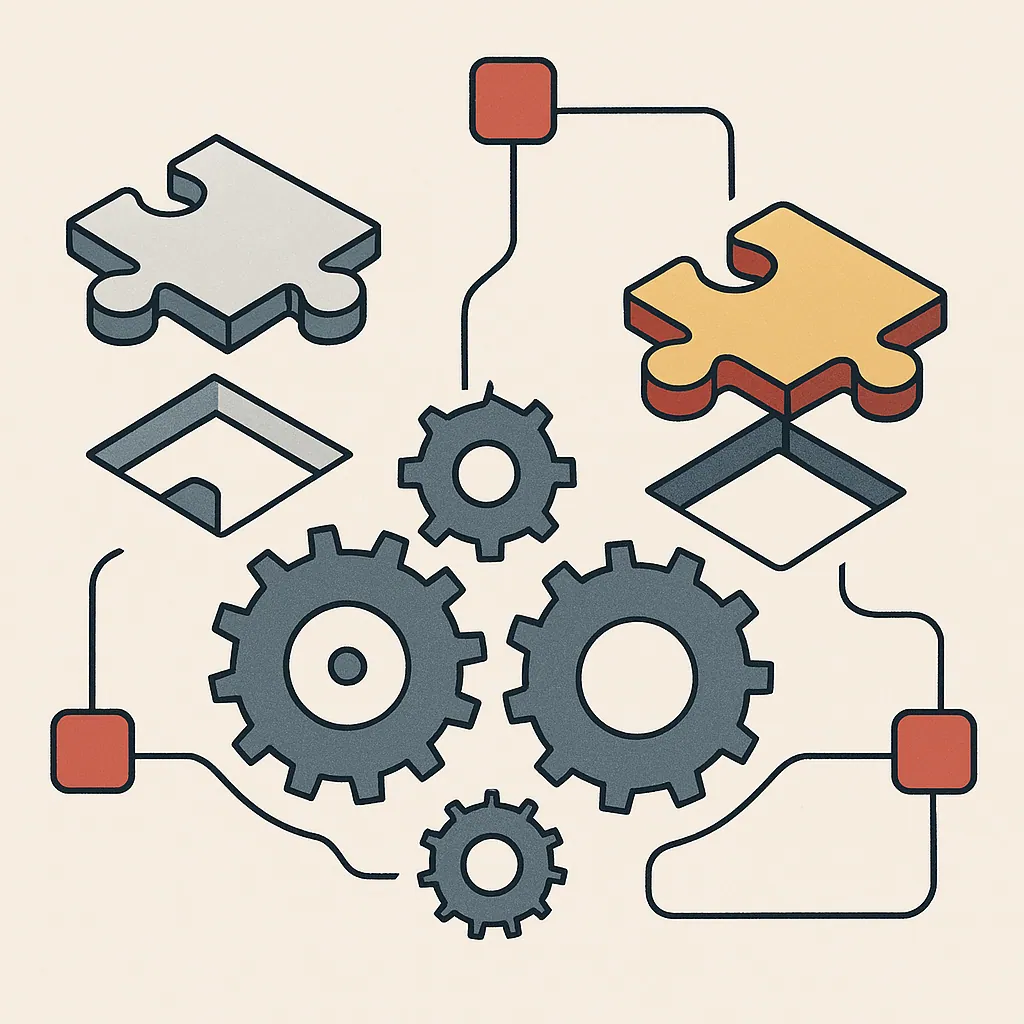
That is where custom ai solutions earn their keep. A custom-built system fits your actual process, connects your existing tools, and removes manual work inside the systems your team already uses. It does not become one more disconnected app to check. Bespoke Mind Ai builds these custom ai solutions and ai agents around each client's real operations, rather than reselling a generic platform. The test is simple. If a subscription tool already solves it, use it. If your bottleneck is unique to your business, custom is usually the answer.
How to know if your operations are ready for AI (readiness signals)
A few signals tell you your operations are ready. First, you have repetitive tasks that follow a consistent pattern every week, the kind ripe for workflow optimization. Second, information lives in disconnected systems and your team wastes time moving it by hand. Third, reporting is slow or unreliable because data exists but is not accessible. Fourth, too much operational knowledge sits with one person, creating founder dependency and risk.
If several of those sound familiar, you likely have clear ai use cases worth pursuing for competitive advantage. Ai readiness is not about company size or a big tech budget. It is about having documented, repeatable processes and clean enough data to build on, because an AI system learns from the patterns and records you already have, and messy inputs produce unreliable outputs. Where processes are undocumented or data is a mess, the first step is a foundation, not an ai agent. An honest ai readiness assessment tells you which is which before you spend a dollar building.
Running a business with artificial intelligence is not about the tool you pick. It is about the manual work you remove and the visibility you gain. If repetitive work is slowing your team down, a short conversation can surface where automation would help most. Book a discovery call with Bespoke Mind Ai to identify the operational bottlenecks worth automating and the ones that are not. No pressure, just a practical look at how AI fits the way your business actually operates.
Frequently Asked Questions
What kind of business can I actually start using artificial intelligence?
Common starting points include AI content production for agencies, chatbot and virtual assistant setup for customer service, and workflow automation services for small companies. The most sustainable ones solve a specific operational problem, like removing manual data entry, rather than selling AI as a novelty.
Can AI realistically help me make $1,000 a day?
There's no guaranteed daily figure:income depends on the service you offer and the demand for it, not the AI itself. AI lowers the cost of delivering work like content, automations, and integrations, so the money comes from selling those outcomes to clients, not from the tool running on its own.
Is investing in AI actually worth it for a small business?
It can be: a 2026 report cited by the SBA found 61% of small businesses had adopted at least one AI tool, and adopters reported an average ROI of 3.8x their investment. The return depends on targeting a real bottleneck:automating repetitive tasks or improving decision-making:rather than buying tools with no clear use.
What if AI just becomes another disconnected tool my team ignores?
That happens when AI is bolted on without integrating into existing workflows and systems. Custom-built AI systems tied to how your team already operates avoid this by removing manual work inside the tools you use, instead of adding one more platform to check.
How is AI actually used to improve operations and grow revenue?
Businesses use it for customer service automation, sales and marketing personalization, fraud and security detection, and faster data-driven decisions. The revenue impact comes from higher conversion rates, reduced churn, and freeing staff from repetitive tasks to focus on higher-value work.
What's the difference between AI and traditional automation for business processes?
Traditional automation follows fixed rules and works best for stable, repetitive tasks with predictable inputs. AI-driven automation uses machine learning to handle unstructured data and adapt to change, making it better suited for exceptions, judgment calls, and variable workflows.
Which AI tools are worth using for a small business right now?
General assistants like ChatGPT (free tier, or Plus at $20/month) handle drafting, summarizing, and brainstorming for most teams. Beyond off-the-shelf tools, businesses with repetitive workflows often get more value from custom AI systems and agents configured around their specific processes.
Why do companies adopt AI in the first place?
The main drivers are better decision-making from analyzing large datasets, higher productivity by automating tasks like data entry and reporting, and improved customer satisfaction. In practice, most adopt it to reduce manual effort and gain clearer visibility into how their operations are performing.