
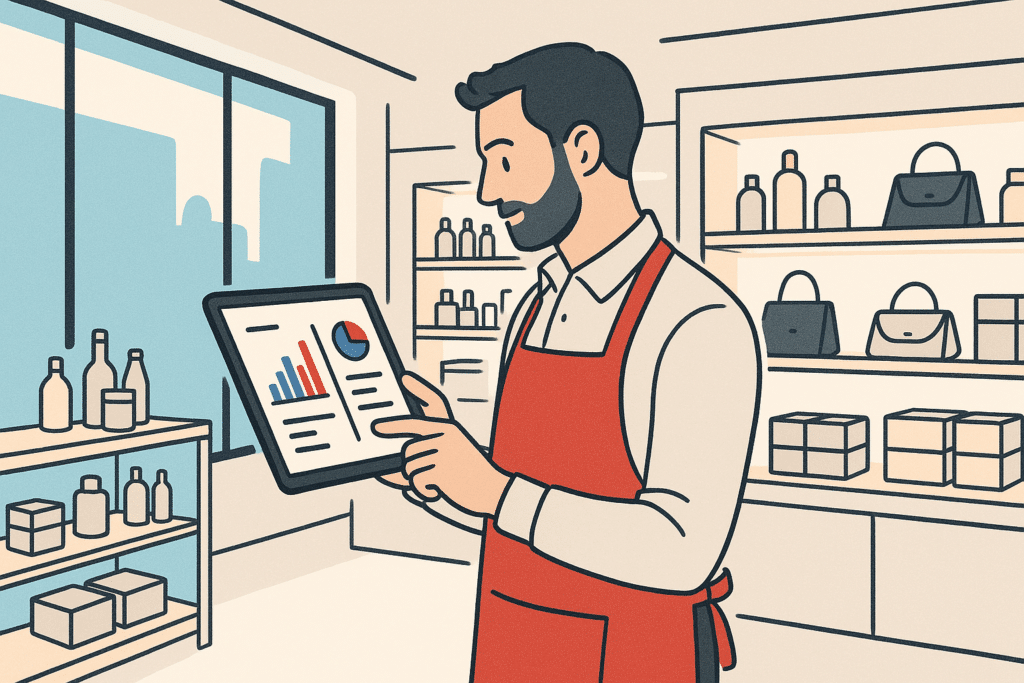
A store manager spends the last two hours of every closing shift updating stock counts by hand across three systems that don't talk to each other. That single habit costs roughly ten hours a week, and it's the exact kind of task an AI tool for a retail business can absorb. Multiply that across a month and you've lost more than forty hours to a job no customer ever sees. Most retailers pick software before they know which bottleneck is actually draining their time, and that order of operations quietly costs them money. This article walks through where AI genuinely helps in retail, what to watch for, and how to tell whether an off-the-shelf tool or a custom-built workflow fits your operation.
AI use cases across retail operations (inventory, pricing, customer service)
AI shows up in retail operations wherever repetitive decisions happen at scale. On the inventory side, AI systems flag slow movers, predict demand, and trigger reorders before shelves empty. For pricing, models test price points against demand, giving retailers pricing optimization that once required an analyst. On the service side, AI agents and shopping assistants handle routine questions so staff focus on the customer experience in front of them. According to the McKinsey report on generative AI in retail, the technology can influence a meaningful share of retail operating costs across marketing, supply chain, and store operations.
The reason these use cases work comes down to volume: retail runs on thousands of small, repeatable decisions, and these tools improve at the tasks that repeat with data behind them. Think of a homewares shop deciding how many of each candle scent to reorder every week, or a clothing store adjusting markdowns on end-of-season stock. Those decisions pile up until they eat a manager's whole afternoon. The scale of the sector, reflected in the U.S. Census Bureau's monthly retail trade data, is what makes the volume so overwhelming by hand. The point isn't to automate everything at once. It's to target the retail business processes where manual work piles up and use AI in your business operations to remove that friction. A good ai tool for retail business earns its keep by absorbing the tasks your team dreads, not by adding a dashboard nobody checks.
Personalized shopping experiences and product recommendations
Personalized shopping experiences are where AI in retail proves its worth to customers directly. When a returning shopper sees product recommendations tied to what they browsed and bought, the experience feels less like a catalog and more like a salesperson who remembers them. Recommendation engines pull from customer data to surface relevant items, and the results compound. Better recommendations can lead to larger baskets and stronger repeat rates. For example, a shopper who bought running shoes last month seeing socks, insoles, and a matching jacket surfaced first is far likelier to add one to the cart than if they had to hunt. Platforms like Shopify build these experiences into their tools, using purchase history and browsing signals to tailor what each visitor sees.
The mechanism is straightforward: relevance reduces the effort a shopper spends searching, and lower effort can raise the odds they buy. Shoppers now expect that relevance, and generic browsing pushes them toward competitors who get it right. An ai tool for retail business that connects customer data across channels keeps the customer experience consistent whether someone shops online or in person. The catch is data quality. A recommendation engine fed fragmented records across three disconnected systems produces generic suggestions, which is why connecting your sales, browsing, and purchase data matters more than the algorithm. A loyal regular treated like a stranger online is the clearest sign those records aren't talking.
Demand forecasting and inventory optimization
Demand forecasting is a retail problem AI fits well. Manual forecasting relies on last year's numbers and a manager's gut, which breaks the moment a trend shifts or a supplier runs late. AI-driven demand forecasting reads sales velocity, seasonality, and even weather patterns to help predict what you'll actually sell. Paired with automated reordering, this can turn inventory management from a weekly guessing session into a background process. The payoff can be concrete: better forecasting can help cut stockouts and overstock, protecting both sales and cash flow. Real-time inventory visibility across locations means you can stop over-ordering in one store while another sells out.
Consider a founder-led boutique chain running three locations off one shared spreadsheet. A summer product sold out in the flagship store while the same stock sat untouched two suburbs away, and nobody noticed until a customer complained. By the time the manager manually checked the other store's counts and arranged a transfer, the weekend rush had passed and the sale was gone. Automated demand forecasting with cross-location visibility would have flagged the imbalance and rebalanced stock first. The result is inventory management that stops being reactive. Instead of scrambling when stock runs low, your AI systems flag it early and handle the reorder before it becomes a problem.
Customer service and virtual/AI shopping assistants
Most retail support questions are the same ten questions asked a thousand ways. Where's my order, do you have this in a medium, what's your return policy. Virtual agents handle these instantly, at any hour, without adding headcount, which protects the customer experience during a holiday rush when a hundred "where's my package" messages can bury a two-person team. AI shopping assistants go further. They guide shoppers toward the right product, answer sizing questions, and hand off to a human when the conversation needs judgment. Many assume this replaces support staff. In reality, it filters out the repetitive tasks so your team spends time on conversations that need a person. This aligns with Harvard Business Review on where AI augments human work, which frames the technology as a way to remove routine load rather than replace people. Tools like Tidio and Intercom deploy these AI agents on storefronts quickly. Answers come faster, and your staff stops answering the same question for the hundredth time. That combination of speed and reduced manual work is where AI shopping assistants earn their place.

Supply chain and logistics optimization
Supply chain management is where small delays snowball into missed sales. A late shipment nobody caught means empty shelves during peak demand. AI applied to supply chain management watches supplier lead times, flags disruptions early, and suggests alternate routing before a gap hits the shelf. Predictive analytics reads patterns across your logistics network and warns you when a delivery is trending late. For multi-location retailers, this means rebalancing stock between stores automatically instead of waiting for a manager to notice. The benefit is smoother business operations and fewer fire drills. Retail AI solutions in this area connect ordering, warehousing, and delivery data. The whole chain then moves as one system rather than a set of disconnected systems each running blind. That visibility turns supply chain management from a source of surprises into something more predictable.
The reason early warnings matter is timing: a disruption caught a week out gives you room to reroute, while the same disruption caught on delivery day leaves you with an empty shelf and no options. Picture a specialty grocer whose main supplier flags a delayed produce shipment; a week's notice lets them source from a backup vendor before the display goes bare, while a day's notice leaves them explaining empty crates to Saturday shoppers. This is why connecting ordering, warehousing, and delivery into one view beats monitoring each in isolation. When those systems stay separate, the warning signals sit in different places and nobody assembles them until it's too late.
Vendor/platform roundup with pros and cons
There's no shortage of ai platforms for retail, and each does one thing well. Shopify Magic uses generative AI to help write product descriptions and marketing copy fast, but it lives inside the Shopify ecosystem. Klaviyo runs personalized email and SMS with strong segmentation, though it needs clean customer data to shine. Inventory Planner and Toolio handle demand forecasting and reordering well, but they focus on inventory and won't touch your marketing. Amazon Personalize powers product recommendations at scale, yet it requires real setup work. The honest trade-off with these platforms is coverage versus fit. Each solves a slice of your operation, and stitching several together often leaves you managing multiple logins and exported spreadsheets. Picture a store owner exporting a sales report from one tool, reformatting it, and importing it into another every Monday just to keep them in sync. That's fine when your needs are simple. It becomes a problem when the gaps between tools create their own operational bottlenecks that nobody owns. This is the point where custom-built systems, built around how your business actually operates, often fit better than bolting more off-the-shelf tools together.
Benefits of AI in retail (efficiency, revenue, productivity)
The clearest benefit of AI in retail is operational efficiency: fewer hours spent on repetitive tasks a system can handle. When reordering, reporting, and routine customer questions run through workflow automation, your team can redirect that time toward selling and service. Given how many staff hours go into repetitive administrative work, as reflected in labor data on retail sales workers, that reclaimed time adds up. On the revenue side, better forecasting can protect sales you'd otherwise lose to stockouts, and personalized marketing can lift repeat purchases. Productivity gains show up as time savings: staff no longer copy numbers between systems or chase stock counts by hand. Consider the closing-shift manager from the start: give those ten weekly hours back and the same person can coach a new hire or reset a display instead of typing figures into a spreadsheet. Results vary based on existing processes, business complexity, implementation, and team adoption, so treat any figures as directional rather than promised. The underlying value is consistent: retail ai solutions can reduce manual work and give leaders clearer visibility into business operations. That mix of operational efficiency and better information is what makes AI in retail worth considering for most growing stores. If you want a fuller picture, the wider benefits of AI in business follow the same pattern across sectors.
Fraud detection, loss prevention, and in-store analytics
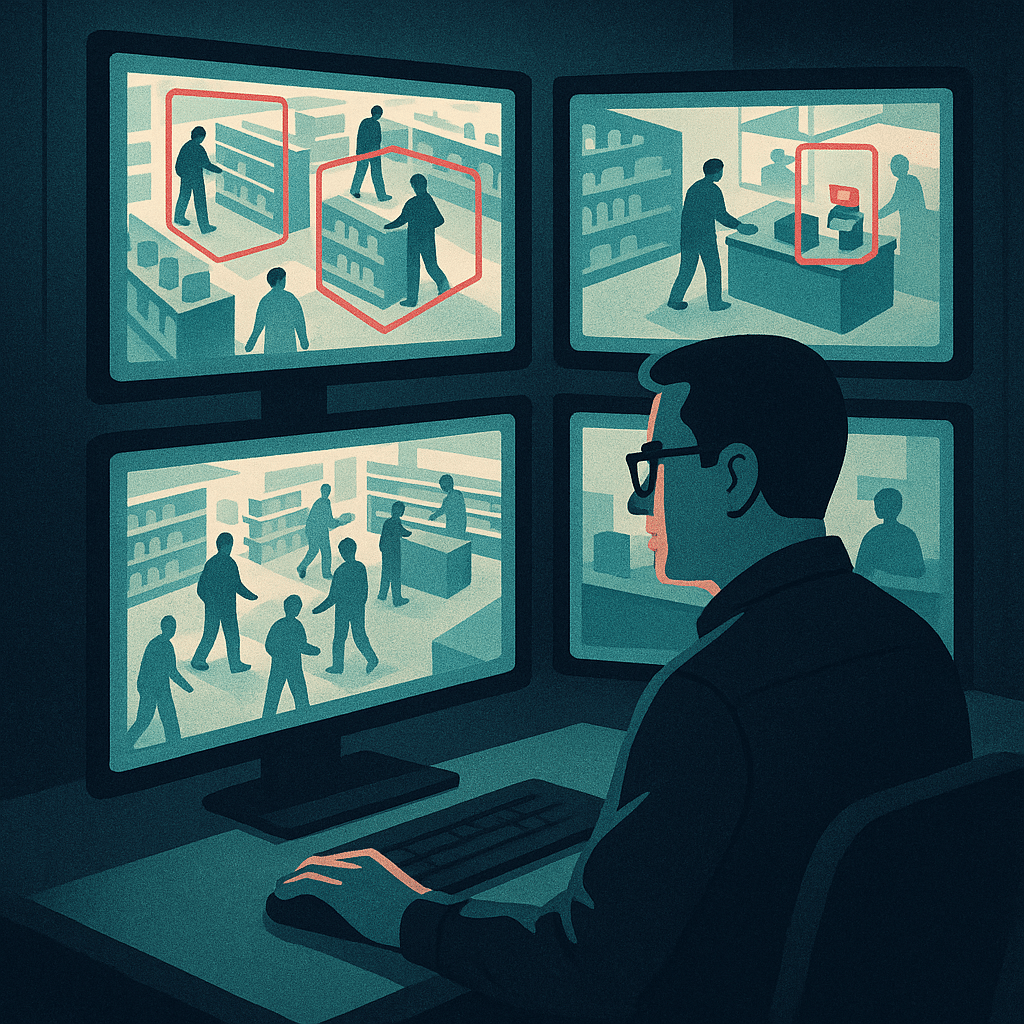
Retail loses real money to theft, chargebacks, and shrinkage, and much of it goes unnoticed until the numbers don't add up. AI fraud detection watches transaction patterns and flags anomalies in real time, catching suspicious orders before they ship. One mid-size online retailer running manual review missed a wave of card-testing fraud. It added up to a five-figure chargeback loss in a single quarter, exactly the pattern automated fraud detection is built to catch early. A run of small orders from mismatched billing and shipping addresses, all placed within minutes, is the kind of signal a tired reviewer skims past but a pattern model can flag instantly. On the store floor, computer vision supports in-store operations by tracking foot traffic, dwell time, and loss prevention. Fraud detection and loss prevention are pattern problems, and pattern problems are what these tools tend to handle better than a person scanning receipts. In-store analytics also reveal how shoppers move through the space, informing layout and staffing. Together these tools help protect margin that would otherwise leak quietly.
How to choose the right AI tool for your retail business
Start with the bottleneck, not the tool. The right ai tool for retail business is the one that removes the manual work costing you the most time or lost revenue right now. Map where your hours go. If it's reordering, look at demand forecasting tools. If it's marketing, look at personalization platforms. If it's support, look at virtual agents. Then ask whether the tool connects to your existing systems or creates another island of data. A tool that solves one problem while isolating your customer data often trades one headache for another, since weak data management keeps every downstream signal fragmented. For example, a slick marketing platform that can't read your point-of-sale history keeps emailing discounts to people who just bought at full price. For owners weighing more involved custom systems, a structured reference like the NIST AI Risk Management Framework helps evaluate tools responsibly without a technical background. It also helps to run an AI readiness check on your operations first. Check implementation effort honestly, since the fanciest platform is useless if your team won't adopt it. The goal isn't more software. It's less manual work, and the right choice is measured by how much repetitive effort it removes from your retail operations.
Underlying AI technologies (machine learning, predictive analytics, automation)
You don't need to build these systems to use them well, but a basic sense of what's under the hood helps you buy smart. Machine learning is the engine behind demand forecasting and product recommendations, learning from your data to make better predictions over time. The more clean, connected data it sees, the sharper it gets, which is why fragmented systems hold back even good tools. Predictive analytics sits on top, turning patterns into forward-looking signals: what will sell, which delivery is trending late, which transaction looks off. Automation is the layer that acts on those signals without a person pushing every button, so a reorder fires, an alert goes out, or a customer gets a reply on its own.
The practical takeaway is that these are not three separate purchases. A workflow automation setup connecting your sales, inventory, and customer data lets these pieces reinforce each other and support operational efficiency. Picture it working together: the model predicts a spike in demand for a seasonal item, predictive analytics flags that the supplier is trending late, and automation fires the reorder early enough to cover the gap, without a manager stitching those signals together by hand. That connection is where scalable systems come from, and it's the difference between another isolated tool and building something that removes manual work across your retail business processes. Custom-built systems, not off-the-shelf software, tend to fit better here because they map to how your team already works rather than forcing your team to work around the tool.
Challenges and risks of adopting AI in retail
- Avoid chasing AI capabilities without a clear problem to solve
- Ensure data quality to prevent failures
- Integrate inventory systems to avoid disconnection
- Be cautious with automated decisions you don’t understand
- Start small and validate results before scaling
Most AI failures in retail come from chasing capability instead of solving a specific problem. Poor data quality, disconnected inventory systems, and staff who never adopt the tool are more common than technical limitations. There's also real risk in automating decisions you don't fully understand, like dynamic pricing or demand forecasting that behaves unpredictably during unusual seasons. The practical approach is to start narrow, validate results against actual sales and margins, and keep a human in the loop until the system earns trust. AI should reduce operational load, not introduce new blind spots you can't explain to your team.
Identifying manual tasks and operational bottlenecks worth automating
Not every repetitive task deserves automation. The ones worth targeting share three traits: they happen often, they follow predictable rules, and they consume time your team should spend elsewhere. Start by tracking where work stalls, where the same data gets re-entered across tools, and which tasks only one person knows how to do. Those single-person dependencies are usually your highest-value fixes. Map the process before touching technology, because automating a broken workflow just makes the mess faster. The goal is straightforward: remove the low-judgment, high-frequency work so your people focus on decisions that actually need a human.
Off-the-shelf tools vs custom-built workflow automation
- Fast to deploy and easy to use
- Works well if processes match software
- May require unnecessary features
- Can lead to multiple subscriptions
- Ideal for unique competitive advantages
- Fits specific workflows better
- Avoids integration costs of multiple tools
- Adapts to business needs directly
Off-the-shelf tools are fast to deploy and fine when your process matches how the software thinks. The friction starts when you begin bending your operations to fit the tool, paying for features you never use, or stitching together five subscriptions that barely talk to each other. Custom-built automation makes sense when your workflow is a genuine competitive advantage, when your process is too specific for generic software, or when integration costs already exceed the price of building something purpose-fit. The real question isn't custom versus ready-made. It's whether the tool adapts to your business or forces your business to adapt to it.
Connecting disconnected systems and reducing founder dependency
When your systems don't talk to each other, someone has to be the bridge, and in most growing businesses that someone is the founder. Information lives in their head, approvals wait on their inbox, and nothing moves when they step away. Connecting your tools through proper integrations turns that manual glue into automated flow, so data moves between sales, operations, and finance without a person copying it over. The outcome matters more than the technology: decisions get made without you, processes run when you're offline, and the business stops depending on any single person to function. That's what real scalability looks like.
Frequently Asked Questions
Which AI tool is best for a retail business?
There's no single best tool because needs differ by function: Shopify Magic handles product copy and marketing content, Klaviyo manages personalized email and SMS, and platforms like Inventory Planner or Toolio cover demand forecasting. The better approach is matching the tool to your specific operational bottleneck rather than adopting an all-in-one product.
How can I actually use AI in my retail business?
The most common uses are demand forecasting and automated reordering, personalized marketing based on customer behavior, and automating repetitive admin tasks like order processing and stock updates. Start with the process that eats the most manual hours, then automate that workflow first.
What are some concrete examples of AI in retail?
Examples include AI-driven inventory tools that predict demand and auto-reorder stock, customer data platforms like Segment or Salesforce CDP that unify shopper profiles, and recommendation engines such as Amazon Personalize that suggest relevant products. Chatbots like Tidio also handle routine customer questions.
Can AI tools help a small retail store increase sales?
Yes, in measurable ways: AI inventory forecasting can cut stockouts and overstock by 20-35%, and AI-driven email and SMS segmentation through tools like Klaviyo can lift repeat purchases by 10-20%. The gain comes from fewer lost sales and better-timed customer outreach.
Are AI tools actually worth it for a small retail store?
They're worth it when a specific process is costing you real time or lost revenue, such as manual reordering or missed customer follow-ups. If your operations are simple and low-volume, off-the-shelf software may be enough, and a custom system only pays off once repetitive work becomes a genuine bottleneck.
What if AI just adds another disconnected tool to my stack?
That's a real risk if you buy point solutions without integration, which leaves data siloed across platforms. The better outcome comes from systems built around how your business already operates, so sales, inventory, and customer data feed into one workflow instead of separate logins.
How is AI retail software different from traditional retail software?
Traditional POS and inventory systems often run in isolation and rely on manual data entry and fixed rules. AI-driven systems connect sales, inventory, and customer data into one flow and adjust things like reorder points and pricing based on live patterns rather than static settings.
What is the 30% rule in AI?
The 30% rule is a common guideline suggesting AI should automate or assist with roughly the top 30% of repetitive, high-volume tasks while people retain judgment-heavy decisions. In retail, that typically means automating routine reordering and reporting while leaving strategy and exceptions to your team.