
Your support inbox goes quiet at 6pm, then fills up overnight. By morning your team is answering the same "where's my order?" and "what are your hours?" customer support questions they handled yesterday. A custom ai chatbot changes that math: it handles the repetitive queries automatically and passes the tricky ones to a person. This article walks through what these systems are, how they work, what they cost, and how to tell if your business is ready, so you can decide without the hype.
What a custom AI chatbot actually is (plain-English definition)
So what is an ai chatbot? It's software that holds a conversation in plain language and answers questions or takes actions for you. A custom version is built around your business, trained on your policies and past tickets instead of the generic internet. That grounding is the point: it answers using your refund window and shipping terms, not a guess. If you want a primer on what is an ai chatbot, IBM's overview of chatbots explains the basics without vendor spin. The bigger idea is that these are custom AI solutions built around how you operate, not off-the-shelf software you bend your process to fit.
How custom AI chatbots work (LLMs, training on your own data)
Modern conversational ai runs on large language models that keep improving how they find the right information. When you train your chatbot on your data, it uses RAG, or retrieval augmented generation: the bot searches your knowledge base for the passage, then writes an answer grounded in it. This is what makes a rag chatbot reliable, because the model looks documents up in real time rather than memorizing them, so updating a policy file updates the answers. For a plain-language explanation, Google Cloud's guide to natural language processing is a solid reference. Deploying these systems responsibly also means following recognized guidance like the NIST AI Risk Management Framework, which helps you spot risks before a bot goes live.
Custom vs off-the-shelf/pre-built chatbots, what the difference means
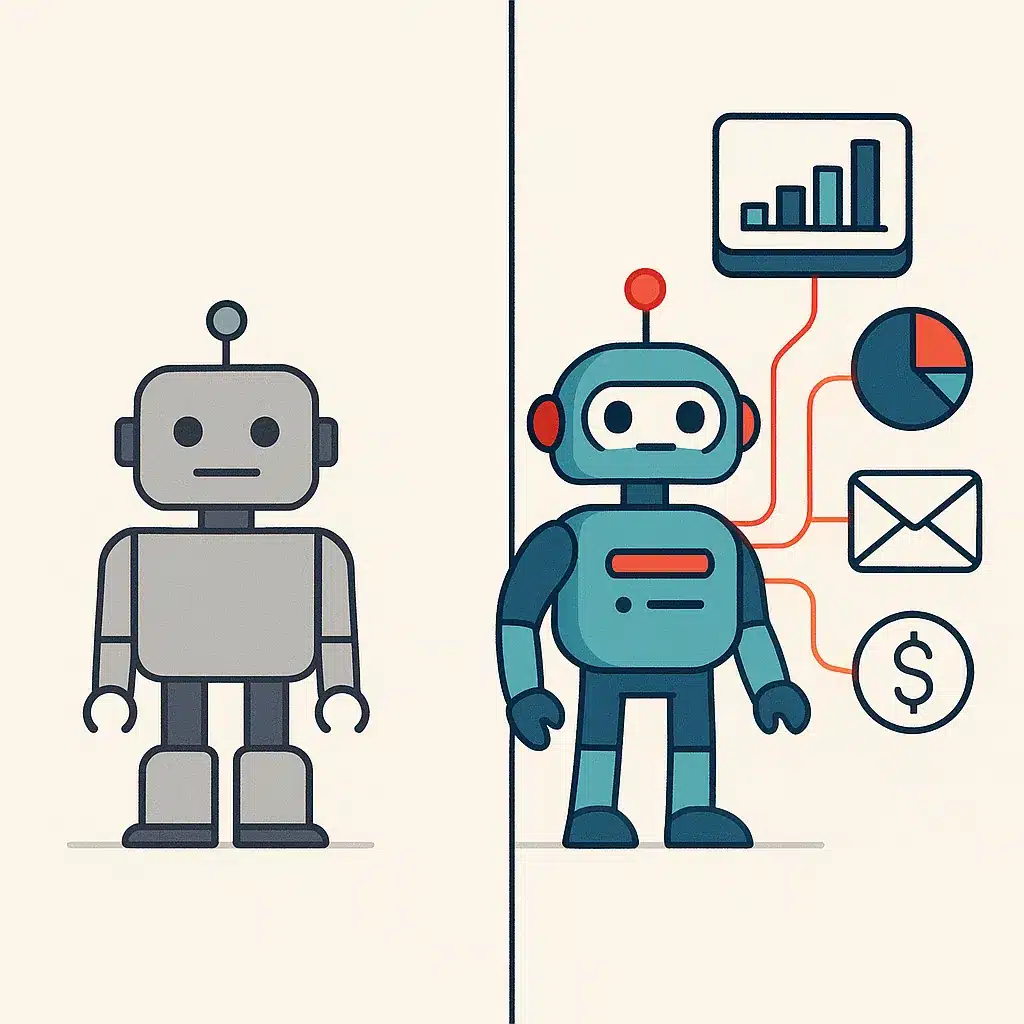
- Trained on your specific data
- Integrated with your tools
- Resolves requests directly
- Higher accuracy and control
- Deploys quickly and easily
- Answers generic questions
- Less tailored to your needs
- Lower initial cost
Many assume a free template is basically the same as a custom build. In reality, the difference is depth. An off-the-shelf, no code chatbot deploys fast and answers generic questions, but it rarely knows your products or order system. A custom generative ai chatbot is trained on your data and wired into your tools, so it resolves a request instead of pointing at a help page. The trade-off is time and cost: off-the-shelf wins on speed, a custom project wins on accuracy, integrations, and control over customer data. Before you deploy a chatbot, pick based on how much it needs to do, not the price. It also helps to understand how to calculate ROI on an AI automation project so the choice rests on numbers rather than gut feel.
What custom AI chatbots actually solve for SMBs (common problems and use cases)
The common ai chatbot uses for small teams cluster around repetitive, predictable work: order status, business hours, return policy, appointment booking. These questions eat hours of customer support time and add nothing your staff enjoys. Custom ai chatbots handle them so people focus on the messy cases that need judgment. Picture a home-services company that fields 40 "are you open Saturday?" and "can I reschedule?" messages a day; automating those alone could free an afternoon a week. The benefits here aren't magic. They're the plain result of removing manual work from a queue. Bespoke Mind AI builds these bots around a documented use case rather than a template.
Where custom chatbots deliver real value for small businesses
A chatbot for small business earns its keep in two places: cost and coverage. On coverage, it provides 24/7 support, so a question at midnight gets an answer instead of waiting for morning. On revenue, it qualifies visitors, answers pre-sale questions, and captures details when nobody's staffing chat. That's how a quiet website can start to bring in more leads without adding headcount. A single chatbot for small business can also handle communication across your site, messaging apps, and email. The reason this works is simple: buyers act when they have answers, and a bot removes the wait that kills interest. Pew Research Center has found public attitudes toward AI applications are mixed, so a helpful bot matters more than novelty.
Connecting a chatbot to your data and existing systems
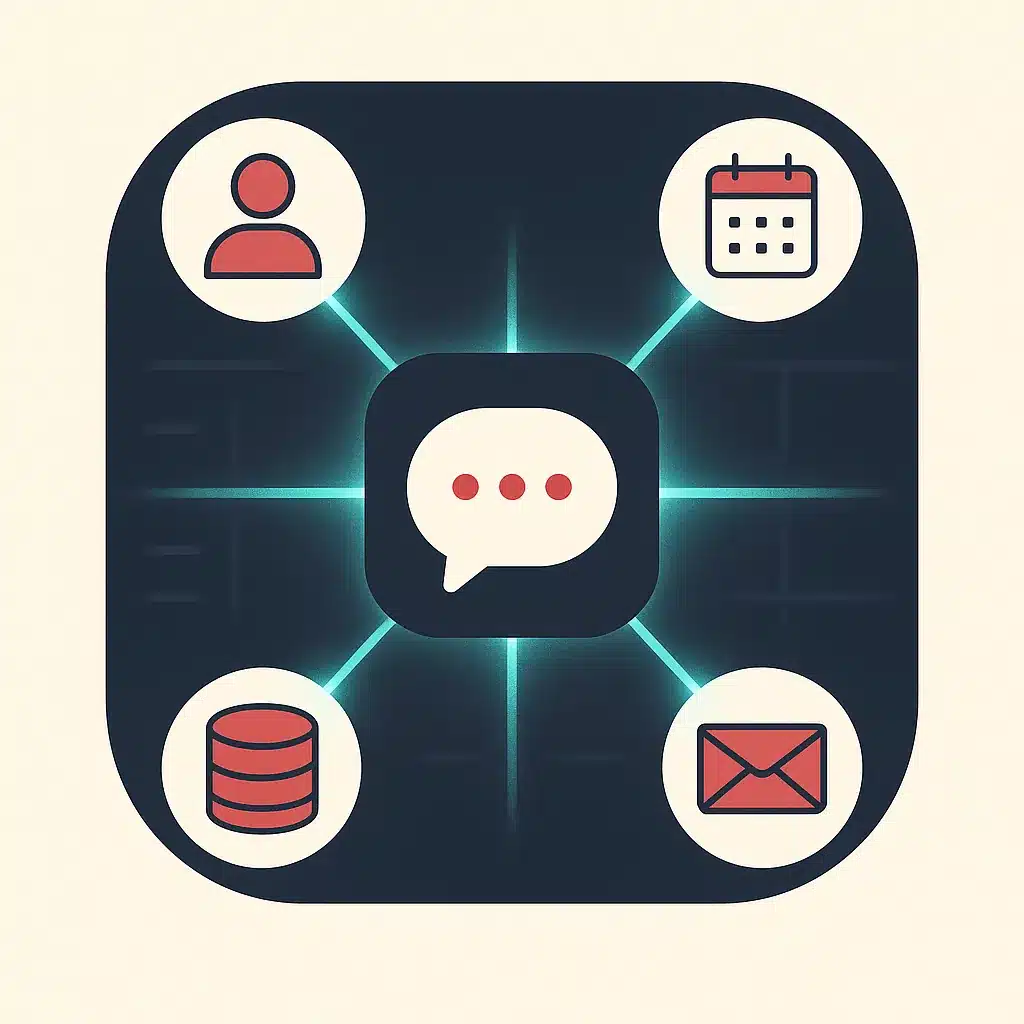
A bot that can't see your systems can only talk, not act. Real value shows up when you build a chatbot on your data and connect it to live tools: the CRM for records, the order system for tracking, the calendar for bookings. With those integrations in place, the bot pulls a real order number instead of telling someone to "check your email." This is where virtual agents stop being a novelty and start to work across your business processes and internal tools, helping the team run more smoothly. The root cause of most disappointing bots is exactly this gap: they answer but can't do anything. Bespoke Mind AI focuses on wiring bots into systems a business already runs on.
Human handoff and knowing the chatbot's limits
No bot should pretend to handle everything. The smartest design decision you make is the human handoff rule. When the bot hits a refund dispute, an angry customer, or a question outside its scope, it passes the conversation to a person with the full chat history attached. What protects the customer experience is knowing where automation stops: a bot that fakes confidence on a billing error costs you trust and, eventually, the account. Set clear escalation triggers and watch how often it deflects versus hands off. Rules for handling customer data and disputes vary by jurisdiction, so review small business compliance guidance and confirm your obligations with the authority that governs your location and industry.
Chatbot vs AI agent, clarifying the terms for operators
- Answers questions
- Simple Q&A functionality
- Acts like a front desk
- Limited to basic interactions
- Takes multi-step actions
- Decides next steps autonomously
- Completes tasks like processing returns
- More advanced operational capabilities
These terms get used interchangeably, and that causes confusion when you're scoping a project. A chatbot answers questions. An ai agent goes further: it can take multi-step actions, decide what to do next, and complete a task like processing a return or updating a record across systems. Think of the chatbot as the front desk and the ai agent as the staffer who does the work. If you want to dig deeper, we break down the difference between an AI agent and a chatbot for operations in detail. Most SMBs deploy a well-scoped chatbot first and grow into ai agent capabilities as their automation needs mature. You need them where a decision or action, not just an answer, saves real time. When needs outgrow simple Q&A, custom AI agent development is the logical next step.
How to scope a custom chatbot around how your business actually operates
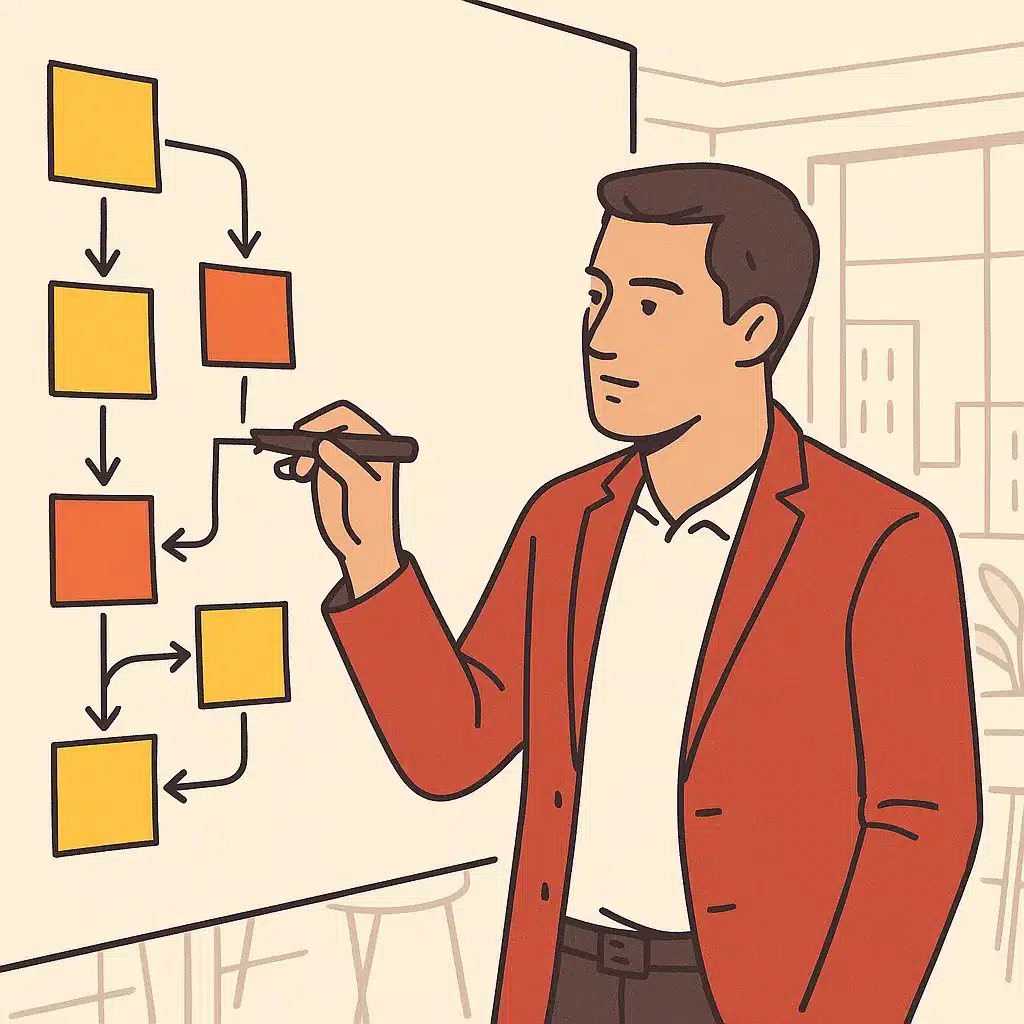
Start with the problem, not the platform. Write down the top ten questions your team answers every week and the actions customers ask for. That list becomes your scope. Then define success in numbers: resolution rate, deflection rate, response time, leads captured. Scoping this way ties the build to real business processes and to smoother day-to-day work, and it applies whether the goal is customer support or automating tasks behind the scenes. It also sets realistic expectations, because results vary with your processes, complexity, and adoption. If you're unsure how to begin, our guide on where to start with bespoke AI solutions helps you frame the first move. Solve the underlying problem first, then expand.
Signs your SMB is (or isn't) ready for a custom chatbot
You're likely ready if you field a steady volume of repeatable questions, have documented answers to draw on, and lose real time to manual work in customer support. You're probably not ready if inquiries are rare, every case is unique, or your policies live only in someone's head. A common pattern: teams that skip documentation launch a bot that answers confidently and wrongly. Fix the source material first. Whether you deploy a chatbot depends less on company size and more on whether volume justifies the spend and maintenance a custom ai chatbot requires. Once you're ready, seeing how our engagement process works makes the path from idea to a scoped build clearer.
If repetitive questions are draining your support hours and you want to improve the customer experience in a way that fits your operation, talk to the team at Bespoke Mind AI about a discovery call. They design custom systems around how your business already works, so the goal stays clear: less manual work, not more software.
Frequently Asked Questions
What actually makes an AI chatbot 'custom' versus a generic one?
A custom AI chatbot is trained on your own data:help docs, FAQs, product catalogs, and CRM records:rather than only public information, so it answers grounded in your real policies and terminology. It typically uses Retrieval Augmented Generation (RAG) to pull current, business-specific answers instead of relying on scripted responses.
Can I build my own AI chatbot for free?
You can prototype a basic bot for free using platform trials and open-source LLMs, but a production chatbot grounded in your data, integrated with your systems, and maintained over time carries real costs. Free tiers usually cap message volume, integrations, and data handling, which limits them to simple experiments rather than customer-facing use.
How much does it cost to develop a custom AI chatbot?
In 2026, a rule-based FAQ bot runs roughly $3,000-$12,000, a custom AI/RAG assistant grounded in your data runs about $15,000-$60,000, and multi-channel bots with tool use cost more. Budget for ongoing expenses too:LLM usage, hosting, and maintenance:not just the one-time build.
Is a custom AI chatbot actually worth it for a small business?
It's worth it when interaction volume is high enough that automating FAQs, bookings, and order tracking frees meaningful staff time or captures leads after hours. If you handle only a handful of inquiries a week, an off-the-shelf tool or simple flow usually delivers better ROI than a custom build.
What if the chatbot gives wrong or made-up answers?
Hallucinations are the main risk, which is why custom bots use RAG to ground responses in your approved documents rather than the model's general knowledge. You reduce errors further by scoping the bot to specific use cases, setting fallback-to-human rules, and monitoring resolution and deflection rates after launch.
Which platforms are best for building a custom AI chatbot?
Developer-focused platforms like Botpress support custom LLMs, deep integrations, and enterprise features, while Voiceflow suits design and product teams with drag-and-drop flows across web, voice, and mobile. The right choice depends on how much control you need, your technical skill, and security requirements.
How is a custom chatbot different from an off-the-shelf one?
Custom bots are trained on your specific products and policies and integrate directly with systems like CRM, ERP, and ticketing, giving higher accuracy and full control over where data is stored and processed. Off-the-shelf tools deploy faster and cheaper but rely on generic knowledge and shallower integrations.
What are the first steps to building one for my business?
Start by defining the use case:support, lead generation, sales, or internal help:and the success metrics like resolution rate, agent deflection, and response time. Then map your knowledge sources (help docs, FAQs, product data, CRM) so the bot has accurate, current information to work from.