

A store manager spends the first ninety minutes of every shift pulling sales reports and checking which shelves emptied overnight. Then they key reorder quantities into three separate systems by hand. None of that work moves a single product or serves a single customer. This is exactly where ai for retail earns its keep. Not in flashy demos, but in the repetitive tasks that quietly drain staff hours and stall operational efficiency. This article walks through where retail ai actually removes manual work, which tasks are worth automating first, and how to tell a real efficiency gain from expensive shelfware.
Automated customer service and AI chatbots that handle repetitive inquiries
Most retail support tickets are the same handful of questions: order status, return policy, store hours, "is this in stock." Answering them by hand ties up staff who could handle complex cases. AI chatbots and shopping assistants resolve these repetitive inquiries around the clock. They pull live order and inventory data, so answers are accurate rather than scripted. What actually happens is that automated customer service filters the routine 70 to 80 percent and escalates the rest to a human with context attached. According to McKinsey's research on generative AI in retail, customer-facing applications are among the fastest to show measurable value. For local and service-based retailers, a conversion-focused chatbot for retail websites also captures leads that would otherwise leave without a reply.
Personalized recommendations and product discovery without manual merchandising
Manually curating "you might also like" blocks across thousands of SKUs is impossible at scale, so most stores don't try. Retail AI closes that gap. It matches browsing behavior, purchase history, and real-time context to surface relevant products automatically. This is what powers personalized shopping experiences that adapt per shopper instead of showing everyone the same bestsellers. The mechanism is simple: the system ranks products by predicted relevance. That can improve product discovery and lift basket size without a merchandiser touching a spreadsheet. Many assume this only works for giants like Amazon. In reality, mid-market retailers often see gains once their catalog and behavioral data are connected. A Boston Consulting Group analysis of personalization in retail points to the revenue impact of getting recommendations right.
Demand forecasting and predictive analytics that cut manual planning
Spreadsheet forecasting breaks the moment you have more than a few dozen SKUs across multiple locations. Predictive analytics replaces that guesswork. It models demand from historical sales, seasonality, local events, and even weather. Here is why this matters: static reorder points assume next week looks like last week. They miss on holidays, promotions, and regional spikes. AI-driven demand forecasting predicts at the individual SKU and store level, so planners stop rebuilding models by hand every cycle. Picture a boutique chain that forecasts by gut feel and gets caught with 400 unsold winter coats after a warm November. Data-driven decision making can turn that from a recurring loss into a manageable exception. It supports operational efficiency and frees planners for assortment work instead of manual number-crunching.
Inventory management, allocation, and replenishment automation
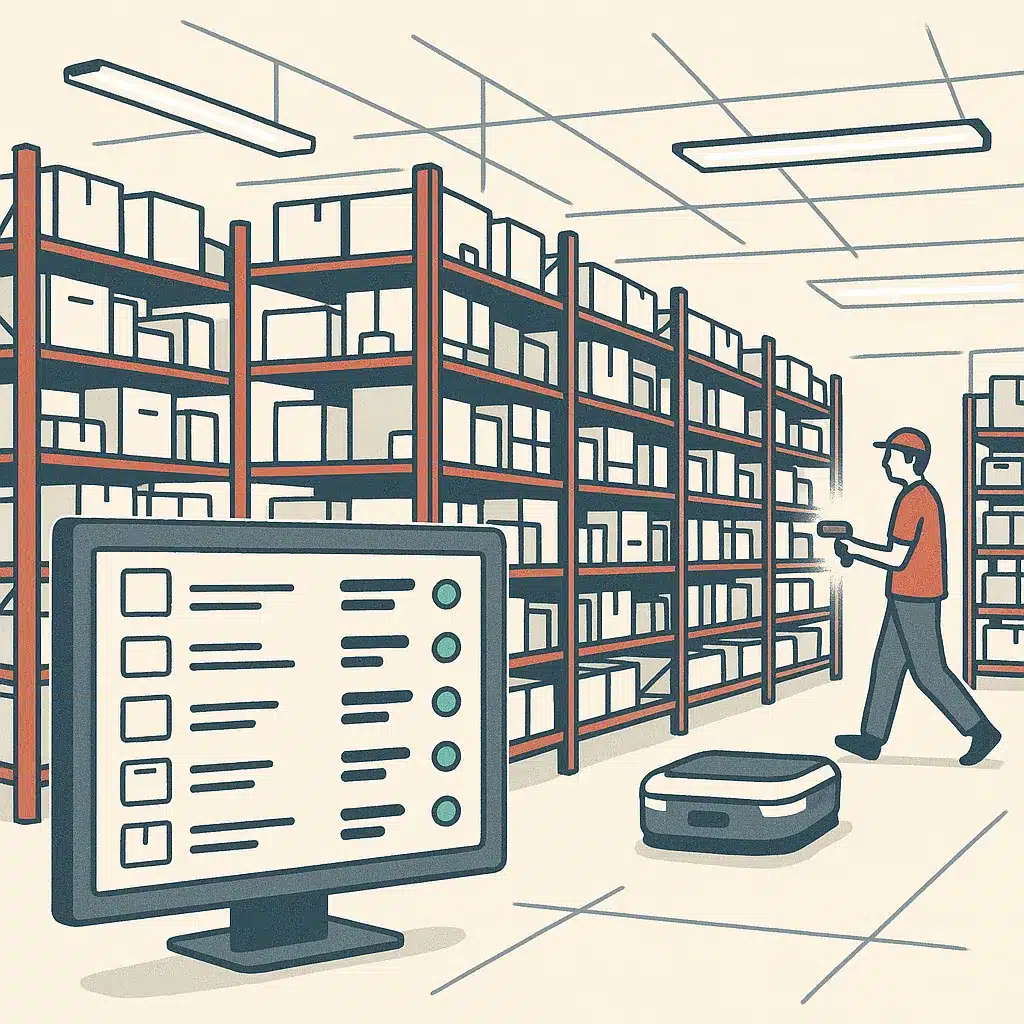
Once demand is forecast, the next manual bottleneck is turning those numbers into stock decisions across locations. AI in retail automates allocation and replenishment. It matches predicted demand to each store's shelf, warehouse, and supplier lead times. Real-time inventory management means the system flags a low-stock SKU and drafts the reorder before a human notices the gap. This is where inventory management shifts from reactive counting to continuous adjustment through AI workflow automation that removes repetitive work. The payoff can be fewer stockouts on fast movers and less capital frozen in slow ones. For multi-location retailers, automated allocation also helps with a classic problem. One store drowns in inventory while another two miles away runs dry, and no staff time goes to rebalancing transfers.
Dynamic pricing, promotions, and markdown automation
Manually adjusting prices across a large catalog is slow, and delayed markdowns leave money on the table. Dynamic pricing uses ai for retail to adjust prices based on demand, competitor moves, inventory age, and margin targets. The root cause of most pricing loss is timing. A markdown applied two weeks late clears far less inventory at a worse margin. Automated markdown logic triggers the right discount at the right moment, and dynamic pricing tests promotions in near real time rather than waiting for a quarterly review. A common misconception is that dynamic pricing means constant, aggressive changes. In practice, most retailers set guardrails so the system only moves within approved ranges. That keeps pricing consistent with brand positioning while removing the manual work of repricing thousands of items.
Supply chain and fulfillment orchestration
The gap between "order placed" and "product delivered" is full of manual handoffs: choosing a warehouse, splitting shipments, rerouting around delays. Supply chain optimization uses AI to make these decisions automatically, weighing cost, speed, and stock location in one pass. Order orchestration then routes each order to the fulfillment point that ships fastest and cheapest. That can reduce split shipments and manual overrides. When a supplier delay hits, the system reroutes and updates promised dates without someone rebuilding the plan. This kind of supply chain optimization matters most for retailers juggling stores, warehouses, and drop-ship partners at once, where a single order can be fulfilled a dozen different ways. The result can be fewer late deliveries and better operational efficiency across logistics exceptions.
In-store operations, layout optimization, and surveillance
Physical stores create operational blind spots that data alone can't see. Computer vision helps fill them. Cameras track foot traffic, dwell time, and shelf gaps, turning in-store operations into measurable data. Instead of a manager walking the floor to spot empty shelves, the system flags them and generates a restock task. Layout optimization uses the same traffic data to test where products actually sell, replacing guesswork about placement. These store operations tools also feed customer insights back into merchandising. Decisions about endcaps and adjacencies then rest on what shoppers do, not what a planogram assumes. For multi-location chains, standardizing this across sites removes hours of manual auditing and shows leadership how each store performs.
Fraud detection and loss prevention automation
Retail fraud rarely announces itself. It hides in patterns no human reviews at scale. AI-driven fraud detection scans transactions in real time, flagging anomalies like unusual refund velocity, mismatched shipping data, or account takeover signals. With monthly U.S. retail sales data showing the sheer transaction volume retailers process, manual review can struggle to keep pace. The mechanism is pattern recognition. The model learns what normal behavior looks like for your store, then surfaces the outliers for review. This applies to both online payment fraud and in-store loss prevention, where computer vision helps spot suspicious activity at self-checkout. Automated fraud detection matters because manual review can struggle to keep pace with transaction volume, and every missed case is direct margin lost. Fraud rules and data-handling requirements vary by jurisdiction. Check your local consumer-protection and payment-compliance regulations, and confirm any approach with a qualified professional before deploying it.

Product content and catalog intelligence automation
Writing product descriptions, tagging attributes, and cleaning up duplicate listings is grinding, repetitive work that scales badly. Generative AI handles catalog intelligence by drafting descriptions, standardizing attributes, and filling missing fields across thousands of SKUs. What used to take a content team weeks can become a review-and-approve task. Catalog intelligence also catches inconsistencies, like the same product listed under three different category names, that quietly hurt product discovery. Here is why clean catalog data matters: recommendation engines and search ranking are only as good as the attributes feeding them. Messy catalogs cap the value of every other retail ai investment. Automating this removes a stubborn source of manual work while making products more findable and supporting operational efficiency across teams.
Retail media and marketing automation
Retailers sitting on first-party purchase data have a marketing asset most don't fully use. AI in retail turns that data into targeted campaigns, automating audience segmentation, ad placement, and creative testing. Retail media networks let stores monetize their own sites by serving relevant sponsored placements, and AI decides which products to promote to which shopper. Business workflows handle the repetitive parts: scheduling, A/B testing, and pausing underperforming ads without manual monitoring. The practical win is that small marketing teams can run campaigns at a scale that used to require an agency. Combined with the customer insights already flowing from recommendations and store operations, this closes the loop between what shoppers buy and what they see next.
The data foundation and system integration needed to make retail AI work
Here's the uncomfortable truth: most retail AI failures aren't AI problems, they're data problems. If your POS, inventory, and e-commerce systems don't talk to each other, no model can forecast accurately or personalize well. The root cause is fragmentation. Sales data sits in one tool, stock in another, customer records in a third, and none are reconciled. Artificial intelligence in retail depends on connected, clean inputs, which is why integration usually matters more than the model itself. That is also why bolting on another disconnected platform rarely helps. Bespoke Mind Ai focuses on mapping business workflows and connecting existing systems first, delivering custom AI solutions built around how your store actually operates so ai agents act on accurate data instead of guessing from silos. Get the foundation right and the rest tends to compound.
How to identify which retail tasks are worth automating first
Not every task deserves automation, and chasing the wrong ones wastes budget. The filter is simple: look for work that is high-frequency, rule-heavy, and repetitive. A task done fifty times a day with clear logic is a far better candidate than a rare judgment call. Start by mapping where your team loses hours to manual work, then find the operational bottlenecks that repeat. Consider a retailer whose staff spend twelve hours a week compiling supplier reports. That single workflow can pay for itself fast. With retail trade employment and wage data confirming how much staff time and payroll go into these repetitive tasks, the case for prioritizing them becomes concrete. Many owners assume they should automate the most visible problem. In reality, the highest automation roi often hides in dull back-office tasks nobody talks about. Rank candidates by frequency times time-per-task, and start at the top. If you're unsure where to begin, it helps to find out what your retail operation can automate before committing budget.

Custom-built retail workflows vs off-the-shelf retail AI tools
- Designed around specific business operations
- Adapts to unique fulfillment rules
- Avoids operational bottlenecks
- Ideal for core competitive workflows
- Fast to deploy for common problems
- Suitable for standardized tasks
- May force workarounds for unique needs
- Not ideal for complex or unique workflows
Off-the-shelf retail AI tools are fast to deploy and fine for common, standardized problems like generic chatbots or basic forecasting. The trade-off is that they assume your business works like everyone else's, and most retail businesses don't. Say your model has quirks, unusual fulfillment rules, a specific approvals chain, or legacy systems. Then off-the-shelf software forces your team to work around the tool and creates fresh operational bottlenecks. Custom-built systems flip that. The business workflows are designed around how your business actually operates. The honest answer is that neither is universally better. Use off-the-shelf for standard, low-differentiation tasks. Choose custom-built systems when a workflow is core to how you compete, or when off-the-shelf tools leave manual work in the gaps.
Measuring ROI and time savings on retail automation
Automation roi you can't measure is just a hopeful expense. Before deploying anything, record a baseline: hours spent on the task, error rate, and any direct cost like overstock or missed sales. After deployment, measure the same numbers. The clearest wins often show up as time savings on repetitive tasks. One small retailer documented saving 50+ hours per month after automating reporting, order follow-ups, and stock alerts. Track error reduction too, since fewer stockouts and pricing mistakes can convert to margin. Be realistic: results vary based on your existing processes, complexity, implementation, and team adoption. Measure one narrow use case against its baseline, prove the time savings, then expand where the numbers hold up rather than betting on a broad rollout.
If repetitive back-office work is slowing your team down, a discovery call can help identify which tasks are worth automating first and what the realistic payoff might look like. Bespoke Mind Ai builds custom AI workflows and agents around how your business actually operates, so you can see how custom automation fits your operations before committing to a full build.
Frequently Asked Questions
How is AI actually used in retail?
Retailers apply machine learning, computer vision, and generative AI to forecast demand per SKU, personalize product recommendations, adjust dynamic pricing, and detect empty shelves in real time. The most common starting point is inventory forecasting and customer-facing recommendation engines, which is where 92% of retailers report investing according to Salesforce.
How does AI-driven inventory management differ from traditional methods?
Traditional inventory relies on manual stock counts, spreadsheets, and fixed reorder points that update periodically. AI systems continuously factor in weather, local events, and demand signals to predict stock down to individual SKUs per store, reducing both overstock and out-of-stock situations.
Which AI tools work best for retail businesses?
For demand forecasting and replenishment, Blue Yonder Demand Edge and RELEX Solutions are strong for multi-location chains and grocery. For customer service, platforms like Zowie and eesel handle high-volume support:but the right tool depends on where your business actually loses money, not on tool rankings.
Is AI worth the investment for a small retail store?
It can be, but only for the right use cases. One small retailer reported saving 50+ hours per month after automating reporting, order follow-ups, and stock alerts:the payoff comes from targeting repetitive, high-frequency tasks rather than buying broad AI platforms.
What if AI gives inaccurate demand forecasts?
AI forecasts degrade when trained on poor or incomplete sales data, so accuracy depends on clean, connected inputs. Start with a narrow scope, measure results against your current baseline, and expand only where the system consistently beats your existing planning.
Do I need to replace my existing retail systems to use AI?
No:most retail AI works by connecting to your existing POS, inventory, and e-commerce data rather than replacing them. The goal is systems that work together to remove manual effort, not adding another disconnected platform to your stack.
Where does AI deliver the fastest ROI in retail operations?
The quickest returns typically come from automating repetitive back-office work: demand forecasting, automated reordering, customer support responses, and sales reporting. These tasks are high-frequency and rule-heavy, so automation compounds time savings quickly.
Will AI replace retail staff?
AI tends to remove repetitive tasks like restock alerts, reporting, and routine customer queries rather than entire roles. Staff shift toward higher-value work:handling complex customer needs, merchandising decisions, and exceptions the system flags.