

A founder finally decides to fix the manual reporting that eats six hours every Monday. They open their laptop to hire help and hit a wall: bring in a solo ai consultant, or a full agency? The answer changes the timeline, the cost, and whether the fix actually sticks. This article breaks down what each option delivers, what they charge, how to vet them, and which one matches how your business actually runs.
AI consultant vs. AI agency: the core difference explained
- Solo expert for focused advice
- Works sequentially on one issue
- Lower entry cost for specific problems
- Limited post-launch support
- Team for multiple projects at once
- Works in parallel across tasks
- Higher costs but broader support
- Ongoing support after project launch
The short version: a solo ai consultant is one experienced person you hire for focused advice and hands-on work. An ai agency is a team that can design, build, deploy, and maintain multiple systems at once. Both fall under ai consulting services, but they solve different problems. If you're still weighing the two paths, it helps to first understand what an ai solutions consultant does and what it costs before comparing it against a team-based model.
A consultant is usually the right call when you have one clear bottleneck and want deep, direct attention on it. An ai consulting company or ai agency makes sense when several parts of your business operations need attention in parallel, or when you want ongoing support after launch. The difference isn't quality, it's capacity and structure. On the agency side, it's worth understanding what an AI automation agency actually does before assuming that model fits your situation.
The reason the choice matters so much comes down to how the work moves: a solo consultant works sequentially, so a single person becomes the ceiling on how many problems can move at once, while an agency splits the work across specialists. Get that mismatch wrong and either you overpay for coordination you don't need, or you starve a multi-front project of the hands it requires.
Independent research on ai adoption backs the shift toward practical, operations-led work. The McKinsey Global Survey on the state of AI shows adoption climbing fastest where companies tie AI to specific functions rather than sweeping transformation. Pick the option that matches your problem's shape, not the hype around it. That caution is echoed in Gartner's research on AI vendor hype and adoption pitfalls, which points to why fit matters more than marketing claims when choosing a partner.
What an AI consultant actually does (scope of engagement)
A good ai consultant starts by mapping how work actually flows, not by recommending tools. The first deliverable is often an ai readiness audit: a plain-English look at where manual work piles up, which systems don't talk to each other, and where automation might pay back fastest. Only then does the scoping happen.
From there, the engagement type varies. Some clients want strategy only. Others want a machine learning consultant to build a workflow automation that routes leads or drafts reports. The strongest engagements combine both: diagnose, then build. That's what separates an ai solutions consultant from someone who hands over a document and leaves.
Many stalled AI projects didn't fail on the technology. They often failed because nobody scoped the fix around the existing workflow. A consultant's job is to close the gap between "we should use AI" and "here is a system aimed at removing hours of admin a week."
Many owners assume the hard part of an AI project is the model or the tool. In reality, the tooling is rarely the constraint: the failure point is often the workflow around it, because a system that ignores how a team already works can be quietly abandoned even when the underlying technology is capable. That is why scoping against the real process comes before any build.
The U.S. Small Business Administration publishes practical guidance on technology adoption for smaller operators, a useful reference before scoping any ai implementation engagement.
What an AI agency delivers (design, build, deploy, run)
An ai agency operates as a team, which changes what you get. Instead of one person balancing strategy and build, you have specialists: someone for ai strategy, someone for custom ai solutions development, someone for ai deployment and ongoing support. This lets an agency run several workstreams at once.
The typical ai agency engagement covers the full arc: design the system, build it, deploy it into live business operations, then run and refine it. That last phase matters. An ai chatbot or ai agents setup needs monitoring and tuning after launch, and an agency has the bench to keep it healthy.
Agencies also tend to handle generative AI and agentic AI builds more comfortably, since those systems benefit from a team watching them in production. The reason is that these systems can drift: their behavior may shift as inputs, data, and edge cases change, so they often need someone actively watching and adjusting rather than a one-time setup. That's another reason broader ai consulting services often sit with a full team rather than one person. A boutique ai consultancy sits between the two models: small enough for founder access, structured enough to build and maintain internal tools and process automation end to end.
The trade-off is overhead. You pay for coordination and account management alongside the actual build. That's worth it when the scope is broad, less so for a single narrow fix.
Head-to-head comparison table: consultant vs. agency
- Best for urgent, single bottlenecks
- One person, sequential work
- Lower hourly rates
- Direct founder access
- Best for multiple priorities
- Team-based, parallel workstreams
- Scoped project pricing, often higher
- Built-in post-launch support
Here's the practical breakdown. Most decisions come down to how many problems you're solving and whether you need someone to stick around after launch.
| Factor | Solo AI consultant | AI agency / consultancy |
|---|---|---|
| Best for | One urgent bottleneck, focused advice | Multiple priorities, ongoing build and run |
| Capacity | One person, sequential work | Team, parallel workstreams |
| Typical cost | $75 to $250+ hourly rates | Scoped project pricing, often larger |
| Post-launch support | Limited, ends with engagement | Built in: monitoring, tuning, run phase |
| Founder access | Direct, always | Direct at boutique scale, less at large firms |
A solo ai consultant gives you depth on a single issue at a lower entry cost. An ai consulting company gives you breadth and continuity. Neither is "better" in the abstract. Consider a retailer fixing one broken lead-follow-up flow: an agency is rarely needed there. A multi-location service business rebuilding reporting, scheduling, and email triage at once probably needs one. Match the structure to the workload, and the cost math usually sorts itself out.
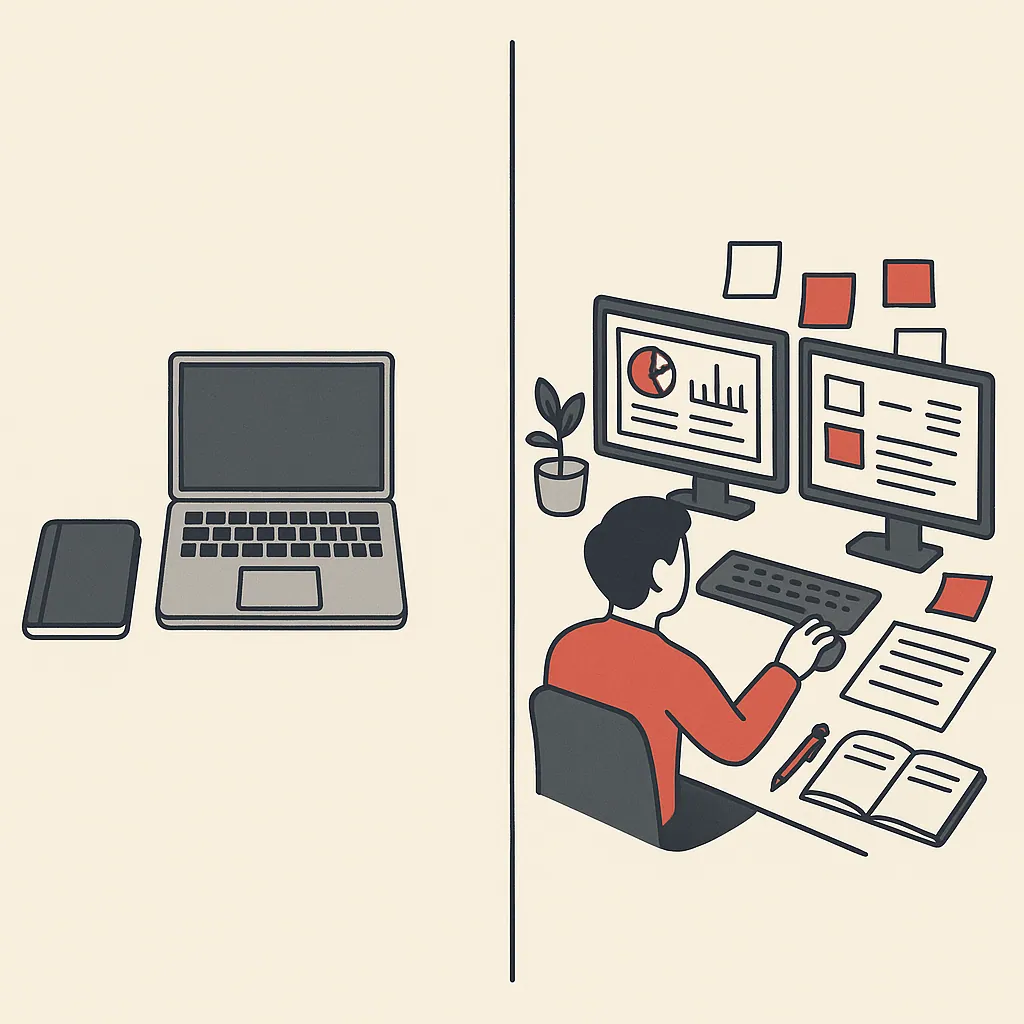
Cost and pricing comparison (rates, project pricing, engagement models)
Money is where the decision gets real. Independent AI consultants in the US commonly bill $75 to $150 per hour for generalist work. Specialists in areas like agent deployment or LLM systems charge $200 to $250+ per hour, and boutique firms often run $150 to $300 per hour.
For larger scoped work, ai consulting rates shift to project pricing. Understanding typical ai consulting rates upfront helps set expectations before scoping begins, and reviewing custom AI development services, scope, and cost is a good way to see how that pricing breaks down in practice. Enterprise engagements often land between $200,000 and $500,000 depending on complexity. That range scares off SMBs, but it shouldn't: most smb ai builds sit well below it, because the scope is one or two workflows, not a company-wide ai transformation.
Three common engagement type models exist: hourly rates for advisory and small tasks, fixed project pricing for a defined build, and retainers for ongoing run and support. Pick based on how well-defined the work is. A vague problem suits hourly discovery first; a clear spec suits fixed pricing. The logic behind this is that fixed pricing only protects you when the scope is fixed too: pay a flat fee for a fuzzy problem and either the vendor pads the estimate for risk or you both fight over what "done" means later.
On the ai consultant salary question people ask about: staffing an in-house role costs far more than one build, once you add recruiting, benefits, and ramp time. For a single scoped problem, engaging outside help can often cost less than the delay of hiring.
It helps to picture how these models play out. Take a common case: a services firm wants to automate quote generation but can't yet describe every exception in the process. Starting on hourly discovery to map those exceptions, then switching to a fixed price once the spec is clear, avoids the trap of locking in a number before anyone knows what the build actually involves, and it keeps the early cost proportional to the uncertainty.
Skills, expertise, and delivery capacity of each option
Skills matter, but capacity often shapes the outcome. A solo ai consultant can be strong and still be one person: work happens sequentially, and a sick week can stall the project. An ai agency trades some of that direct depth for parallel delivery and redundancy.
Look for a mix of two skill sets in either option. First, technical fluency: workflow automation, data pipelines, and the ability to build custom ai solutions rather than resell a subscription. Second, operations thinking: the ability to spot bottlenecks and design process automation that fits how a team actually works.
A pure technologist may build something clever that nobody uses. A pure strategist may recommend ai solutions consultant ideas that never get built. Operational efficiency tends to come from both together.
For enterprise ai programs with many moving parts, an ai consulting company with a full team often has an edge on capacity. For a focused fix where ai adoption hinges on getting one system right, a skilled individual or boutique ai consultancy can deliver faster and closer to the ground.
Credibility and proof points: how to vet either option
Look past the pitch deck. Ask for a case study that names a specific problem, the system built, and the measurable result: hours saved, reporting improved, response times cut. Vague claims of "AI-powered results" tell you little. A real proof point tells you whether they solve problems like yours.
The more useful signal isn't a big client logo. It's whether they can explain, in plain language, how a past ai implementation removed manual work and what changed operationally. If they can only talk in buzzwords, that's a warning sign for both a solo ai consultant and an ai agency.
Also test their discovery process. A serious operator asks about your business operations before proposing anything. If the first conversation jumps straight to a tool recommendation, they're selling software, not solving the underlying problem. The reason discovery predicts outcomes is simple: a fix scoped without understanding your process is a guess, and a guess can stall in production months later.
Finally, ask what happens after ai deployment. Who monitors the ai chatbot or ai agents once they're live? Clear answers on ownership, handover, and support separate a real partner from a one-and-done vendor.
Certifications and credentials, do they matter when choosing?
Certifications help, but they don't decide the outcome. A certified ai consultant with a recognized ai consulting certification signals baseline knowledge, which reassures buyers without a technical team. It's a floor, not a ceiling.
No credential proves someone can fix your specific bottleneck. The strongest evidence is demonstrated work: automation that cut hours, an internal tools build that gave leaders visibility they didn't have before. Certifications show effort and current knowledge; delivered roi shows capability.
Where credentials genuinely matter is in regulated or data-sensitive contexts. If your ai implementation touches customer data, healthcare records, or financial information, formal training and compliance awareness reduce real risk. Rules here vary widely by industry and by jurisdiction: data-protection, healthcare, and financial regulations differ from one country and state to the next, so verify requirements with the relevant regulator or a qualified professional before scoping anything sensitive. Treat any general guidance, including this article, as a starting point rather than a substitute for advice on your specific obligations.
For most SMB workflow automation work, weigh a portfolio of real outcomes above any single ai consulting certification. Ask both the individual consultant and the ai consulting company to show the work, not just the wall of badges.
Selection criteria: how to decide which fits your business
Start with a blunt question: how many problems are you solving right now? One clear bottleneck points toward a solo ai consultant. Several overlapping issues, or an ongoing need, point toward an ai agency.
Then run these selection criteria in order. First, scope clarity: a well-defined problem suits fixed project pricing; a fuzzy one suits hourly discovery. Second, timeline: if you need a working pilot in weeks, favor whoever can start fast and dedicate attention. Third, post-launch needs: if the ai deployment must be monitored and tuned, an ai consulting company with a run phase fits better.
Fourth, and this is the one people skip, chemistry with the person doing the work. Ai adoption tends to succeed or fail on whether your team trusts and uses the system. A consultant who listens beats a polished agency that doesn't. The mechanism is behavioral, not technical: an automation only saves time if people actually route their work through it, and a team can quietly revert to the old manual steps if the new system feels imposed rather than fitted to them.
Picture a distribution company managing a heavy load of manual order entry. One scoped workflow automation build, delivered by a focused operator, might help reclaim hours each week. That's a consultant-shaped problem. Match the structure to the work, not to who has the nicer website.
Pros and cons: who each option is best for
A solo ai consultant tends to win on cost, focus, and direct access. You work with the person actually building your custom ai solutions, decisions move fast, and hourly rates stay lower. The downside is capacity: one person can't run five projects, and support after launch is often limited.
An ai agency tends to win on breadth and continuity. Multiple specialists tackle ai strategy, build, and run in parallel, and someone stays on to maintain your ai agents and internal tools. The trade-off is overhead and, at larger firms, less founder access. You may deal with an account manager instead of the builder.
Who each fits: a solo consultant suits founders with one pressing bottleneck and a tight budget. An ai agency or boutique ai consultancy suits growing teams with several priorities and a need for ongoing support. A smb ai buyer often does well with a boutique option, small enough for direct access, structured enough to build and maintain.
The honest answer is that neither replaces your team. Both work best when they reduce manual work so your people can focus on higher-value tasks. And both have a failure mode worth naming: a consultant can leave you with a system nobody on staff can maintain, and an agency can wrap you in process that slows a simple fix. Ask upfront who owns the system after handover, and how quickly small changes actually get made.
Enterprise vs. boutique/SMB fit for AI consulting
- Involves many stakeholders
- Requires large consulting firms
- Higher six-figure project pricing
- Complex compliance and legacy systems
- Focuses on one or two workflows
- Faster to start and closer to operations
- Lower costs for small builds
- Avoids unnecessary enterprise overhead
Scale changes the math. Enterprise ai programs involve many stakeholders, legacy systems, and compliance layers, which favors a large ai consulting company with the headcount to coordinate all of it. The cost reflects that: six-figure project pricing is normal at this level.
Smb ai works differently. A smaller business rarely needs a full ai transformation; it usually needs one or two workflows fixed well. Handing that to a large enterprise firm often means overpaying for process and account management you don't need. A boutique ai consultancy or a focused ai consultant usually fits better: faster to start, closer to your operations, priced for your reality.
Mismatched engagements usually trace back to buying by brand size instead of problem size. A ten-person service firm doesn't need enterprise infrastructure. It needs a working ai chatbot on the site and automated lead routing. The reason large firms cost more for the same small build is structural, not greedy: their overhead assumes multi-stakeholder coordination and layered account management, and you pay for that machinery whether your project needs it or not.
Bespoke Mind Ai works in exactly this middle ground, designing and deploying custom ai solutions, workflow automation, and ai agents built around how SMB and mid-market operations actually run, rather than reselling generic tools. If this boutique model sounds like the right fit, it's worth seeing how Bespoke Mind AI works from discovery to deployment before reaching out.
ROI and measurable outcomes as the deciding factor
Strip away the noise and one thing tends to decide which option to pick: measurable roi. Not "we adopted AI," but "we saved twelve hours a week" or "reporting that took a day now takes an hour." Whichever option can commit to a clear before-and-after is generally the safer bet.
Define the metric before the engagement starts: hours of manual work removed, faster lead response, fewer errors, better visibility into business operations. A serious ai consultant or ai agency will help you name the metric, then scope the build to move it.
Be realistic, though. Results depend on your existing processes, business complexity, quality of ai implementation, and team adoption. Anyone guaranteeing a specific roi figure before understanding your workflows is worth questioning closely.
The practical way to reduce risk is to start with a scoped pilot tied to one metric. A pilot that delivers real operational efficiency on a single workflow automation can build the confidence, and the internal buy-in, to expand. That's often how sustainable ai adoption happens: one measurable win at a time, rather than one giant bet.

Custom builds vs. off-the-shelf and generic automation
- Tailored to specific business needs
- Fits unique workflows and exceptions
- Reduces manual work effectively
- Higher initial cost but long-term savings
- Cheaper and faster to implement
- Best for standard needs
- Can lead to manual work gaps
- May require multiple tools for one process
The custom vs off-the-shelf question sits underneath the whole consultant-versus-agency decision. It's worth settling the custom vs off-the-shelf trade-off before choosing who builds anything. Off-the-shelf software is cheaper and faster to switch on, and for standard needs it's the right call. The problem starts when your workflow doesn't match the tool's assumptions.
Generic automation often breaks down at the seams between systems, the exact spots where SMB manual work lives. The reason is that off-the-shelf tools are built for the average case, so the moment your process has a step or an exception the tool didn't anticipate, someone has to bridge the gap by hand, which is exactly the manual work you were trying to remove. Custom ai solutions earn their cost when the fix has to fit how your business actually operates: your data, your steps, your exceptions. That's the case for an ai consultant or ai agency over a subscription.
A common pattern: teams buy three tools to cover one process, then spend hours copying data between them. Custom process automation and internal tools aim to remove that gap by connecting what already exists. The goal isn't more software. It's less manual work.
The honest test is simple. If a standard tool solves 90% of your problem, buy it. If the last 10%, the part unique to your operations, is what actually costs you time, that's where a custom build pays off. This is where an ai consultant earns their keep: diagnosing whether your problem is the common 90% or the costly last 10% before anyone spends money building.
If repetitive manual work is slowing your team down, a discovery call with Bespoke Mind Ai can identify which workflows are worth automating first and where a custom build would pay back fastest. No pressure, no hype, just a practical look at your operations and where AI actually fits.
Frequently Asked Questions
What does an AI consultant actually do day to day?
An AI consultant diagnoses where manual work and bottlenecks are costing a business money, then designs and helps deploy the automation, chatbots, or internal tools to fix it. The job sits between strategy and hands-on build, mapping workflows first, then scoping a specific implementation rather than handing over a generic slide deck.
Is hiring an AI consultant actually worth it, or can I just buy software?
It's worth it when you already know the operational problem (slow lead follow-up, manual reporting, founder bottlenecks) but don't have the internal expertise to fit AI to your existing systems and data. If you just need a generic tool switched on, off-the-shelf software is cheaper, consultants earn their fee when the fix has to be built around how your business already runs.
What if my team already tried AI and it didn't work?
That's one of the most common reasons businesses bring in a consultant, pilots that stall usually failed because they were bolted onto workflows rather than built around them. A consultant's first job in that case is usually a short readiness audit to find why the earlier attempt didn't reach production, not to restart from scratch with new software.
How much do AI consultants charge?
Independent AI consultants in the US typically bill $75-$150 per hour for generalist work, with specialists in areas like agent deployment or LLM systems charging $200-$250+ per hour. Boutique firms often run $150-$300 per hour, while scoped project engagements commonly land between $200,000 and $500,000 depending on complexity, though smaller SMB-focused builds are typically priced well below that range.
What is this '$900,000 AI job' people are talking about?
It refers to a small number of highly specialized AI roles, usually senior applied-AI or research leadership positions at large tech companies, commanding total compensation near $900K, not a typical consulting engagement. For most SMBs and mid-market businesses, actual AI consulting costs and freelancer rates look nothing like these outlier enterprise salaries.
How do I become an AI consultant?
Most AI consultants build credibility through a mix of technical fluency (machine learning, data pipelines, automation tooling) and direct experience solving business operations problems, not through certifications alone. The stronger path is proving measurable outcomes on real projects, automation that cut hours or improved reporting, since clients hire for demonstrated ROI, not credentials.
What's the real difference between hiring a solo AI consultant and a full agency?
A solo consultant typically focuses on one or two priorities with hands-on, custom-fit work at a lower hourly rate, while an agency can run multiple workstreams in parallel with more account management overhead. The right choice depends on whether you need deep focus on a single bottleneck or broader coverage across several operational areas at once.
What happens if I skip a consultant and just build AI in-house?
Building in-house usually takes 6-18 months to reach full productivity once you factor in hiring, onboarding, and infrastructure setup, versus roughly 6-12 weeks for a consultant to deliver a working pilot. In-house teams can pay off long-term for companies running continuous AI development, but for a single scoped problem, that ramp-up time often costs more than the consulting engagement itself.