

Your team logs into six different tools before lunch. They copy the same customer data between three of them, then miss a follow-up that costs you a deal. That gap between the software you own and the work that gets done is exactly where an ai automation agency lives. This article breaks down what these agencies do, the services they offer, and how pricing works. It also shows whether you need one, or whether building in-house makes more sense.
What an AI automation agency actually is (plain-English definition)
So what is an ai automation agency? It's a partner that designs, builds, and runs systems that handle repetitive work for you, not one that recommends tools and leaves. Think of the difference between a consultant who writes a report and a builder who hands you a working system. These teams pair business process thinking with modern AI to remove manual work, connect systems, and give leaders better visibility. For a grounded view of where automation genuinely applies, the McKinsey Global Institute automation research is a useful reference point. The best builds focus on AI workflow automation that removes repetitive work rather than layering on more tools.
Why businesses are turning to AI automation agencies
The pressure is simple: growth creates operational complexity faster than most teams can hire. Repetitive tasks pile up, information scatters, and too much knowledge sits with one founder. AI automation agencies exist because off-the-shelf software rarely solves workflow problems across multiple systems, since each tool works alone, not to share data. The Microsoft Work Trend Index has documented how much time employees lose to admin work. This shift isn't passing either; Gartner's forecast on enterprise generative AI adoption signals that business process automation is becoming standard practice.
Core services an AI automation agency provides
Most ai automation agencies group their ai services into a few practical categories: workflow automation to remove repetitive steps, business process automation across departments, custom ai agent development, and internal tool development for the gaps generic software leaves. Many also handle systems integration, connecting your CRM, billing, and scheduling so data flows without a human copying it. The point isn't a menu of features. It's picking the ai automation services that clear a specific bottleneck. A strong agency starts with the operational problem, not the technology, then scopes a build around how your team works.
AI readiness assessment and strategy
Before anyone builds anything, a good agency runs an ai readiness assessment: an honest look at your current processes, data quality, and where manual work is concentrated. It answers a blunt question: which tasks are worth automating, and which aren't ready yet? Bespoke Mind AI runs ai readiness audits and ai consulting that map where your time actually goes. That ai consulting produces an ai strategy targeting real operational bottlenecks instead of guessing. If you're unsure how to begin, this is exactly where to start with bespoke AI solutions.
Custom AI workflow development and process automation
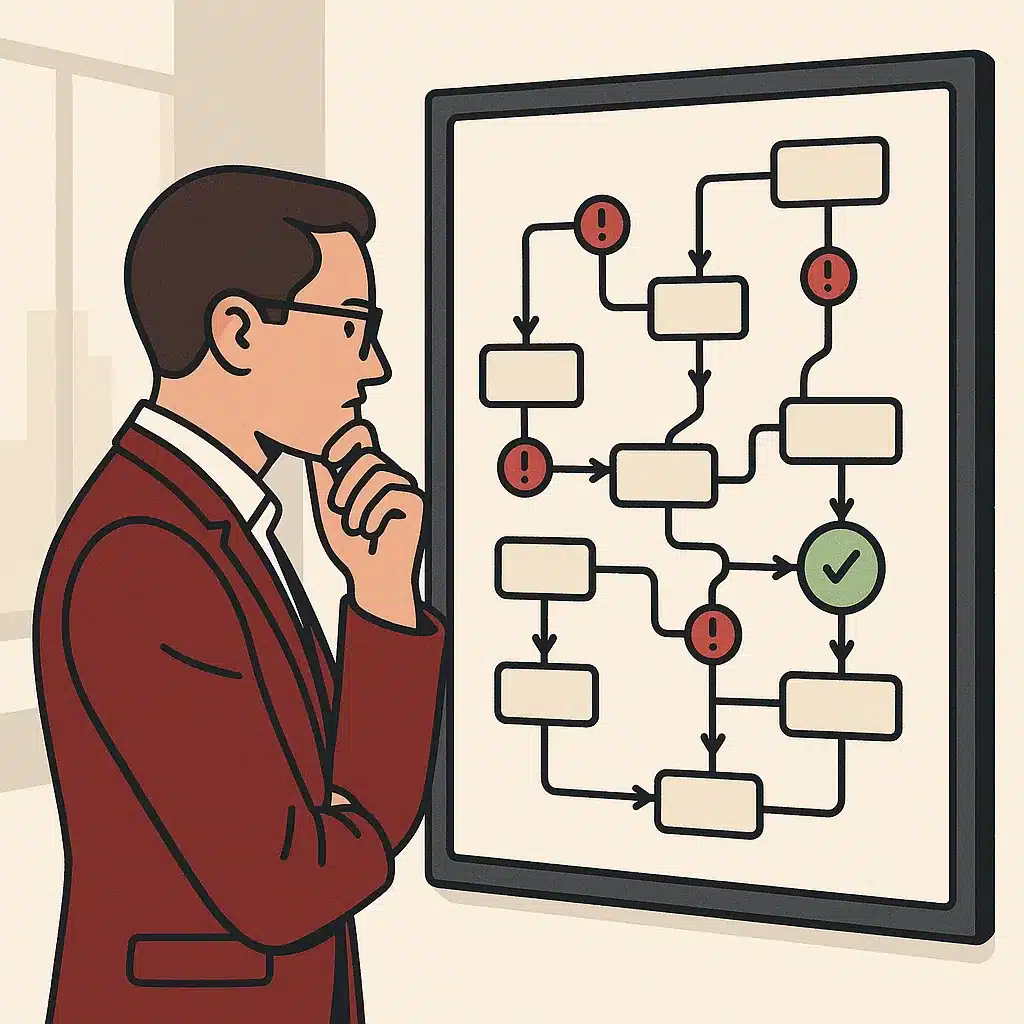
This is the core of the work. Custom ai workflow development means building automations shaped around your exact steps, not forcing your team into a rigid template. Picture a service firm that manually re-keys every intake form into its CRM and billing tool, losing hours a week and introducing typos that reach the invoice. Well-built workflow automation captures that data once and pushes it everywhere it needs to go. Business process automation built through proper mapping can deliver real time savings because it matches reality, not a vendor's assumptions.
AI agent design and deployment
AI agents are systems that handle a task with some judgment, not just follow a fixed rule. Ticket triage, lead qualification, first-draft responses, report generation: these are common jobs for ai agents. AI agent deployment isn't about buying the flashiest model. It's about choosing or building the right agent for a specific task and your existing stack. What matters is where the agent hands control back to a person. A well-designed agent knows its limits and escalates edge cases, which helps keep quality high while still removing manual work. This mirrors research on how humans and AI work best together, where the strongest results come from pairing people with automation rather than replacing them.
Systems and tools integration (connecting fragmented apps)
Most operational pain comes from disconnected systems. Sales lives in one tool, billing in another, support in a third, and nobody has a single view. Systems integration is the connective work that links these disconnected systems, so a change in one place updates the others automatically. This is where crm automation earns its keep. A closed deal can trigger onboarding, invoicing, and a welcome sequence without anyone touching a keyboard. Clean integration is often the highest-value work that lifts operational efficiency.
How an AI automation agency engagement works (step-by-step process)
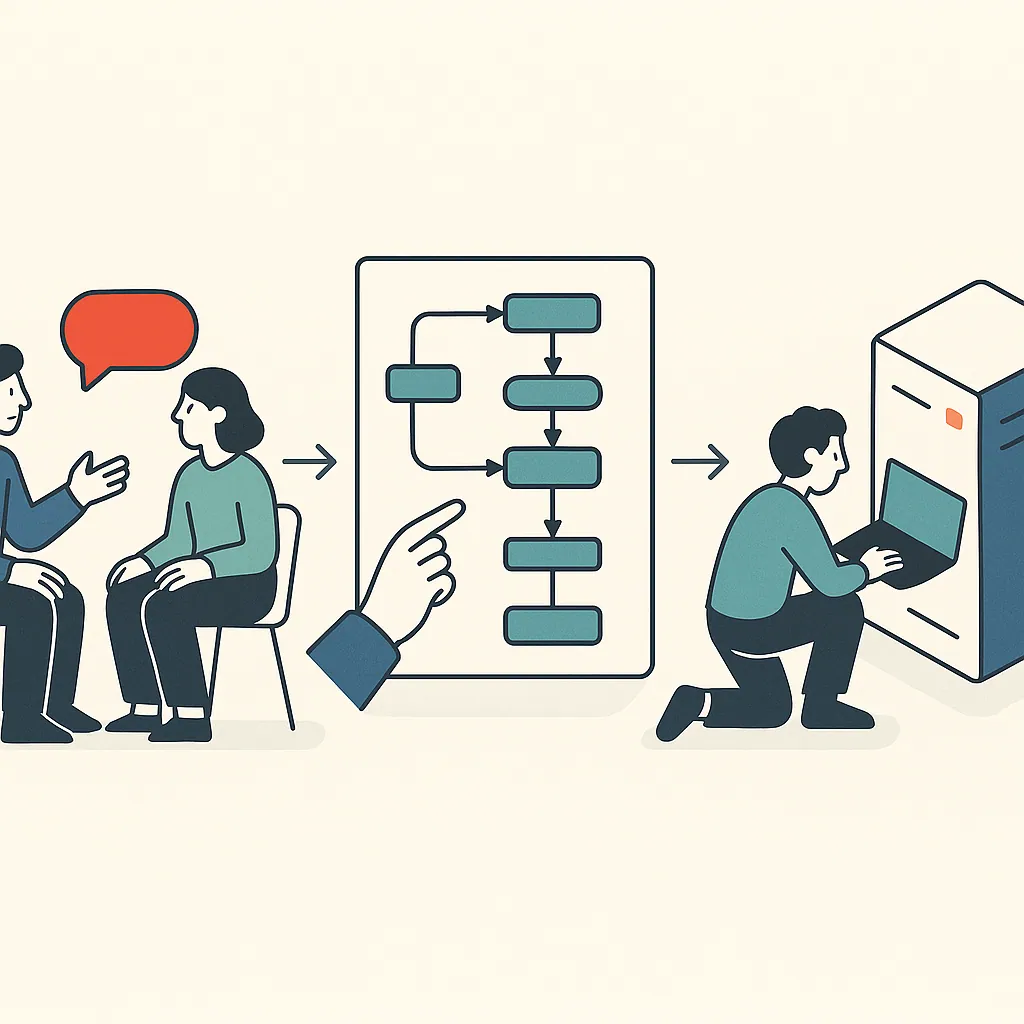
Engagements usually follow a clear arc. First, a discovery call to understand the business challenge. Then an assessment and process mapping to document workflows, data sources, outputs, and approval points. Next comes a scoped build, where the agency develops and tests the custom ai solutions against that documented scope. After that, ai agent deployment and rollout, with your team trained on the new system. Many agencies then offer managed ai operations, adjusting the build as your processes change. If you want to see how our engagement process actually works, it follows this same discovery-to-build arc.
Types and tiers of AI automation (rule-based vs AI-powered vs autonomous)
- Follows fixed instructions for tasks
- Reliable for predictable, repetitive tasks
- Ideal for moving data between systems
- Less complex, easier to maintain
- Adds judgment to handle variations
- Can read messy emails and extract details
- More complex than rule-based systems
- Requires more maintenance and oversight
Not all automation is the same, and the differences matter for cost and risk. Rule-based automation follows fixed instructions: if this happens, do that. It's reliable for predictable, repetitive tasks like moving data between systems. AI-powered automation adds judgment, handling variation such as reading a messy email and pulling out the right details. Autonomous ai agents chain several steps together and make decisions along the way. More autonomy isn't always better. The right tier is the simplest one that solves the problem, because complexity you don't need becomes maintenance you can't afford.
Who needs an AI automation agency
The clearest candidates are founder-led and scaling businesses drowning in manual work. If your team repeats the same tasks daily, if critical knowledge sits with one person, or if growth keeps creating new operational bottlenecks, an ai automation agency can help. Small business owners and operations managers at service firms, professional practices, and multi-location businesses tend to see the fastest payback and strong gains in operational efficiency. If your processes are low-volume, rarely repeated, or change every week, the case is weaker. Automation rewards consistency.
Common use cases across business functions
Use cases for ai span nearly every department, and the strongest ones share a pattern. In sales, lead follow-up and crm automation keep prospects warm without manual chasing. Marketing automation handles content pipelines, scheduling, and reporting, and that same marketing automation frees teams from routine reporting. HR automation speeds up onboarding and document collection. Financial automation covers invoicing, reconciliation, and expense routing. Support teams use custom chatbots and ticket triage to answer routine questions. Bespoke Mind AI builds end-to-end content pipeline automation for teams producing content at scale.
How AI automation agencies are priced
Ai automation agency pricing depends on scope, not a fixed rate card. A single workflow build costs far less than automating processes across several departments and systems. Common ai automation agency pricing models include project-based fees for a defined build, and monthly retainers for managed ai operations and ongoing adjustments. The more useful question isn't the sticker price but the return: how many hours of manual work does this remove, and how many errors does it prevent? Get the scope documented so pricing stays comparable across proposals.

AI automation agency vs generic automation or marketing agency
- Builds underlying systems and AI agents
- Creates infrastructure you own and maintain
- Focuses on long-term operational efficiency
- Delivers ongoing systems, not one-off solutions
- Runs campaigns and creative projects
- Connects apps without long-term support
- Focuses on short-term tasks and outputs
- Less emphasis on building sustainable systems
A marketing agency runs campaigns and creative. A generic automation shop might connect a few apps and move on. An ai automation agency does something different: it builds the underlying systems, ai agents, integrations, and internal tools that your operations run on. The output isn't a campaign or a one-off connection. It's infrastructure you own and keep. The practical test is whether the work leaves you with a system that keeps running after the engagement ends.
Why custom-built systems beat off-the-shelf software
Off-the-shelf software is built for the average customer, which means it fits nobody exactly. You bend your process to match the tool, and the awkward gaps become manual work again. Custom systems, not off-the-shelf software, are built around how your business actually operates. Custom AI solutions built around how you operate handle your specific exceptions, approval points, and handoffs. They also grow into scalable systems as you do, rather than hitting a ceiling the moment your workflow gets complex.
How to tell when you actually need an agency vs building in-house
- Requires expertise in operations and AI
- Needs bandwidth for building and maintenance
- Hidden costs in upkeep and system drift
- May lack support during critical deadlines
- Provides necessary expertise and resources
- Handles maintenance and system updates
- Offers support for urgent deadlines
- Can be more cost-effective in the long run
The in-house build vs development partner decision comes down to three things: expertise, time, and maintenance. The in-house build vs development partner call works out for you if you already have people who understand both operations and ai automation, with bandwidth to build and maintain it. Most small business owners don't. The hidden cost of an in-house build is upkeep. Systems drift as processes change, and someone has to own that. Weighing it honestly usually means asking who fixes it at 2pm on a deadline. If the answer is "nobody," a partner earns its cost.
If repetitive tasks are slowing your team down and you want a clear picture of what's worth automating, a discovery call is a low-pressure place to start. Talk to the team at Bespoke Mind AI about where an ai automation agency could remove manual work and improve operational efficiency in your business.
Frequently Asked Questions
What does an AI automation agency actually do?
An AI automation agency maps out your existing processes:things like data entry, approvals, invoicing, and support triage:and builds AI-driven systems to run them. Unlike pure consultants or software vendors, they deliver working automations and often maintain them over time, integrating tools like CRMs, calendars, and billing platforms through Zapier, Make, or custom builds.
How much does it cost to hire an AI automation agency?
Costs vary widely based on scope, from small workflow builds to full process automation across multiple systems. The more meaningful number is return: reported outcomes include a dental practice cutting no-shows from 15% to 6% to recover roughly $90K/year, and a marketing agency adding $12,600 in recurring revenue after automating outreach and CRM tasks.
Is hiring an AI automation agency actually worth it for a small business?
It depends on whether you have high-volume, repetitive tasks eating your team's time:those deliver the fastest payback. If your bottlenecks are manual data entry, follow-ups, or scheduling, automation typically pays for itself; if your processes are low-volume or constantly changing, the investment is harder to justify.
What's the difference between an AI automation agency and a traditional marketing agency?
A traditional marketing agency runs campaigns and creative; an AI automation agency builds the underlying systems:AI agents, integrations, dashboards, and workflows for lead follow-up, qualification, reporting, and scheduling. Automation agencies often hand over ownership of the infrastructure they build, so it keeps running without ongoing campaign fees.
What if the agency builds something and then it breaks or stops fitting how we work?
This is the main reason to define your workflows, data sources, and approval points in writing before signing:clear scope makes proposals comparable and reduces drift. Choose agencies that build around how your business actually operates and offer maintenance, since custom systems need adjustment as your processes change.
How do I choose the right AI automation agency for my company?
Start by documenting the exact workflows, outputs, and permissions you want automated, then prioritize problems with high volume, high error rates, or heavy manual effort. Shortlist agencies with relevant client work, ask vendor-evaluation questions about integrations and handover, and compare proposals against that written scope.
What's the best AI agent for automation?
There's no single best agent:the right tool depends on your systems and the task, whether that's ticket triage, lead qualification, or report generation. A good agency selects or builds the agent to fit your existing stack rather than forcing you onto a fixed platform.
Are large firms like Accenture or McKinsey the only credible options?
No:large firms like Accenture and McKinsey's QuantumBlack suit enterprise-scale transformation, but they're overkill for most SMBs. Smaller specialist agencies focused on custom builds are usually a better fit for founder-led and scaling businesses that need practical, scoped automation over strategy overhauls.