

A ten-person service firm spends roughly 15 hours a week copying data between a scheduling tool, a spreadsheet, and an invoicing app. Nobody chose that workload. It built up, one disconnected system at a time. That's the quiet tax most small operations pay, and it's exactly where AI solutions for small business earn their keep. This article walks through what these ai tools for small business actually do, how custom-built AI systems differ from off-the-shelf AI tools, and how to tell which approach fits the way your business already runs.
What AI solutions for small business actually are
Strip away the marketing, and ai tools for small business fall into two camps: off-the-shelf AI tools you subscribe to, and custom-built AI systems designed around your specific business workflows. The first group includes chatbots, writing assistants, and automation platforms that work out of the box. The second is tailored. AI agents and workflow automation are shaped to how your team actually operates. Both have their place. The U.S. Small Business Administration's guidance on AI for small businesses frames these tools as practical ways to automate repetitive tasks, not as replacements for judgment. The goal isn't more software. It's less manual work.
How AI works for small businesses (learning from data, adapting to workflows)
The short version of how AI works for small businesses: modern AI models read patterns in text, numbers, and past behavior, then apply those patterns to new inputs. A support chatbot learns from your actual FAQs. A lead-scoring agent learns from which past inquiries turned into customers. The system matches each new case against what it's already seen, then acts or suggests an action to support data-driven decisions. That matching is why feeding it your own data matters: the model can only reflect the patterns it has actually seen, so generic training produces generic output. According to the McKinsey Global Survey on the state of AI, adoption is now mainstream, and generative AI in particular handles unstructured work like drafting and summarizing. The practical point: AI adapts to your business workflows when it's fed your data, not generic examples.
Why AI matters for SMBs, time savings, cost cuts, and competing with larger firms
Larger firms have had operations teams and custom software for years. AI automation tools narrow that gap. A small team can now get sales pipeline support, automated reporting, and extended response coverage without hiring for each one. Time savings can add up as teams automate repetitive tasks and redirect that time to higher-value work.
That's real operational efficiency, and it can help reduce overhead without cutting people. Many assume AI mainly cuts costs by replacing staff. In reality, the bigger win for most SMBs is productivity: the same team handling more volume without the process breaking.
Common areas where SMBs apply AI (customer support, content, email, analytics, admin)
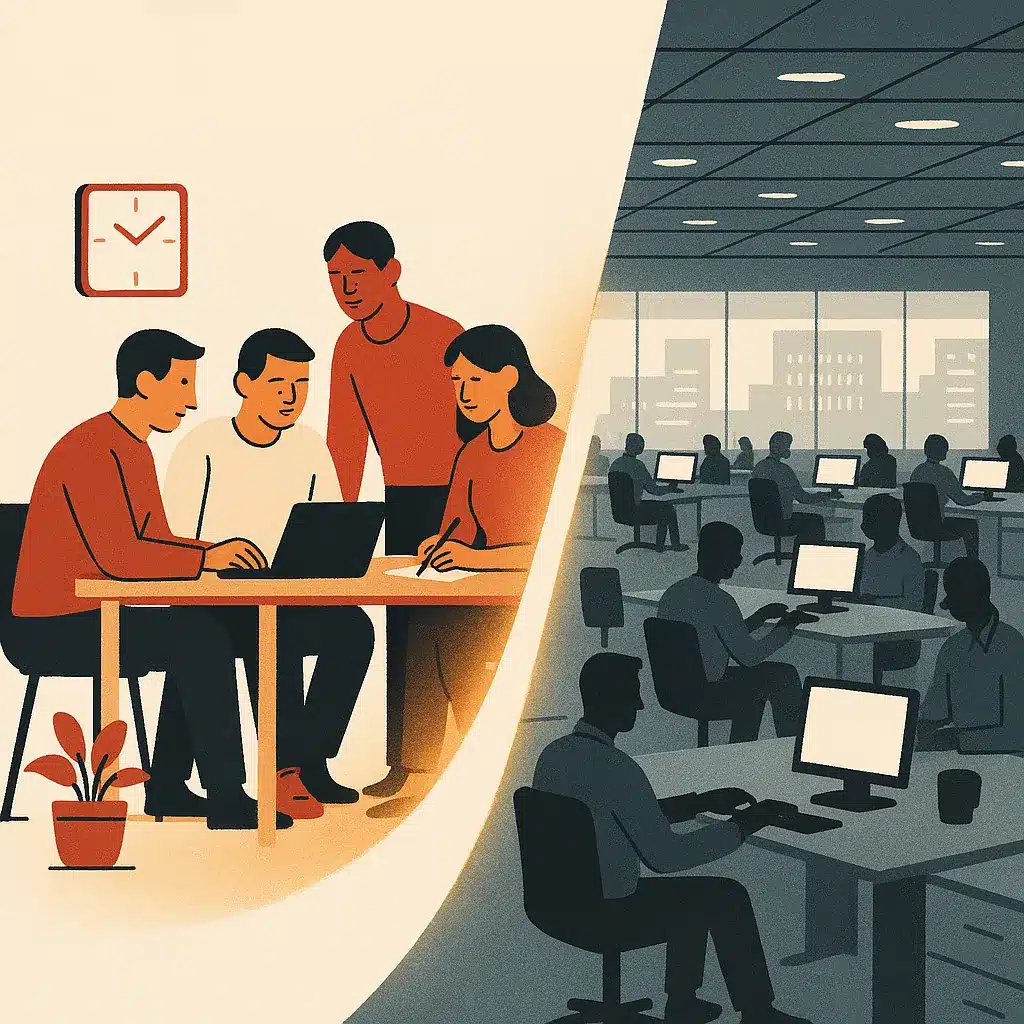
Most SMBs start in a handful of predictable places. A customer support chatbot handles repeat questions so staff don't retype the same answers, which can lift the overall customer experience. An AI receptionist books appointments after hours. Content generation and AI writing speed up proposals, product descriptions, and blog drafts.
Email marketing optimization uses AI to test subject lines and timing. On the analytics side, AI turns scattered data into business intelligence and automated reporting, surfacing what leaders can't see across disconnected systems to support data-driven decisions. Virtual assistants and AI agents chain these together. Each one targets a specific stream of manual work rather than trying to automate everything at once.
Off-the-shelf AI tools: what they are and when they fit
Off-the-shelf AI tools are ready-made products: ChatGPT, Claude, a plug-in chatbot, a standalone scheduling automation. They're cheap to start, fast to set up, and fine for general content generation, drafting, and standardized tasks. If your process looks like everyone else's, these ai tools for small business often do the job well enough. For businesses building their own software products rather than internal workflows, the same logic applies, and it's worth reviewing an AI app builder vs custom build comparison to see how the decision plays out in that context.
The catch is that these tools are built around their own logic, not yours. A rule-based tool handles the common case and stalls on the exception, because it can only follow the branches someone else programmed in advance. For a founder-led business with no in-house technical team, off-the-shelf AI tools are usually the right first step, as long as the task is generic enough to fit inside their limits.
Custom AI solutions: what they are and when a business needs them
Custom AI solutions are built around how your business actually operates. Instead of forcing your intake, approval, or quoting steps into someone else's template, custom-built AI systems follow your logic. This is where a service business with a unique onboarding flow, or a manufacturer with specific inventory rules, sees the difference.
Bespoke Mind Ai designs and deploys custom AI agents and workflow automation around a client's existing operations, so the system fits the team rather than the other way around. You need this when off-the-shelf tools keep breaking on your edge cases, or when the task that's costing you hours is too specific to buy off a shelf. Businesses that reach this conclusion typically move toward custom AI solutions built around your operations rather than continuing to patch together generic tools.
Custom vs off-the-shelf: how to tell which approach fits your operations
- Best for general tasks like drafting and scheduling
- Low monthly subscription cost
- Breaks with unique workflow mismatches
- Ideal for business-specific workflows and unique processes
- Higher upfront costs plus maintenance
- Requires time for discovery and setup
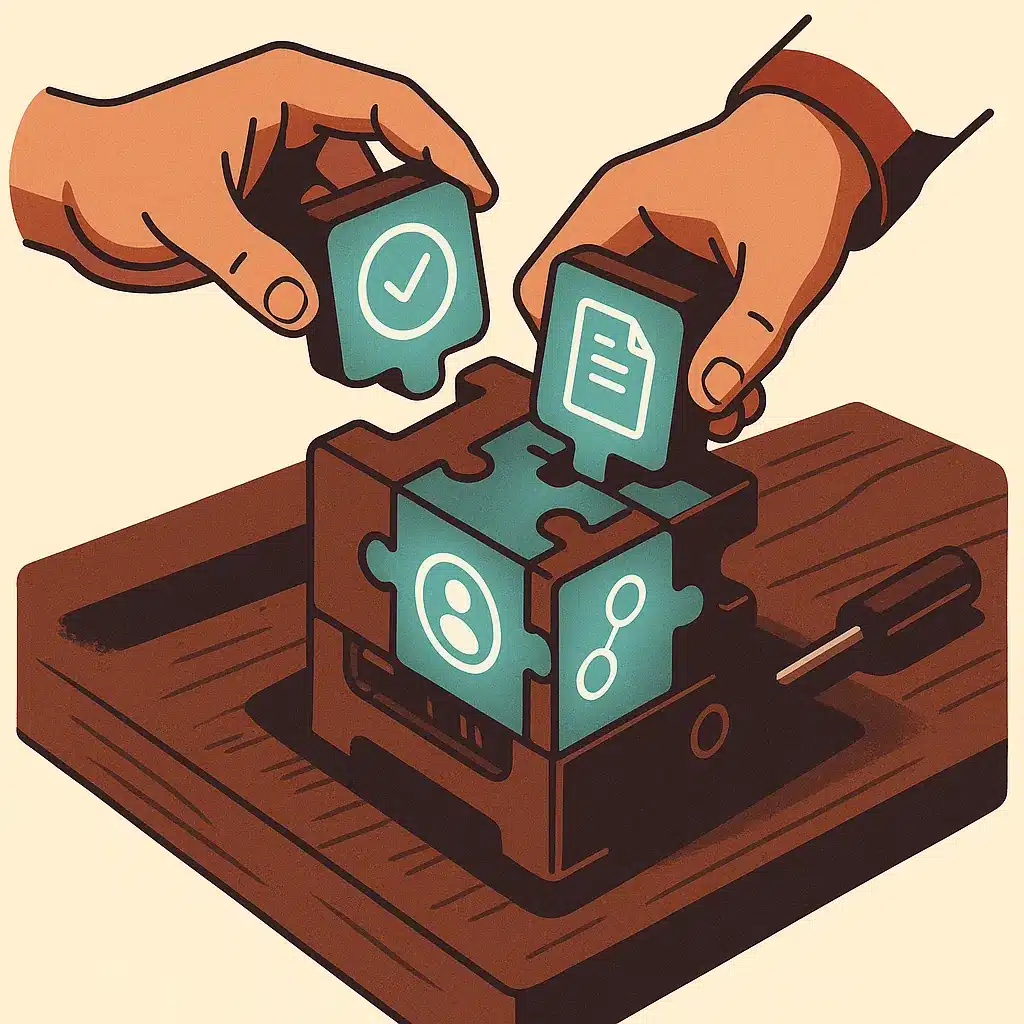
The decision usually comes down to how unique your workflow is and how much the manual work costs you. Here's a plain comparison.
| Approach | Best for | Typical cost | Key limitation |
|---|---|---|---|
| Off-the-shelf AI tools | General tasks: drafting, summarizing, basic chat, standard scheduling | Low monthly subscription | Breaks when your workflow doesn't match its built-in logic |
| Custom AI solutions | Business-specific workflows, unique intake or approval steps, connecting disconnected systems | Higher upfront build, then maintenance | Takes discovery and setup time before it runs |
The short rule: buy off-the-shelf when the task is common, build custom when the task is yours. Many businesses run both, using subscriptions for generic work and custom-built AI systems for the processes that define how they operate. When security and risk are part of that decision, it helps to measure both options against NIST's AI Risk Management Framework, which gives small businesses a neutral way to weigh how much risk either approach introduces.
Identifying manual work and operational bottlenecks AI can remove
Before choosing any tool, find the bottleneck. Look for work that's repetitive, rule-driven, and high-volume: data re-entry between tools, chasing the same follow-ups, sorting inbound requests, compiling the same weekly report. These operational bottlenecks share a signature: a person doing something a system could do.
Picture a distribution company where two staff spend 20 hours a week keying orders from email into a spreadsheet and then into accounting. That's roughly $25,000 a year in labor on copy-paste work, plus the errors nobody catches until a shipment goes wrong. That's the kind of manual work worth automating first, because the task is rule-driven and repeats constantly, which is a pattern AI tends to handle well.
How to evaluate and choose AI for your business (fit, security, workflows)
When learning how to evaluate AI tools, start with fit: does it match an actual workflow, or are you buying it because it's trendy? Then security. Any tool touching customer or financial data raises questions of data exposure and compliance, and the rules here vary by industry and jurisdiction, so check the data protection regulations relevant to your sector before connecting anything.
Next, ask whether it connects to the systems you already use or creates another silo. Finally, weigh ai readiness: your data has to be reasonably clean for the tool to work well, since a model fed inconsistent or incomplete records can produce unreliable output. How to evaluate AI tools well means judging outcomes, not features, and favoring scalable systems you won't outgrow in a year. If you're not sure where your own operation stands on any of this, an AI readiness audit for your operations is a practical way to get an outside read before committing budget.
Getting started with AI without an in-house technical team
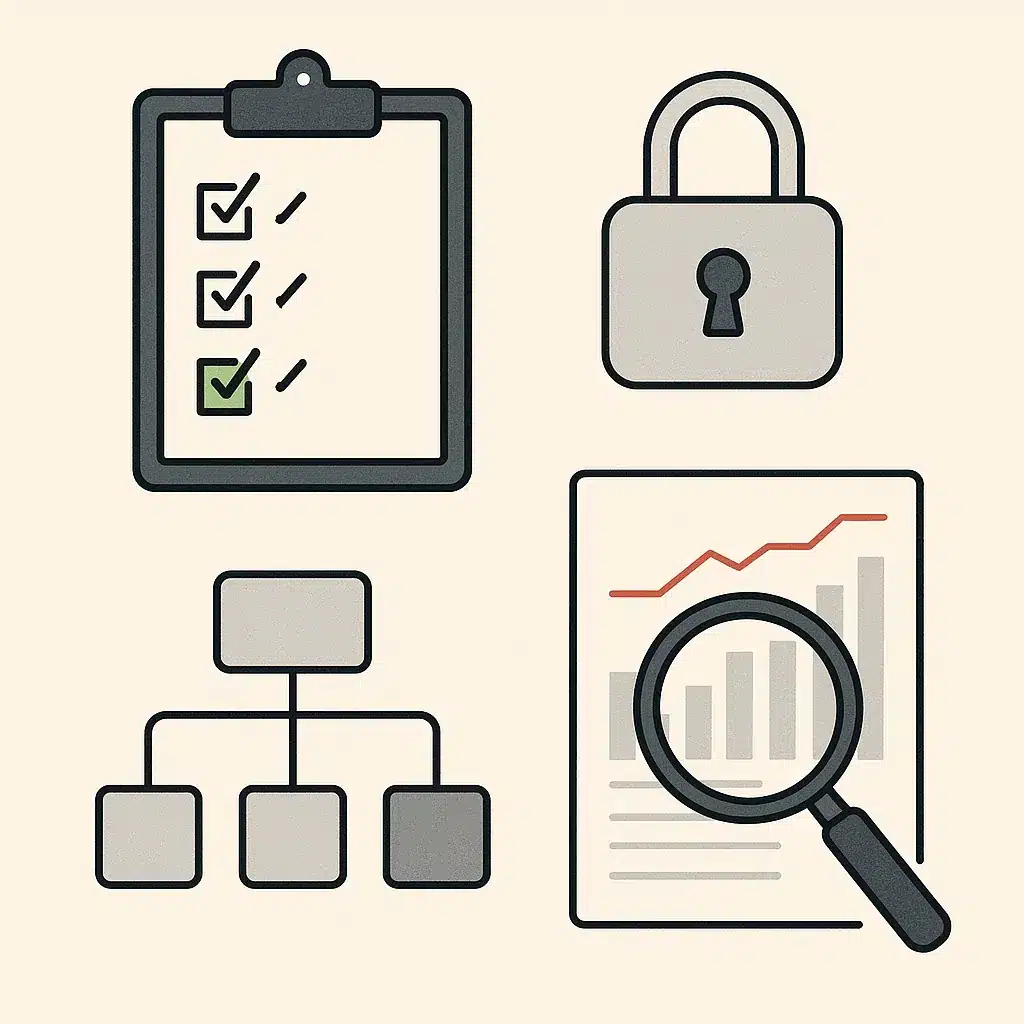
Getting started with AI doesn't require hiring engineers. Non-technical business owners can begin with one off-the-shelf tool on a single painful task, measure the time savings, then decide whether a custom build is worth it. For teams with no in-house technical team, a readiness audit maps where AI tools for small business fit before any money gets spent on building.
Bespoke Mind Ai runs AI readiness audits and strategy engagements for exactly this, helping non-technical business owners see which processes are worth automating and which aren't. Getting started with AI this way keeps risk low: you solve the underlying problem first, then scale into custom-built AI systems only where the numbers justify it. When that point comes, many SMBs look to custom AI development services for SMBs to move from a validated idea into an actual build.
If repetitive work is slowing your team down and you're not sure which process to tackle first, a discovery call can help identify where AI solutions for small business would actually pay off. Book a discovery call with Bespoke Mind Ai to map your bottlenecks and see which approach fits how your business already operates. Results vary based on existing processes, business complexity, implementation, and team adoption.
Frequently Asked Questions
What's the best AI solution for a small business to start with?
There's no single best option, it depends on which task is eating the most hours, whether that's customer replies, invoicing, or lead routing. Off-the-shelf tools like ChatGPT or Claude work for general writing and admin, but once a workflow is specific to how your business operates, a custom-built agent or automation usually delivers more reliable ROI than a generic tool stretched to fit.
Can AI really help a small business generate meaningful revenue, not just save time?
Yes, but it's rarely a single tool doing it, AI contributes to revenue growth through smarter lead follow-up, faster quote turnaround, and 24/7 website engagement that captures leads a human team would miss overnight. Claims about hitting a specific income figure from AI alone tend to oversimplify what's really a combination of automation, consistent follow-up, and existing demand.
What does the '30% rule' mean when people talk about AI adoption?
It's commonly used as a rough guideline suggesting businesses should expect AI to meaningfully improve roughly 30% of a given workflow or role's output, not replace it entirely. In practice, most small businesses see the best results when AI handles the repetitive 30% of a task, like drafting or sorting, while a person still reviews and finalizes it.
How much time can a small business actually save by using AI tools?
Businesses automating administrative tasks like email sorting, proposal drafting, or meeting summaries report saving around 6.8 hours per week on average. Workflow-level automation, invoicing, lead routing through a CRM, can reclaim 10 to 40 hours per month depending on how manual the process was beforehand.
Is it worth investing in AI if my business is still small or early-stage?
It depends on whether you're solving a real bottleneck or just adding software because it's trendy, AI pays off when it removes a specific repetitive task costing real hours each week. If there's no clear workflow to fix yet, it's often better to wait until a manual process becomes painful enough to justify the setup time and cost.
What if a custom AI solution doesn't fit how my business actually runs, isn't off-the-shelf software safer?
Off-the-shelf tools are rule-based and work well for standardized tasks, but they struggle when your workflow doesn't match their built-in logic, which is often the case for service businesses with unique intake or approval steps. A scoped discovery or readiness audit before building anything custom is the usual way to avoid paying for a solution that doesn't match the operation.
How does AI actually help with the day-to-day running of a small business?
Beyond writing emails, AI can qualify inbound leads, route support tickets, flag inventory issues, or generate reports from data that's currently sitting unused across disconnected tools. The impact shows up less in flashy features and more in fewer manual handoffs between people and systems.
Should I build AI automation in-house or hire someone to do it?
Most small businesses don't have the data science or engineering staff to build and maintain custom AI systems internally, which is why many turn to a development partner for the initial build. The decision usually comes down to whether the ongoing maintenance and iteration cost is worth keeping in-house versus outsourced.