
Most AI projects that fail don't fail because the technology was bad. They fail because nobody checked whether the data was usable. Or whether the "problem" was actually worth solving. That gap between a flashy demo and a system that quietly runs your invoicing every morning is where an ai consulting company earns its fee, or wastes your budget. This article breaks down what these firms do, how they charge, and what separates real results from another tool nobody uses.
What an AI consulting company is and what it actually does
An AI consulting company helps a business find where AI fits, then builds and runs the systems that deliver on it. Good ai consulting services cover a lot: a readiness audit, ai strategy, use-case prioritization, ai implementation, and support. The good firms don't lead with technology. They map your business operations and find where manual work piles up and operational efficiency suffers. The reason this order matters is simple: AI applied to a broken process just automates the mess faster, so the process has to be understood before anything gets built.
Think of it less as buying software and more as hiring someone who understands both your process and the tools involved. The output isn't a slide deck. It's working ai systems, or a clear reason not to build them. If you're still forming a picture of the category, it helps to understand what an AI automation agency actually does before you evaluate partners. For a grounded view of where ai adoption stands, the Stanford HAI AI Index Report tracks how businesses deploy these tools across functions.
Why AI consulting matters and the problems it solves for businesses
Most companies don't have an AI problem. They have a manual work problem that AI often solves well. Teams re-key data between disconnected systems, chase approvals over email, and rebuild the same report weekly. That's lost time and lost visibility into what's actually happening.
The root cause is usually process, not tooling. Adding another subscription rarely fixes it, because the underlying workflow still runs through people copying between systems that were never connected. An ai consulting partner exists to solve the underlying problem: find the bottleneck, then apply workflow automation or automated agents where it earns its keep. The McKinsey Global Survey on AI shows ai adoption rising fastest in operational functions. That's exactly where repetitive tasks live and where operational efficiency gains show up first.
Consider a wholesale distributor whose finance team spends two days a month reconciling supplier invoices against purchase orders by hand. The work is slow, error-prone, and invisible to leadership until a payment goes wrong. A tightly scoped build that extracts and matches those records removes the manual step entirely and gives managers real visibility into where money is going.
Key functions and services of an AI consulting company (strategy, build, deployment, run)
Good ai consulting services break into four stages. Strategy comes first: an ai advisory phase where the firm audits your data maturity, maps use cases, and prioritizes by ai roi and feasibility. Build is next. Here they design custom ai solutions rather than forcing your process into off-the-shelf software.
Deployment gets those systems into your real environment, integrated with the tools you use. Then run: monitoring, tuning, and the ai training and enablement your team needs to operate what was built. This is where Bespoke Mind Ai fits, delivering custom AI development services and workflow automation designed around how a business actually operates, then integrating them into existing software instead of replacing everything. The point of all four stages is production-ready ai, not a proof of concept that stalls. The run stage matters more than most buyers expect, because a system nobody monitors drifts out of use the moment its inputs change.
The typical AI consulting engagement: from readiness assessment to enterprise adoption
A typical engagement runs five phases. It opens with discovery and an ai readiness assessment, where the firm inspects your data, systems, and workflows. This phase catches blockers early: fragmented data, poor quality records, or a process that's simply too undefined to automate yet.
From there it moves to strategy and use-case selection, then solution design and build, then deployment, then ongoing operations. What happens in the readiness phase determines everything downstream. Skip it, and you build on sand. If you want the sequence in detail, this breakdown of how we work with clients walks through each stage of the model. Many assume ai adoption starts with picking a model. In reality, it starts with cleaning up and connecting the data that model would need, because a capable model fed fragmented records can produce confident, wrong answers. Enterprise ai programs add governance and responsible ai layers, but the sequence holds regardless of size.
Common AI consulting use cases across business functions
The most reliable ai use cases share one trait: high volume, repetitive, rule-heavy work. In finance, ai consulting for finance often targets invoice processing, reconciliation, and reporting. Here custom ai agents extract and route data people used to key by hand, and lighter models flag anomalies. In support, ai consulting for customer service handles ticket triage and drafting first-response replies, a set of ai use cases that often pays back fast.
Operations teams use workflow automation to move information between systems that don't talk to each other, lifting operational efficiency. Ai consulting for supply chain focuses on demand signals and inventory visibility. Sales teams lean on generative ai for proposal drafts and lead qualification. Across all of them, the goal is the same: measurable time savings and process improvement, not novelty. These functions get picked first because volume and repetition make the savings large enough to measure. Pick the function where manual work is loudest and start there.
Types of AI consulting firms: enterprise giants vs specialized boutiques
- Run board-level AI transformation programs
- Focus on P&L outcomes and multi-year scope
- Built for large enterprise AI budgets
- May lack flexibility and speed
- Focus on hands-on AI implementation
- Ideal for small and mid-sized businesses
- Deliver faster and cheaper solutions
- Skip account-management layers for direct builds
Ai consulting firms fall into three camps. Large strategy houses run board-level ai transformation programs tied to P&L outcomes. They're built for enterprise ai budgets and multi-year scope. Independent freelancers sit at the other end, cheap and flexible but thin on delivery.
In the middle are specialized boutiques and custom-build agencies. These focus on hands-on ai implementation for small and mid-sized businesses. When people search for the top ai consulting companies, they often assume bigger is better. For a small business ai project with a defined bottleneck, a boutique often delivers faster and cheaper. It skips account-management layers and builds the thing directly. Match the firm's shape to your scope, not its brand.

How to choose the right AI consulting partner
Start with fit, not credentials. The right ai consulting partner asks about your workflows before it mentions any technology. If the first conversation is a product pitch, that's a signal they'll fit your problem to their software rather than the reverse.
Look for a discovery-led ai strategy, evidence of custom ai systems actually deployed, and direct access to the builders. In-house expertise matters less than whether they combine business process thinking with real AI capability. Ask how they measure ai roi and what happens after launch. Ai training and enablement is where adoption sticks or dies, because a working system that nobody on your team knows how to run quietly reverts to the old manual process. A partner who promises guaranteed results is overselling. One who ties scope to specific efficiency metrics is honest about how this works.
Why most AI projects never reach production
A common pattern: teams build an impressive pilot, demo it to leadership, then watch it die in the gap between prototype and daily use. The demo ran on clean sample data. Production runs on messy, live, edge-case-filled reality, and the system was never designed for it. This isn't rare, either: Gartner's forecast on abandoned generative AI projects predicts that 30% will be dropped after proof of concept.
Production-ready ai carries requirements a pilot ignores: error handling, integration with live systems, monitoring, and someone accountable for it. Picture a mid-sized firm that spends $80,000 on a chatbot that never launches. It was never wired into the ticketing system the team uses, so every answer it drafted had to be copied over by hand, which defeated the point. The fix is unglamorous. Scope for deployment and ai integration from day one, and treat the pilot as a step toward operations, not the finish line.
What actually delivers ROI from AI consulting (custom systems, manual-work removal, measurable outcomes)
Ai roi comes from one thing above all: removing manual work that a person was doing repeatedly. Not from having AI, but from what it stops your team from having to do. That's why custom ai systems tend to outperform generic tools here. Built around your exact business operations, they cut the specific steps that waste hours and drive real operational efficiency, whether through automated agents or simpler rules.
The measurable outcomes worth tracking are concrete: hours removed per week, error rates dropped, faster cycle times. Bespoke Mind Ai anchors its builds to these, focusing on manual-work removal and measurable results rather than AI hype. If you want to run the numbers, this guide on how to calculate ROI on AI automation projects walks through the baseline math. Results vary based on existing processes, complexity, implementation, and ai adoption, so set baselines before you build. Without a baseline, you can't prove savings, and unproven savings are indistinguishable from spend.
AI consulting for SMBs vs enterprise: what smaller businesses actually need
- Need governance and change management
- Require multi-year roadmaps
- Focus on large-scale staff integration
- Solutions may be too broad for SMBs
- Need quick fixes for specific bottlenecks
- Require cost-effective solutions
- Focus on immediate process improvements
- Benefit from narrow, targeted AI builds
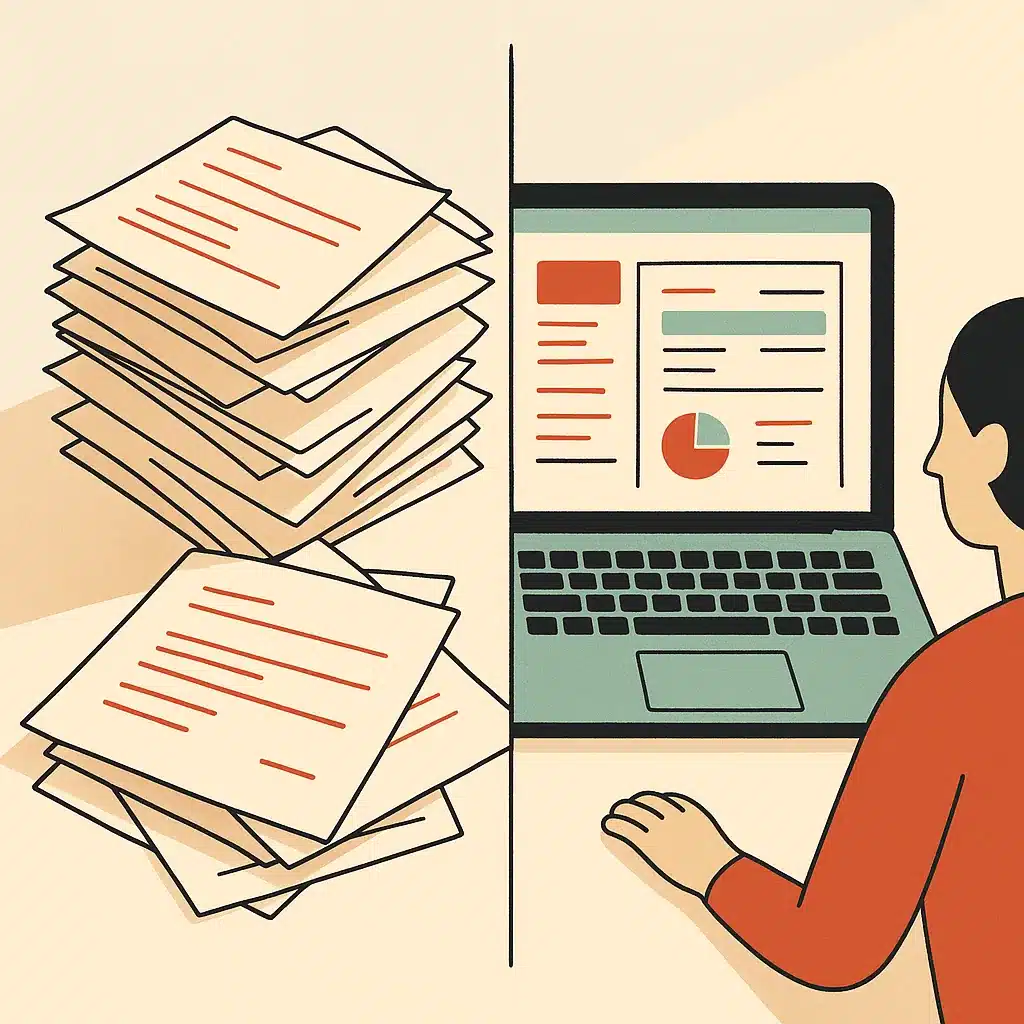
Enterprise buyers need governance, change management across thousands of staff, and multi-year roadmaps. Small business ai buyers need something narrower and more urgent: one painful bottleneck fixed, fast, at a cost that makes sense against the time it saves through better process improvement.
The mistake smaller businesses make is assuming custom ai solutions are enterprise-only. They aren't. A focused build, like automating dues collection or triaging inbound inquiries with custom ai agents, often costs less than a year of stacked subscriptions and removes more manual work. The reason a narrow build wins here is that a smaller business feels a single bottleneck acutely, so fixing that one process returns visible time almost immediately. What SMBs need are ai consulting services that scope tightly, ship something usable in weeks, and measure time savings honestly. Skip the transformation language. Solve the loudest operational problem first, prove it worked, then decide whether to expand.
Questions to ask before hiring an AI consulting company
Before you sign anything, ask pointed questions. What does your readiness assessment actually look at? How do you prioritize ai use cases, and by what measure of ai roi? Can you show custom ai systems you've deployed, not just designed? Who builds the work, and will I talk to them directly?
Then ask the uncomfortable ones. What happens if the pilot doesn't deliver? How do you handle ai integration across our business operations? Do you provide the ai training and enablement so my team can run ai agents, or resell it? A serious firm answers plainly and ties everything to operational efficiency and manual-work reduction. Vague answers about "transformation" or guaranteed returns are your cue to walk. The right ai consulting company treats these questions as normal, because they've built their process around exactly these answers.
If repetitive work is slowing your team down, a short discovery call can help pinpoint where automation and custom systems would actually save time. Talk to the team at Bespoke Mind Ai to map your operational bottlenecks and see which ones are worth automating first, no hype, no pressure.
Frequently Asked Questions
What does an AI consulting company actually do?
An AI consulting company guides businesses through the full AI lifecycle:readiness assessment, use-case prioritization, roadmapping, building, and ongoing operations. In practice, that means auditing your data and workflows, identifying where AI removes manual work, then designing and deploying the systems that deliver measurable ROI.
How much does it cost to hire an AI consulting company?
US rates in 2026 typically run $75-$150/hr for independent freelancers, $150-$300/hr for boutique firms handling mid-market builds and LLM applications, and $300-$600/hr or more for large strategy houses. The right tier depends on scope: a well-defined automation build costs far less than a board-level transformation program.
Who are the big-name AI consulting firms?
Strategy houses like McKinsey/QuantumBlack, BCG X, and Bain Vector dominate enterprise AI strategy and P&L-driven programs. For smaller and mid-sized businesses, boutique and custom-build agencies are usually a better fit because they focus on hands-on implementation rather than board-level advisory.
Is hiring an AI consulting company worth it for a small business?
It can be, if you have repetitive tasks worth automating:invoice processing, lead qualification, or support triage often produce measurable savings within 6-12 months. It's not worth it if you're chasing AI hype without a clear operational bottleneck to solve; the goal should be less manual work, not more software.
Should I hire an AI consulting company or build an in-house AI team?
A consulting company can deploy pilots in weeks with project-based, variable cost, while an in-house team typically takes 6-18 months to hire and reach productive delivery. Many businesses do best with a hybrid: consultants build and prove the systems, then hand off to internal staff for maintenance.
What phases does an AI consulting engagement usually follow?
Most follow a five-phase structure: discovery and readiness assessment, strategy and use-case identification, solution design and build, deployment, then ongoing operations and optimization. The early phases exist to catch blockers like poor data quality or fragmented systems before you invest in building anything.
What if the consultant just sells me generic AI tools I don't need?
That's a real risk with firms that push off-the-shelf products. Look for a partner who starts with an operational audit, prioritizes use cases by ROI and feasibility, and builds around how your business actually operates rather than fitting your problem to their preferred software.
How do I know an AI project delivered real value?
Tie every engagement to concrete metrics before it starts:hours of manual work removed, error-rate reduction, and productivity gains are the clearest indicators. A good AI consulting company sets these baselines during the readiness phase so you can measure savings against them within the first 6-12 months.