

A mid-sized real estate firm we worked with had eleven different tools tracking deals, and not one agreed on the same numbers. Their leadership spent the first hour of every Monday reconciling spreadsheets by hand. That's the problem AI data solutions are sold to fix, and most buyers solve it wrong by buying yet another platform. This article covers what these systems do, where they break, and why the answer is rarely more software.
What AI data solutions actually are
At their core, AI data solutions are ai systems that pull data from wherever it lives, clean it, and apply machine learning to surface patterns people miss. The work happens in stages: data collection, validation, then data analytics that produces predictions instead of just reports. According to McKinsey, organizations that embed analytics into operations outpace peers on decision speed, and their studies on automation potential across business processes quantify how much manual effort can realistically be removed. Good solutions don't add a dashboard for its own sake. They remove the manual work between a question and an answer.
Why disconnected data and systems block AI value
Here's the part vendors gloss over: AI is only as good as the data feeding it. When your information lives across disconnected systems, no model produces trusted output, because the AI inherits every gap in the data. Sales sits in one tool, finance in another, operations in a third. Gartner has long held that poor data quality stalls most analytics projects, and their analysis of disconnected systems and tool sprawl shows businesses suffer from too many tools, not too few. Before any ai implementation, it's worth running an honest assessment of whether your operations are ready for AI.
Data management and trusted/AI-ready data foundations
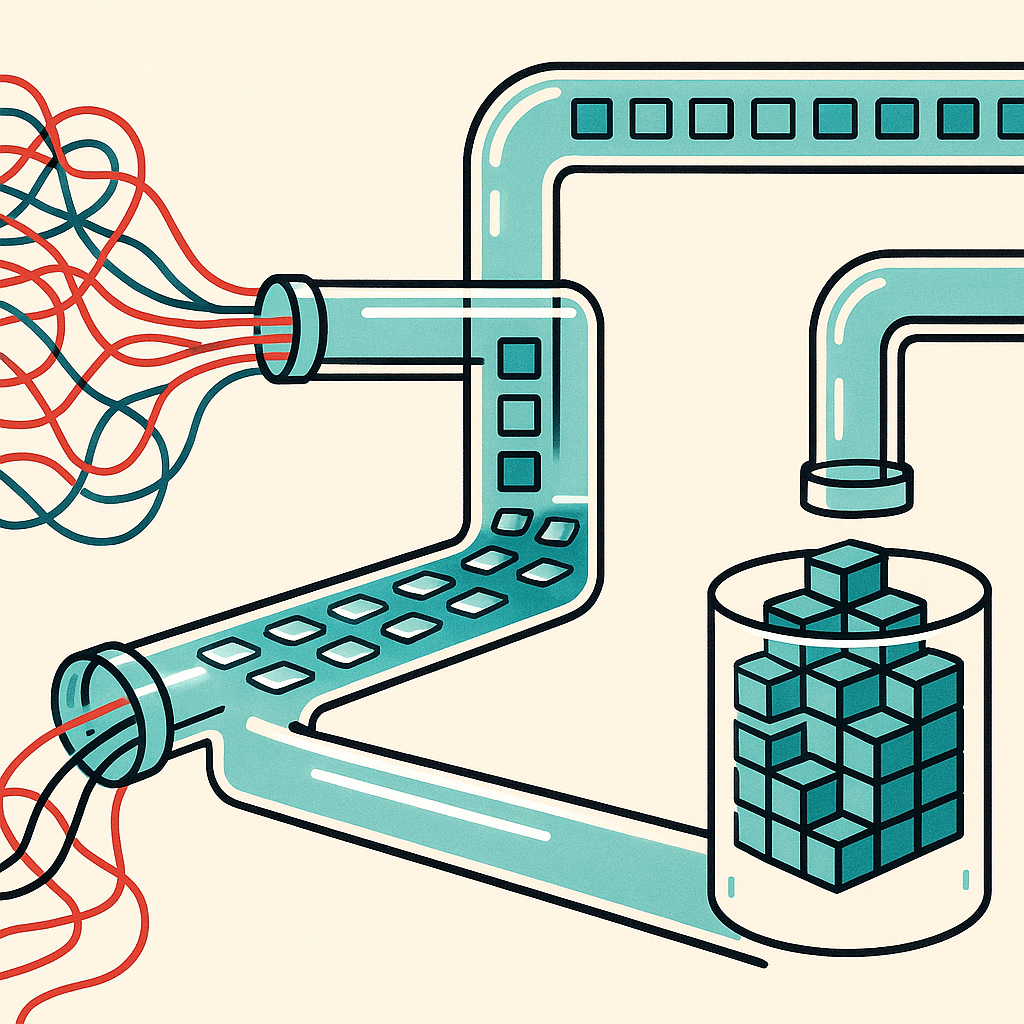
Trusted data is the unglamorous foundation everything else sits on. That means consistent formats, automated quality checks that catch errors before analysis, and integration connecting structured, unstructured, and real-time sources. Without disciplined data management, even the best ai systems produce confident-sounding nonsense. Ai-ready data isn't a one-time cleanup. It's ongoing data management that scales as your data grows.
Automation and workflow streamlining for business operations
Once trusted data exists, automation does the heavy lifting. Workflow automation removes the repetitive work that eats your team's week: data entry, status updates, report assembly, handoffs. The goal isn't replacing people. It's getting them off manual processes and onto higher-value work, which matters because manual handoffs are where errors and delays compound. Research on operational inefficiency and manual work consistently shows how much time businesses lose to these repetitive tasks. This is the practical side of streamlining your business: ai agents monitor processes and trigger actions without someone watching a queue. If you're figuring out where to begin, our practical guide to AI workflows for small business walks through the steps.
Business outcomes and operational efficiency from AI
Leaders don't buy AI. They buy outcomes: operational efficiency, faster decision-making, less administrative drag. When workflow automation and trusted data work together, the gap between a question and an action shrinks. This business process optimization gives leaders the visibility to act on what's happening now, supporting real data-driven decision-making. Business intelligence stops being a monthly slide deck and becomes daily.
Consulting, implementation, and deployment services
Plenty of companies recommend solutions. Far fewer build and deploy them. Useful ai consulting services start with discovery: understanding the business problem before touching technology. Then comes ai implementation, where data deployment, integration, and testing turn a plan into working systems your team adopts. A recommendation deck doesn't reduce manual work. A deployed system does.

Tools, platforms, and software options for AI data
The market is crowded. The right pick depends on your data sources and latency needs, not a leaderboard. Off-the-shelf software handles common cases and is fine when needs are standard. Some enterprises use platforms like K2View for entity-based real-time views, or Databricks for combining data engineering with machine learning. But internal tools built around your specific business workflows often outperform generic platforms for niche problems.
AI governance, security, and compliance readiness
Skip governance and you're one data leak away from a serious problem. Ai governance covers who can access data, how models are monitored, and how decisions get audited. Compliance readiness varies by industry and location. Check the relevant data protection regulations for your jurisdiction and consult a qualified professional before deployment. Build security and access controls into the data layer from the start, not as a patch after launch.
Why more software isn't the answer: solving the underlying problem
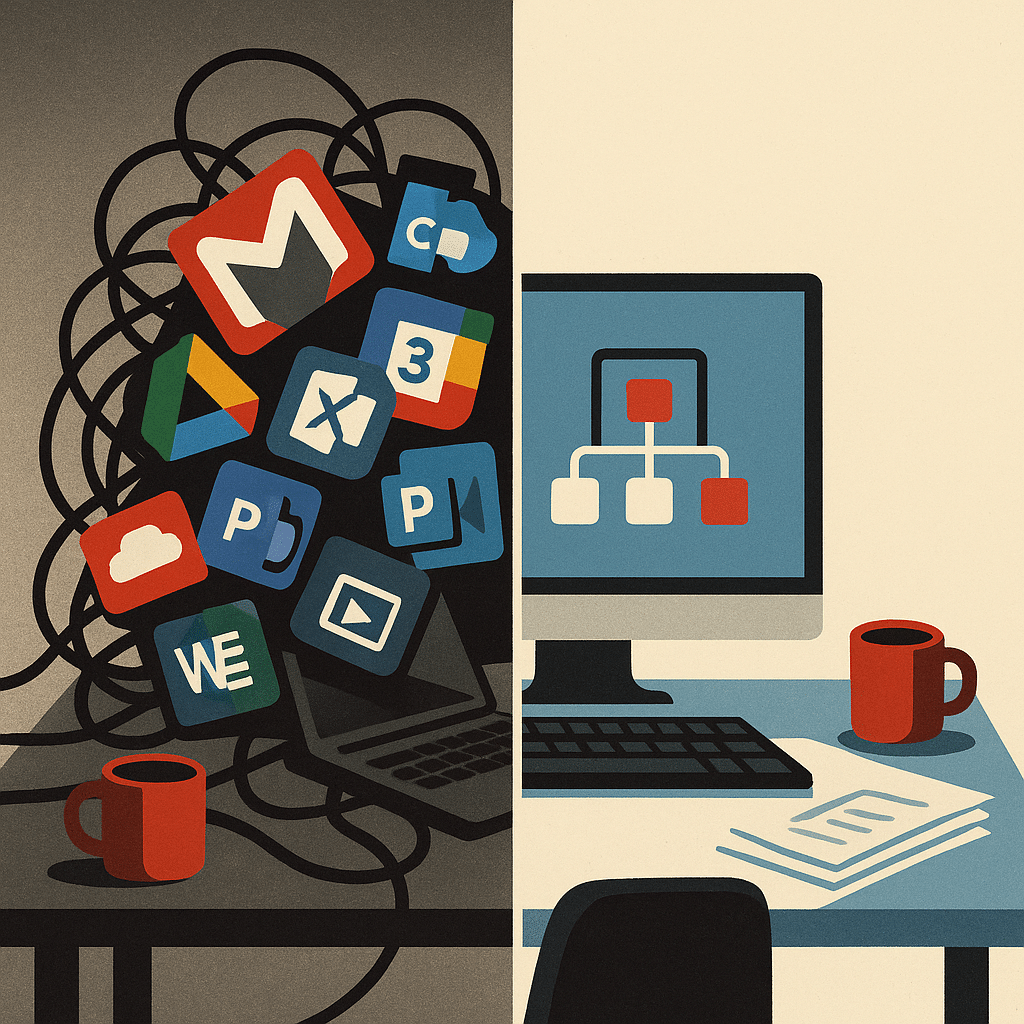
Most businesses don't need more software. They need scalable systems that work together and remove manual effort. We've watched companies buy a fifth tool to fix problems caused by the first four, then wonder why their disconnected systems got worse. Adding off-the-shelf software to a broken process just automates the mess, because the underlying problem was never the lack of a tool. The fix is process improvement: connecting data, removing manual steps, and building custom AI solutions designed around how you actually operate.

Custom-built systems vs off-the-shelf software
- Faster implementation for standard needs
- Lower cost compared to custom solutions
- Requires process adaptation to fit the tool
- Limited flexibility for unique workflows
- Tailored to specific team processes
- Integrates with existing internal tools
- Targets specific painful workflows effectively
- Can be more cost-effective than multiple subscriptions
Off-the-shelf software wins on speed and price for standard needs. The trade-off is you bend your process to fit the tool. Custom-built systems flip that: technology built around how your team works and the internal tools they rely on daily. The right ai enablement targets one painful workflow, and that focused system often costs less than the subscriptions it replaces. Before deciding, it helps to weigh building in-house against working with a development partner. The deciding question is whether your problem is common enough for off-the-shelf software or specific enough to justify scalable systems built for you.
Reducing founder dependency and operational bottlenecks at scale
Founder dependency is the quiet bottleneck that caps growth. When too much knowledge sits with one person, every operational bottleneck routes through them, and visibility disappears. This is common among the founder-led companies reflected in data on U.S. small business operations, where lean teams concentrate critical knowledge in a few people. Documenting business workflows into ai agents and workflow automation distributes that knowledge and removes bottlenecks, the core of streamlining your business at scale. When repetitive work and routine decisions live in systems instead of someone's head, the founder stops being the single point of failure.
If manual processes and disconnected systems are slowing your team down, data and ai solutions built around your operations can show where automation and trusted data deliver the biggest time savings and lasting operational efficiency. You can book a discovery call with our team at Bespoke Mind to explore what's worth automating.
Frequently Asked Questions
What are AI data solutions and how do they actually work?
AI data solutions are systems that use machine learning to ingest, clean, and analyze data, turning raw information into usable insights. They typically work in stages: pulling data from different sources, preparing and validating it, then applying models to surface patterns and predictions your team can act on.
How do AI data solutions improve business decision-making?
They process large datasets quickly and flag patterns humans tend to miss, which shortens the gap between analysis and action. Some companies report cutting the time from data review to decision by up to 50%, while also improving forecast accuracy.
What's the real difference between AI data solutions and traditional analytics?
Traditional analytics looks backward, relying on predefined metrics and manual exploration to explain what already happened. AI data solutions automate pattern discovery and add predictive and prescriptive insight, so you can plan ahead instead of just reporting on the past.
Is investing in an AI data solution actually worth it for a small business?
It's worth it when manual data work and disconnected systems are slowing your team down, not when you simply want more software. The return shows up as fewer repetitive tasks, clearer visibility into operations, and faster decisions:so the value depends on solving a real bottleneck, not adding a tool.
What if my data is messy and spread across too many tools?
Messy, scattered data is a common starting point, not a disqualifier. Strong solutions include integration that connects structured, unstructured, and real-time sources, plus automated data quality checks that detect and correct errors at scale before analysis begins.
Why do AI data solutions matter when handling large datasets?
Large datasets overwhelm manual processes, so AI is used to automate storage, retrieval, and validation while keeping accuracy intact. This lets systems scale with your data growth and catch quality issues that would be impossible to fix by hand.
What features should I look for when choosing an AI data solution?
Prioritize data integration across multiple sources, scalability for growing workloads, and strong security and compliance controls. The best fit is the one built around how your business actually operates, not a generic off-the-shelf platform.
Which AI data platforms are enterprises using in 2025?
Commonly cited enterprise platforms include K2View, which uses an entity-centric data fabric for real-time unified views, and Databricks, which combines data engineering, data science, and machine learning operations. The right choice depends on your data sources, latency needs, and existing systems rather than rankings alone.