

A software company spent eight months building an annual strategic plan. By the time it shipped, two of its biggest pricing assumptions had already gone stale. That gap between how fast markets move and how slowly most planning cycles run is exactly where ai for business strategy earns its place. This article walks through where AI genuinely helps strategic work, where it doesn't, and how to tell the difference before you spend money on it.
What AI for business strategy actually means
Strip away the noise and ai for business strategy means one thing: using artificial intelligence to make better strategic decisions faster. That covers machine learning models spotting patterns in customer data, predictive analytics forecasting demand, and automation clearing the manual work that buries analysts before they analyze anything. It is not a magic decision-maker. According to McKinsey's research on the state of AI, adoption keeps rising. Value shows up where AI ties to real business operations rather than sitting bolted on. The reason this matters: AI amplifies whatever process it sits on top of, good or bad.
Aligning AI with business goals and strategy first
Start with the business strategy, then find where AI fits, not the reverse. Too many teams buy an AI tool and go hunting for a problem it might solve. That backwards order is how you end up with expensive dashboards nobody opens. Pick the strategic goals that matter this year. Then ask which are held back by slow analysis, disconnected systems, or repetitive reporting. A useful ai strategy is a subset of your business strategy, not a separate initiative. Deloitte's work on AI adoption in the enterprise points to the same pattern: alignment with clear goals separates the projects that stick from those that stall. If you're unsure where to begin, our guide on where to actually start with AI walks through the first practical steps.
Real value and business impact of AI (moving from hype to impact)
The real value of ai for business leaders is rarely the flashy demo. It is quieter: fewer hours spent pulling reports, cleaner data feeding decisions, and less time waiting on a founder to answer the same question again. Many assume the payoff is some dramatic revenue jump. In reality, business value usually shows up as operational efficiency and time savings that compound. This lines up with the NBER study on generative AI and worker productivity, which found measurable output gains when AI took over routine work in real settings. Moving from hype to impact means measuring the real value of ai against boring, concrete things: hours saved, errors reduced, decisions made a week sooner. If you want a structured way to quantify this, our breakdown of how to calculate ROI on AI automation projects can help. Results vary based on existing processes, business complexity, and adoption, so anchor expectations to your actual starting point.
Identifying AI opportunities and use cases
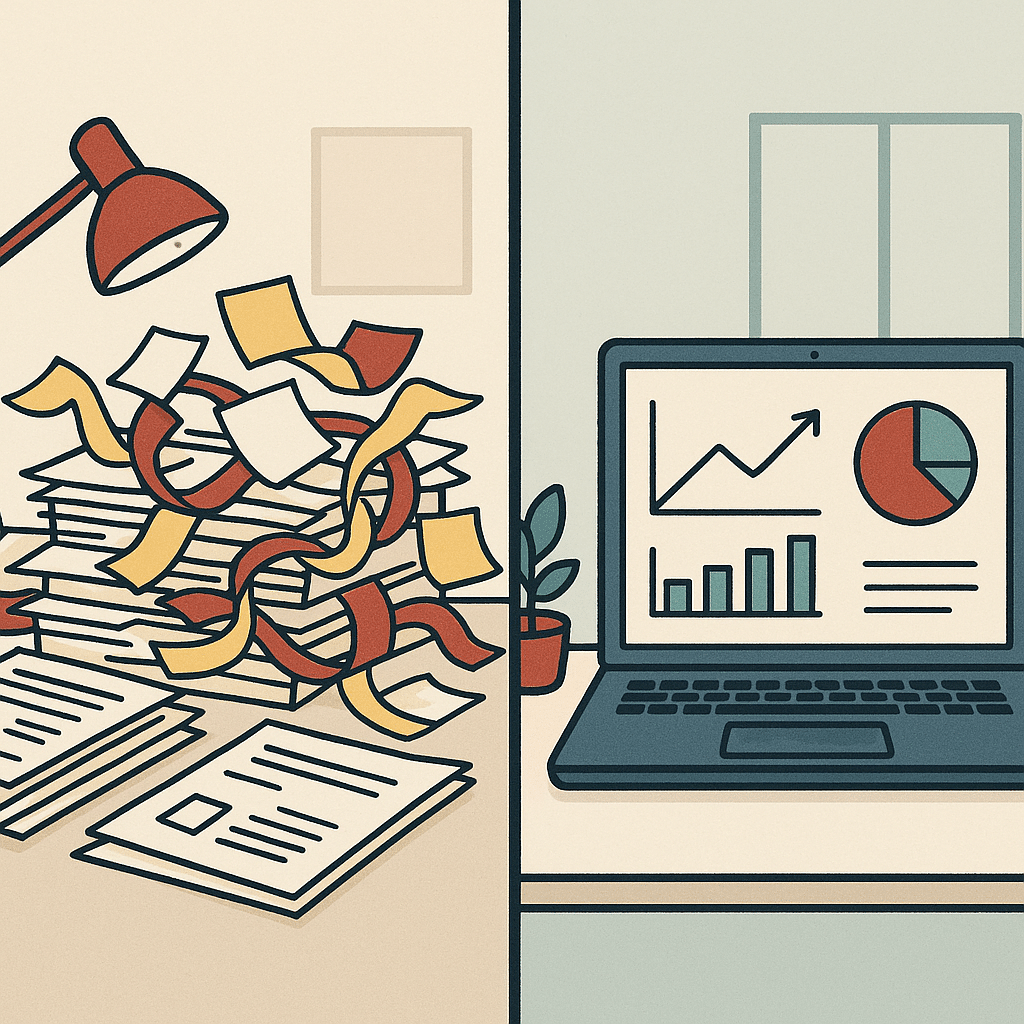
Finding AI opportunities is detective work, not a shopping spree. Look at where your team keeps doing the same task by hand. Look at where information sits in three tools that don't talk to each other, or where a decision gets delayed because someone is still compiling a spreadsheet. Those are your first ai use cases and the clearest openings for process improvement. Practical ones include market trend analysis, scenario planning for a product launch, competitive monitoring, and automating routine reporting. The strongest ai use cases tend to sit at operational bottlenecks, not in the boardroom. Map the process first, then ask whether machine learning or workflow automation removes the friction. If it doesn't, skip it.
Competitive advantage through AI
Competitive advantage from AI is less about having the fanciest model and more about acting faster on better information. If your competitor still runs quarterly reviews while you catch a demand shift in real time, that edge is real. Here is what actually happens: AI compresses the gap between a signal appearing and your team responding to it. That speed becomes a competitive advantage only when it feeds decision-making people trust. An effective ai strategy points these systems at the places where being early matters most: pricing moves, inventory, customer retention. It doesn't spread thin across every function at once. Focus creates the advantage. Diffusion dilutes it.
Risks, limitations, and balancing goals of AI adoption
- Bad data can lead to AI failure
- AI struggles with unseen context
- Bias can be baked into decisions
- Incomplete data can trigger costly mistakes
- Check data privacy regulations before automating
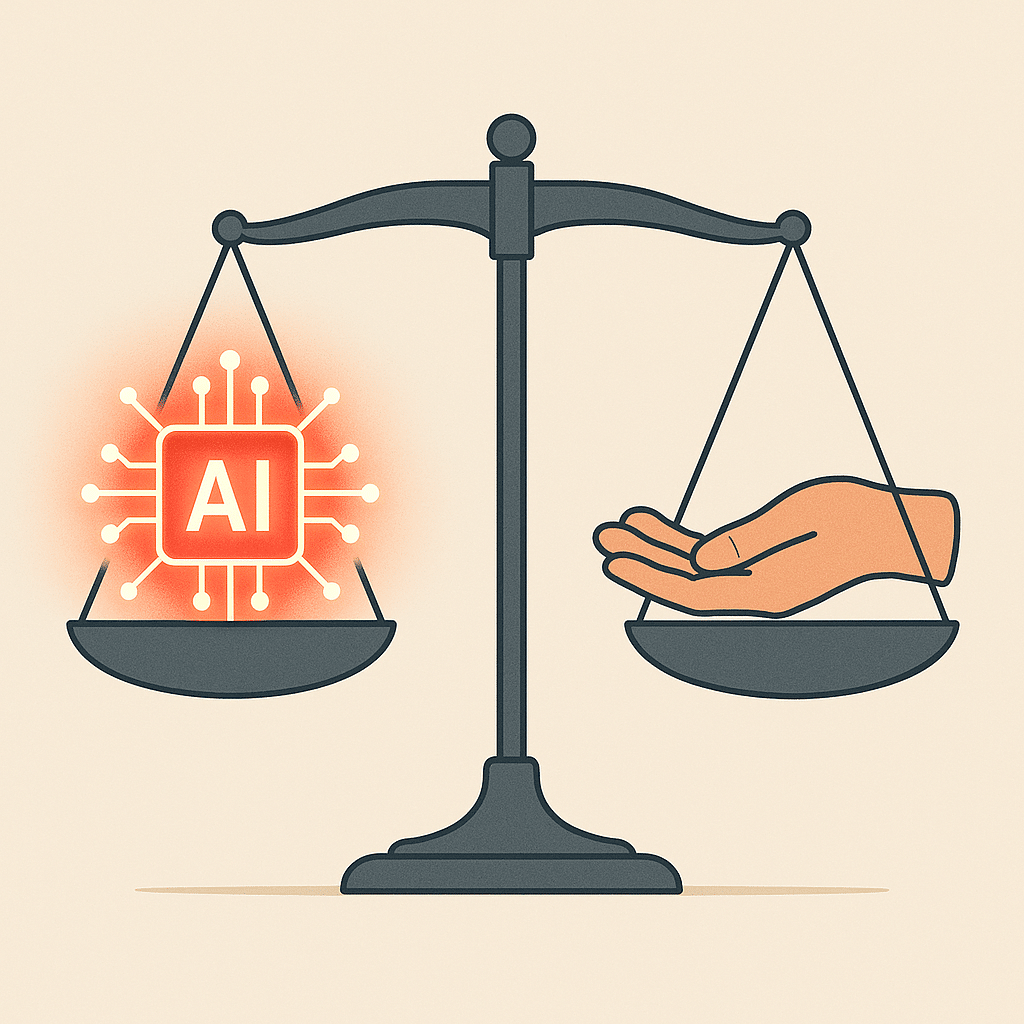
AI adoption fails more often from bad data than bad technology. Feed a model messy, contradictory information and it produces confident nonsense. There are real limits. Artificial intelligence struggles with context it hasn't seen, and it can bake existing bias into decisions if nobody checks. The balance is knowing what to hand over and what to keep human. A retail operations team once automated reorder decisions on incomplete inventory data and triggered a $40,000 overstock before anyone caught it. This is why more software rarely fixes the problem, as our take on why AI data solutions aren't about adding tools explains. Rules around data privacy and AI vary by jurisdiction. Check your region's data protection regulations and involve qualified advisors before automating anything touching sensitive information.
Leadership's role in driving AI transformation
AI transformation stalls when leadership treats it as an IT project and walks away. Business leaders set the priorities, protect the budget, and decide which problems get solved first. Their real job is asking blunt questions: what business outcome does this serve, and how will we know it worked? Building an ai-fueled organization takes leaders who understand business operations well enough to spot where AI systems drive real process improvement and where they add cost. As the Harvard Business Review on augmenting work with AI argues, the biggest gains come when AI complements human judgment rather than replacing it. The reason this matters: teams take AI adoption seriously only when the people setting direction do. Ai-driven transformation follows leadership attention, not the other way around.
Iterating and keeping AI strategy dynamic
An ai strategy written once and filed away is already outdated. The whole point is to move away from static annual plans toward continuous analysis. Treat your ai strategy like a product: ship a small version, watch what it does, adjust. Market conditions shift, your data improves, and the AI systems that helped last quarter may need retuning. Keep the loop tight. Review what's working monthly, retire what isn't, and expand only where you see measurable business value. An effective ai strategy is one that keeps changing on purpose, staying tied to current goals instead of last year's assumptions.
AI for operational efficiency and workflow automation
This is where most businesses see the fastest return. Workflow automation handles the repetitive manual work draining your team: data entry, status updates, moving information between disconnected systems. The goal isn't more software, it's less manual work. Ai agents can now read documents, route requests, and handle routine business workflows that used to eat hours. Point workflow automation at your worst operational bottlenecks first, the tasks everyone dreads, and the operational efficiency gains show up quickly. Reporting and visibility improve as a side effect once your business operations run through connected, scalable systems instead of scattered internal tools. Our practical guide to AI workflows for small business covers how to prioritize these bottlenecks.

Reducing founder dependency and improving operational visibility
Founder dependency is a quiet risk that grows with the business. When too much knowledge and decision-making sits with one person, the company can't scale and the founder can't step away. Artificial intelligence and workflow automation help by capturing how work actually gets done and making it visible to the whole team. Reporting and visibility that once lived in the founder's head move into internal tools everyone can access. Small business owners and operations managers often feel this shift first. Decisions that used to wait on one person now happen faster because the information is finally accessible. That's operational efficiency and resilience in one move.
Custom-built AI systems vs off-the-shelf software
- Tailored to specific business operations
- Addresses unique process challenges
- Higher upfront costs
- Reduces workflow friction
- Solves generic problems
- May force workflow adjustments
- Lower initial investment
- Can lead to failed AI projects
Off-the-shelf software solves generic problems in a generic way, which is fine until your process doesn't match the tool. Then your team bends their workflow to fit the software, and the friction returns. Custom-built systems flip that: they're built around how your business actually operates. The root cause of most failed AI projects is layering off-the-shelf software on messy, unique processes and hoping it sticks. Custom-built systems cost more upfront, but they solve the underlying problem instead of forcing a workaround. For businesses with genuinely repetitive business workflows and disconnected systems, that difference determines whether ai for business strategy actually pays off.
If repetitive work is slowing your team down, a short conversation can help identify where AI systems and automation might actually fit your operations. Book a discovery call with Bespoke Mind AI to talk through your specific bottlenecks and where a custom approach makes sense.
Frequently Asked Questions
What does AI for business strategy actually mean?
It means using technologies like machine learning, natural language processing, and predictive analytics to analyze data, automate repetitive work, and support strategic decisions. In practice, it starts with solid data management:collecting, storing, and organizing information so it's accessible and reliable enough to act on.
How does AI improve strategic decision-making?
AI processes large datasets to surface patterns:like customer behavior or market shifts:that inform where to focus resources. It also automates routine analysis and reporting, so leadership teams spend less time gathering data and more time making decisions.
How is AI-driven strategy different from traditional planning?
Traditional planning tends to run in long, static cycles that can be outdated by the time they're finished. McKinsey notes that AI-driven approaches enable continuous, real-time analysis, which supports more frequent strategy adjustments and dynamic resource allocation as conditions change.
What are some practical ways businesses use AI in strategy?
Common uses include scenario planning (simulating outcomes for a market entry or product launch), market trend analysis, and competitive monitoring. These help teams evaluate options with more confidence and catch shifts earlier.
Is AI for business strategy actually worth it for a small business?
The value comes from removing manual work and giving leaders clearer visibility, not from adding software for its own sake. For a founder-led business drowning in disconnected tools and repetitive reporting, a custom system built around how the business operates usually returns more than a generic strategy tool.
What if my data is messy or spread across too many tools?
That's the most common starting point, not a disqualifier:AI depends on a data foundation, so consolidating and cleaning information is typically the first step. Solving that disconnected-systems problem often delivers value on its own, before any advanced analysis begins.
Do the popular AI strategy tools replace a real strategy?
No:tools like PrometAI or Plania generate business plans and run frameworks such as SWOT, PESTEL, and Porter's Five Forces, but they produce inputs, not judgment. The strategy still comes from people deciding what to do with those outputs in your specific context.
Will AI make my strategy team unnecessary?
No:AI handles data collection, pattern-finding, and routine analysis, which frees strategists to focus on interpretation and complex, higher-value decisions. The goal is less manual effort, not fewer humans setting direction.