

A sales team spends four hours a day copying lead details between a form, a CRM, and a calendar. An AI assistant can draft the follow-up email in seconds, but it still waits for someone to tell it to do each step. That gap is the heart of the ai agent vs ai assistant question, and getting it wrong means paying for software that does not touch your actual bottleneck. This article breaks down how each one works, where each fits, and how to match the choice to the operational problem you are trying to solve.
Core distinction: AI assistant responds, AI agent acts
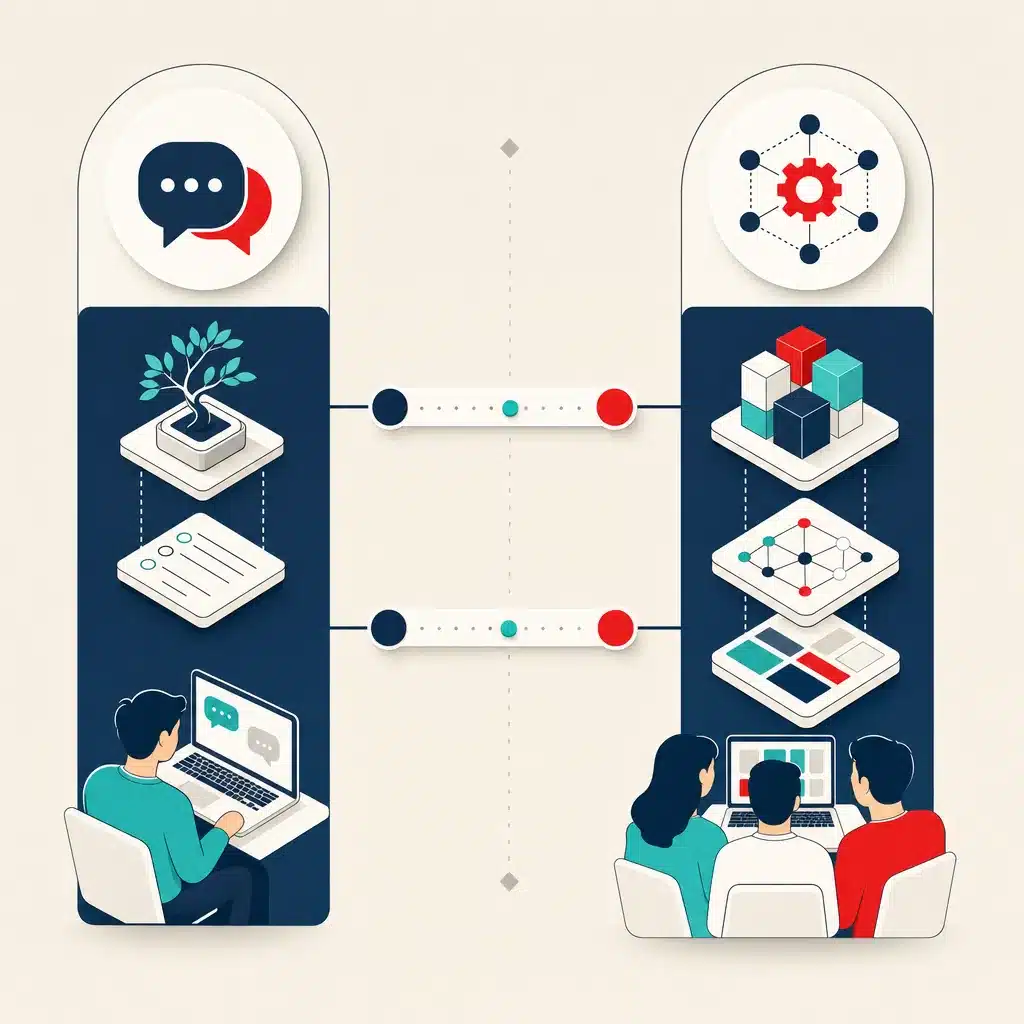
Here is the simplest way to tell them apart: an AI assistant reacts, an AI agent acts. An assistant is reactive. You ask, it answers, it stops. An AI agent is proactive within a defined goal. It plans sub-tasks and executes them across tools until the work is done. If you're trying to pin down this same autonomy question against a more conversational tool, AI agent vs. chatbot, which one fixes your bottleneck covers that closely related comparison.
The reason this matters is autonomy. Assistants hold no plan of their own, while agents hold a goal and decide the next step without waiting on human decision making. IBM's explainer on AI agents describes this as systems that reason, plan, and take action with limited human oversight. That shift from single reply to self-directed action is the whole debate, and it's a shift analysts expect to accelerate: Gartner's forecast on agentic AI autonomy projects agentic systems may independently resolve a large share of common service issues within a few years.
How each one works (reactive prompts vs goal-driven plan-act-observe loops)
- Runs on a reactive prompt cycle
- Generates response to each instruction
- Loop closes until next prompt
- No initiative between responses
- Operates on plan-act-observe loop
- Sets plans and takes actions autonomously
- Adjusts based on observations
- Decisions chain together without human handoff
An AI assistant runs on a reactive prompt cycle. You send an instruction, it generates a response, and the loop closes until your next prompt.
An AI agent runs a plan-act-observe loop instead. It sets a plan, takes an action, checks the result, then adjusts and continues toward the goal. Inside an agent, decisions chain together, calling tools and policies as needed without a human handoff at each step. Anthropic's guidance on building effective agents frames agentic systems as models that dynamically direct their own processes. That loop is what gives an agent its initiative, because each observation feeds the next decision instead of stopping at a single reply.
Head-to-head comparison table (autonomy, task scope, initiative, oversight)
A comparison table makes the trade-offs clearer than prose. The dimensions that matter most are autonomy, task scope, who initiates action, and how much human oversight each needs.
| Dimension | AI Assistant | AI Agent |
|---|---|---|
| Autonomy | Low, one step per prompt | High, multi-step toward a goal |
| Task scope | Single, narrow task | Workflow across tools |
| Initiative | Reactive, waits for input | Proactive, self-directed |
| Human oversight | Per task, constant | Checkpoints, periodic |
The ai assistant vs ai agent split is not about which is smarter. It is about how much of a process each can own before a person has to step back in.
Real-world business use cases for each option
Real business applications make the fit obvious. An AI assistant works well for drafting a proposal, summarizing a call, or answering a customer's product question through a chatbot. An AI agent can be useful for processes: qualifying inbound leads across a form, CRM, and calendar, or routing documents through an approval chain.
Consider a property management firm that manually re-keys maintenance requests across three systems. An assistant speeds up each reply, but an agent can handle the whole intake-to-assignment workflow. Bespoke Mind AI designs AI agents for these kinds of multi-step business operations, scoped around how the team already works rather than forcing a new tool on top, and how a custom AI agent is built around your operations walks through what that process actually looks like.
Selection criteria: which one fits your operations
Deciding which one fits your business starts with one question: is the problem a task or a process? If your team keeps repeating a single, contained action, an AI assistant can deliver time savings with minimal setup. If the pain is a chain of steps spanning disconnected systems, an agent built for workflow automation may remove more manual work.
A common pattern: teams buy an assistant hoping it will fix a process bottleneck, then stay stuck because the assistant still needs a human to connect each step. Map the task scope first, then match the tool to it, since which one fits your business depends on where the work actually breaks down.
Who each option is best for (pros, cons, and fit)
An AI assistant fits businesses that want quick wins without a build. Pros: cheap, fast, easy to adopt. Cons: it stops at one task and never initiates the next.
An AI agent fits operations dealing with a lot of multi-step manual work. Pros: potential operational efficiency, fewer handoffs, outcomes that can be measured against your own baseline. Cons: it needs careful scoping, governance, and human oversight to run safely. A small business with one repetitive chore rarely needs an agent, even as more small business owners explore workflow automation to cut admin time. A growing firm with workflows stitched across five tools usually does. Fit depends on complexity, not company size alone.

Why most 'agents' are really assistants (marketing blur)
Here's the uncomfortable truth: much of what is sold as agentic ai is just a chatbot with a confident label. Many assume anything called an "agent" acts independently. In reality, plenty of these tools still wait for a prompt at every step, which makes them assistants wearing a more expensive name.
The test is simple: does it plan and execute multiple steps on its own, or does it need you to drive each one? Even enterprise automation branded as autonomous often keeps a human in the loop for every decision. Check the autonomy, not the marketing copy.
Human oversight, risk, and governance considerations
- Autonomous agents can make unchecked decisions
- Errors can accumulate before human review
- Define clear approval processes for agents
- Good oversight is essential for sound decision making
- Governance is more critical for agents than assistants
Autonomy cuts both ways. An autonomous agent that acts without checkpoints can send the wrong email, update the wrong record, or approve something it shouldn't. The root cause is that agents make decisions between prompts, so errors can pile up before a person sees them.
That's why governance matters more for agents than assistants. NIST's AI Risk Management Framework gives a structured way to think about oversight, testing, and accountability. Define where the agent can act freely, where it needs approval, and who reviews its decisions. Good human oversight is not a brake on automation. It is what keeps decision making sound as systems gain more autonomy.
How assistants and agents work together in a workflow
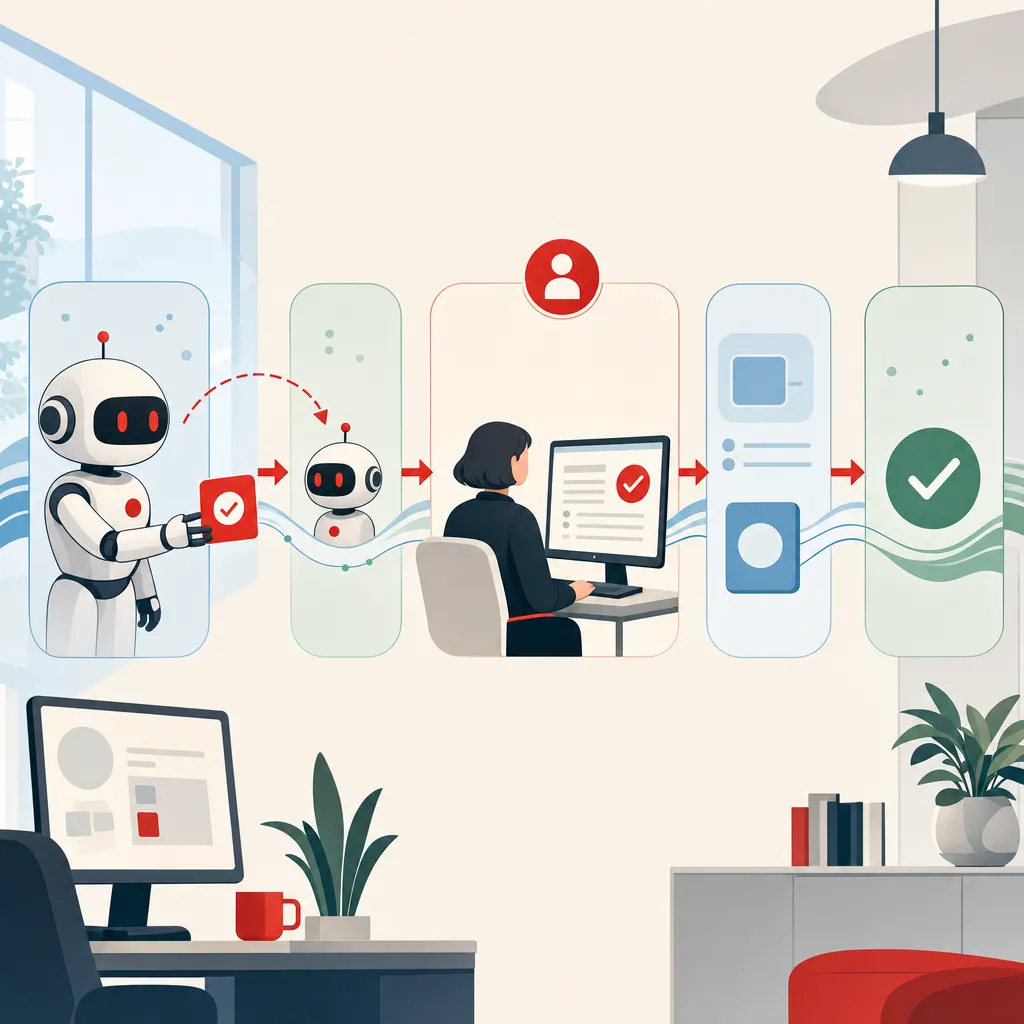
The ai assistant vs ai agent framing is not either-or in practice. In a real workflow they layer. An agent runs the backbone process, pulling data, routing tasks, triggering actions, while an assistant handles the human-facing moments: drafting a message, answering a one-off question, polishing a report.
Picture a services firm where an agent qualifies and schedules leads automatically, and a writing assistant helps staff reply to the tricky ones. The agent owns the repeatable chain. The assistant covers the judgment calls. Together they can cut more manual work than either does alone, and that combination is usually the practical answer.
Matching the choice to your actual operational bottlenecks
Start from the operational bottlenecks, not the technology. List where business operations stall: data re-entered by hand, approvals waiting in inboxes, information trapped in siloed tools. If a bottleneck is one slow task, an assistant unblocks it. If it is a process crossing several systems, an agent fits better.
Picture a distribution company that loses two days a week reconciling orders across a spreadsheet and two platforms. An assistant speeds the typing, but an agent is often better positioned to close the gap end to end. Bespoke Mind AI builds custom AI workflows and internal tools scoped to these specific bottlenecks rather than retrofitting off-the-shelf software.
Cost, ownership, and ROI of a custom build vs off-the-shelf
- Cheap to start and easy to implement
- Suitable for single-task assistant needs
- Saves time on individual tasks
- Subscription model may incur ongoing costs
- Higher upfront costs but tailored to processes
- Ownership of the final product
- Can remove entire handoffs
- Predictable costs with fixed-price builds
Off-the-shelf software and tools like Microsoft Copilot are cheap to start and easy to turn on, which is why they suit single-task assistant needs. Custom ai systems cost more upfront but are scoped around your process, and you own the result.
On ROI: a subscription assistant can save time on individual tasks, while a well-scoped agent may remove whole handoffs. Results vary based on your existing processes, complexity, and team adoption. A fixed-price build gives predictable cost and clear ownership, which matters when the goal is lasting operational efficiency rather than another monthly license. Weigh upfront cost against how much manual work the system actually removes. For businesses ready to compare build paths side by side, Bespoke Mind AI's custom AI development and automation services outline the options for both agent and assistant projects.
A simple decision checklist for non-technical operators
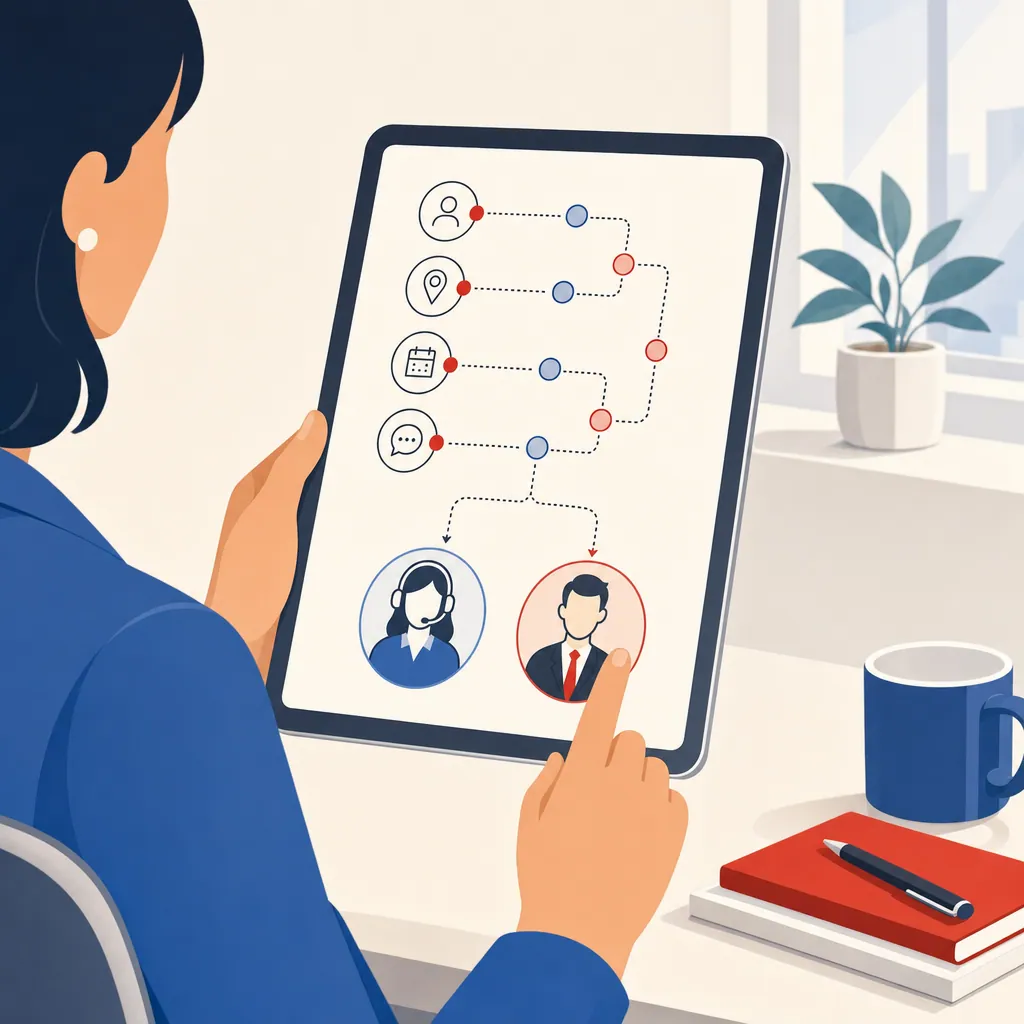
You do not need deep technical knowledge to choose well. Run through this: Is the problem one task or a chain of steps? Does it touch one tool or several? Do you need the system to initiate action, or just respond? How much human oversight are you comfortable handing over?
If the answers point to single, reactive, one-tool work, pick an assistant. If they point to multi-step, proactive, cross-system work, an agent fits. The ai agent vs ai assistant decision gets simple once you name the bottleneck honestly instead of chasing the label that sounds most advanced.
If repetitive work is spread across your systems and you're not sure whether a task-level assistant or a full workflow agent fits, a short conversation can map it out. Bespoke Mind AI scopes custom AI systems around how your business actually operates, so you can book a free automation discovery call to find the right fit before committing to a build.
Frequently Asked Questions
What's the real difference between an AI agent and an AI assistant?
An AI assistant waits for an instruction and completes one task, like drafting an email or summarizing a document. An AI agent takes a goal, breaks it into steps, and executes a multi-step workflow with less human input at each stage.
How is an AI agent different from a chatbot?
A chatbot is built to hold a conversation and answer questions within a fixed script or knowledge base. An AI agent can take that conversation and act on it, booking a slot, updating a record, or triggering a next step in a workflow, without a human doing the follow-up manually.
What does "agentic" actually mean in this context?
Agentic describes AI systems that plan, make decisions, and carry out multi-step actions toward a goal rather than just responding to a single prompt. It's the quality that separates an AI agent from an assistant that only reacts to direct commands.
Is it worth building an AI agent instead of just using an AI assistant?
It depends on whether the work involves one task or a chain of them. If a team just needs faster drafts or quick answers, an assistant covers it; if the bottleneck is a multi-step process spanning several tools, an agent removes more manual handoffs but costs more to scope and build properly.
What if my business doesn't have the technical team to manage an AI agent?
Most SMBs don't run agents in-house from scratch, they're scoped, built, and handed over by a developer so the business owns the system without needing dedicated engineering staff. The setup work is front-loaded; day-to-day operation shouldn't require a technical hire.
What's an example of an AI assistant most people already use?
Tools like a scheduling assistant that drafts calendar invites or a writing assistant that edits a document on request are common examples, they respond to a specific ask and stop there. They don't independently decide to follow up or take the next action.
Can an AI agent replace an AI assistant, or do businesses need both?
Most operations end up running both, since assistants handle quick one-off tasks while agents manage ongoing processes like lead qualification or document routing. Replacing an assistant with an agent for simple tasks usually adds unnecessary complexity and cost.
How many types of AI are there, and where do agents and assistants fit?
AI is commonly broken into categories like reactive machines, limited memory systems, theory of mind, and self-aware AI, plus narrow vs. general AI. Both AI agents and AI assistants fall under limited memory, narrow AI, they're built for defined tasks or workflows, not general reasoning.